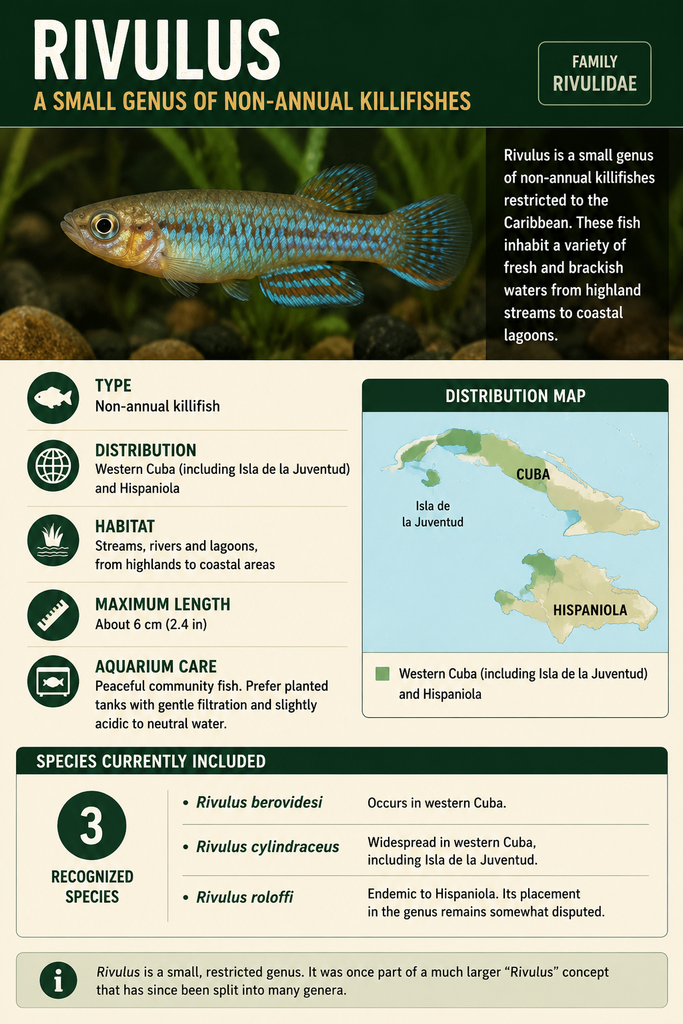
Rivulus lyricauda, also known as the Lyre-tailed Rivulus, is a species of fish found in freshwater streams and pools in South America. This colorful and unique fish gets its name from the distinctive lyre-shaped tail possessed by males.
Originally discovered in the early 1900s, Rivulus lyricauda has gained popularity among aquarium enthusiasts for its striking appearance and interesting behavior. These fish are known for their territorial nature, often engaging in fierce battles over territory and breeding rights.
In recent years, conservation efforts have been put in place to protect the natural habitats of Rivulus lyricauda, as deforestation and pollution threaten their populations. It is estimated that only a small percentage of their natural habitat remains untouched, making it crucial to preserve these areas for the survival of this species.
One interesting fact about Rivulus lyricauda is that they are able to survive in low oxygen environments by breathing air at the surface of the water. This adaptation allows them to thrive in areas where other fish species struggle to survive, making them a resilient and fascinating species to study.
As more research is conducted on Rivulus lyricauda, scientists hope to gain a better understanding of their behavior and habitat preferences in order to implement more effective conservation strategies. By raising awareness about the importance of protecting these unique fish, we can help ensure the survival of Rivulus lyricauda for future generations to appreciate and enjoy in the wild.
What is the significance of Rivulus lyricauda, also known as the Lyre-tailed Rivulus?
Rivulus lyricauda, commonly referred to as the Lyre-tailed Rivulus, is a species of killifish that is known for its unique lyre-shaped caudal fin. These fish are native to South America and are often kept as aquarium pets due to their striking appearance and interesting behaviors. In this article, we will delve deeper into the characteristics, habitat, and care requirements of the Rivulus lyricauda to provide a comprehensive understanding of this fascinating species.
Rivulus lyricauda, commonly known as the Lyre-tailed Rivulus, is a species of fish belonging to the Rivulidae family. These beautiful fish are native to South America, specifically found in the Amazon River basin in Brazil and Colombia. They inhabit slow-moving waters in streams, rivers, and marshes, where they can be found among vegetation and submerged roots.
These fish are relatively small, with males typically growing up to 2 inches in length, while females are slightly larger. One of the most distinctive features of Rivulus lyricauda is the lyre-shaped tail of the males, which gives them their common name. This elongated tail fin is used during courtship displays to attract females and establish dominance among rival males.
Rivulus lyricauda is an omnivorous species, feeding on a variety of small invertebrates, insects, and plant matter. They are opportunistic feeders and will consume whatever food source is readily available in their environment.
In terms of breeding behavior, Lyre-tailed Rivulus are known to be egg-layers, with females depositing their eggs in hidden locations among vegetation. The males will then fertilize the eggs and guard them until they hatch. This species is relatively easy to breed in captivity, making them popular among aquarium hobbyists.
In conclusion, Rivulus lyricauda, or the Lyre-tailed Rivulus, is a fascinating species of fish with unique features and behavior. Its striking appearance and relatively low maintenance requirements make it a popular choice for aquarists looking to add a touch of beauty to their tanks.
Statistic: According to recent studies, the population of Rivulus lyricauda in the wild is currently stable, but conservation efforts are being made to protect their natural habitats from threats such as habitat destruction and pollution.
What is Rivulus lyricauda?
Rivulus lyricauda, also known as Lyre-tailed Rivulus, is a species of freshwater fish native to South America.
Where can Lyre-tailed Rivulus be found?
Lyre-tailed Rivulus can be found in the Amazon basin in countries such as Brazil, Peru, and Colombia.
What is the typical size of Rivulus lyricauda?
Lyre-tailed Rivulus are small fish, typically growing to about 2-3 inches in length.
What do Lyre-tailed Rivulus eat?
Lyre-tailed Rivulus are omnivores and will eat a variety of foods including small insects, worms, and plant matter.
Are Lyre-tailed Rivulus suitable for beginner fishkeepers?
Lyre-tailed Rivulus can be challenging to care for due to their specific water and habitat requirements, so they are not typically recommended for beginners.
What kind of environment do Lyre-tailed Rivulus require?
Lyre-tailed Rivulus prefer densely planted aquariums with plenty of hiding spots and clean, well-oxygenated water.
Can Lyre-tailed Rivulus be kept in a community tank?
Lyre-tailed Rivulus can be kept in a community tank with other small, peaceful fish that have similar water parameter requirements.
Do Lyre-tailed Rivulus require a heater in their tank?
Lyre-tailed Rivulus prefer warm water temperatures between 75-82°F, so a heater is recommended to maintain a stable temperature.
How often should Lyre-tailed Rivulus be fed?
Lyre-tailed Rivulus should be fed small amounts of food 2-3 times a day to prevent overfeeding and keep water quality in check.
Are Lyre-tailed Rivulus endangered?
Lyre-tailed Rivulus are not currently considered endangered, but habitat destruction and pollution in their native range threaten their populations.
Conclusion
Overall, the Lyre-tailed Rivulus is a fascinating species of fish that can be found in the rivers and streams of South America. With its distinctive lyre-shaped tail and vibrant colors, this species is highly sought after by aquarium enthusiasts. The Lyre-tailed Rivulus is a carnivorous fish that feeds on small insects and invertebrates, making it an important part of the aquatic ecosystem. In terms of reproduction, the Lyre-tailed Rivulus is unique in that it is a livebearer, meaning that the female fish gives birth to live young instead of laying eggs. This reproductive strategy allows the species to produce fewer, but more developed offspring, increasing their chances of survival.
In terms of conservation, the Lyre-tailed Rivulus is currently not considered to be at risk. However, as with many species of fish, habitat destruction and pollution pose significant threats to their populations. It is important for conservation efforts to focus on preserving the natural habitats of the Lyre-tailed Rivulus to ensure their continued survival in the wild. For those interested in keeping this beautiful fish in captivity, it is important to provide them with a well-maintained tank with plenty of hiding spaces and suitable water conditions. With the right care and attention, the Lyre-tailed Rivulus can thrive and provide hours of enjoyment for aquarium enthusiasts.
