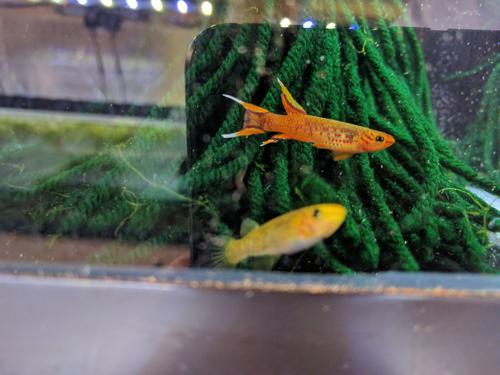
Spawning mops are one of the simplest and most useful tools for breeding Aphyosemion. But an important question often arises: Should the mop float at the surface, or should it lie on the bottom?
There is no single answer for every Aphyosemion. Most species are considered plant-spawners, and many will use floating mops readily. However, individual species, populations and even individual pairs can show different spawning preferences.
For that reason, providing both a floating and a bottom mop can be an excellent way to discover what your particular fish prefer.
What Is a Spawning Mop?
A spawning mop is an artificial substitute for the fine vegetation in which many killifish deposit their eggs.
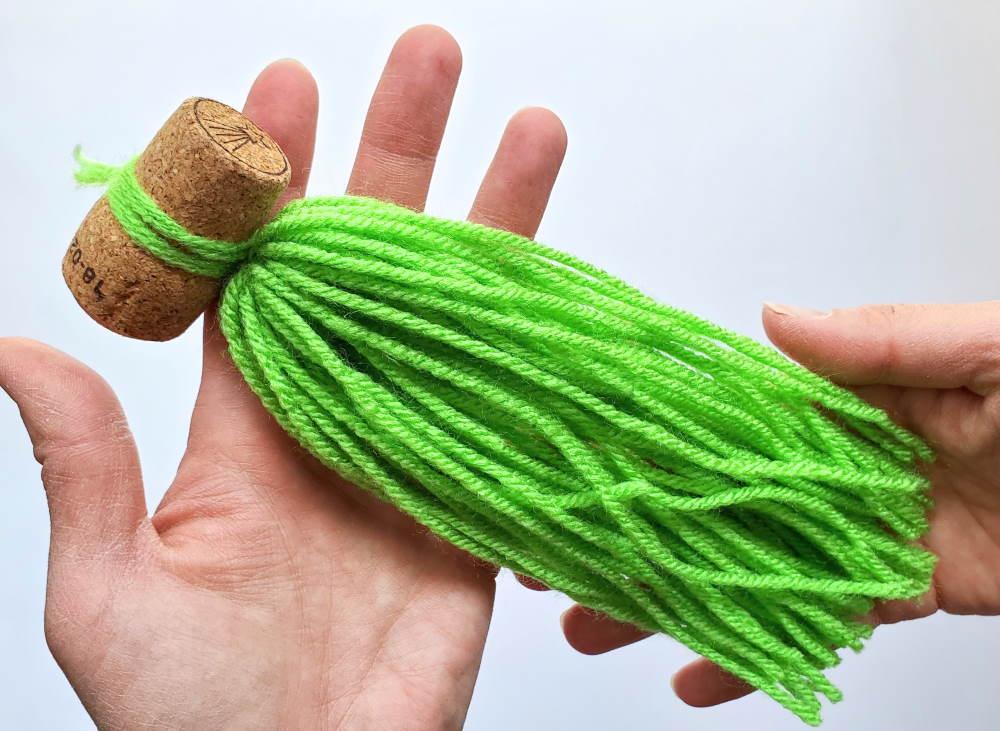
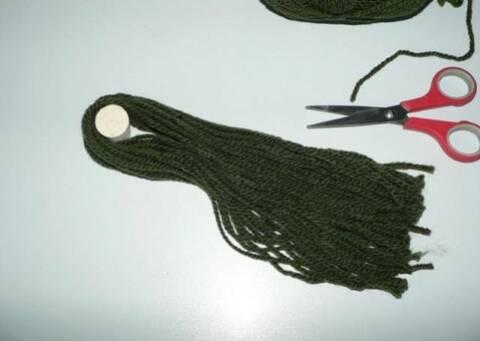
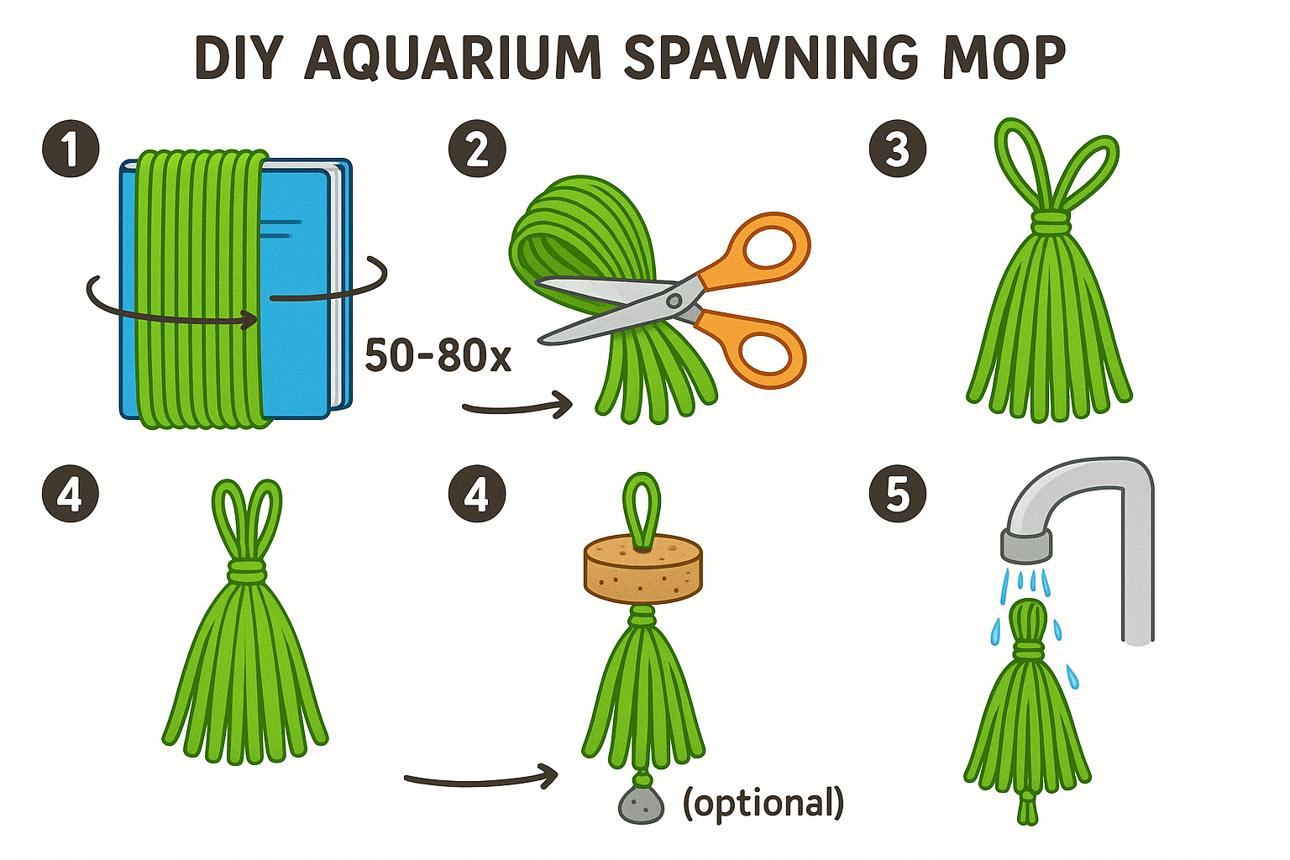
The traditional mop is made from 100% acrylic or nylon yarn. Natural materials such as cotton or wool are generally unsuitable because they deteriorate in water. The yarn is attached either to a float or to a weight-free base so that the mop remains on the bottom.
The fish enter the strands and deposit their eggs between them.
The major advantage for the breeder is that the eggs are much easier to find than they would be in a densely planted aquarium.
Floating Mops
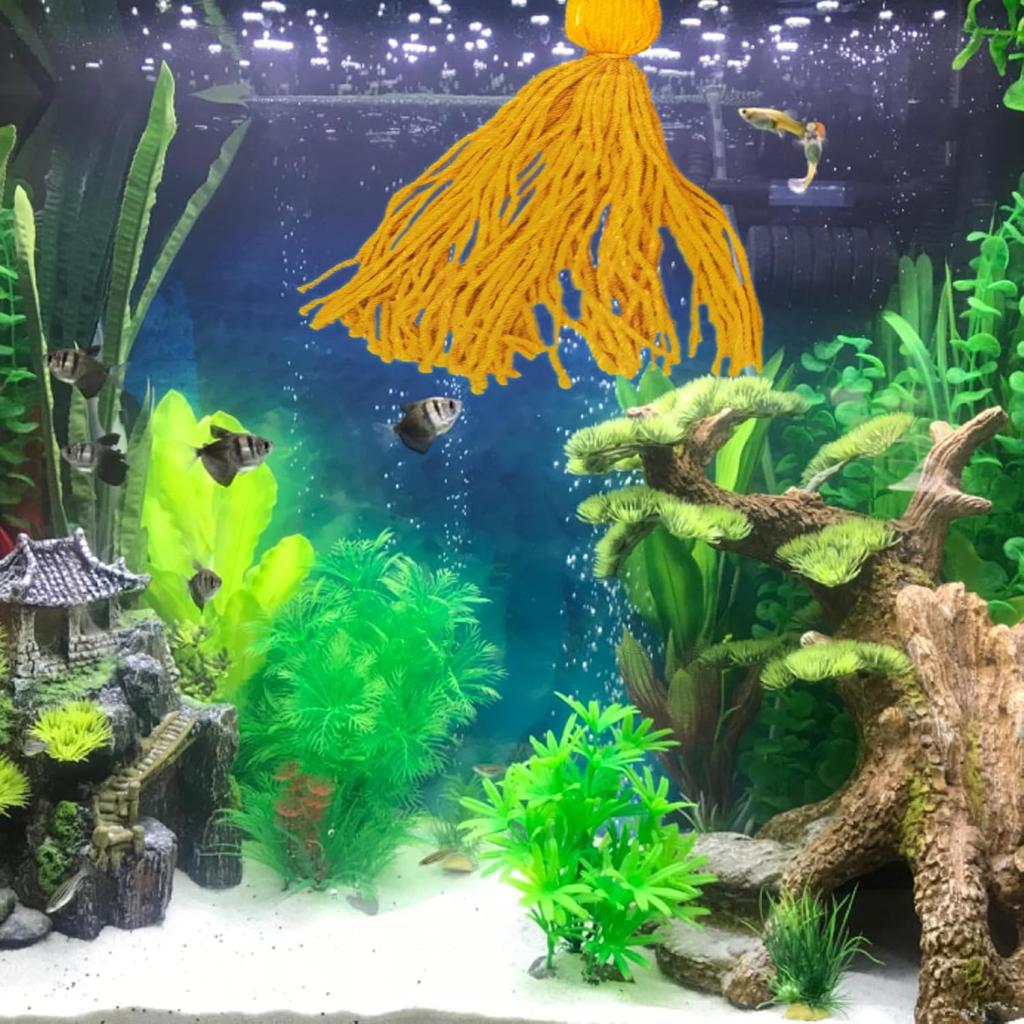
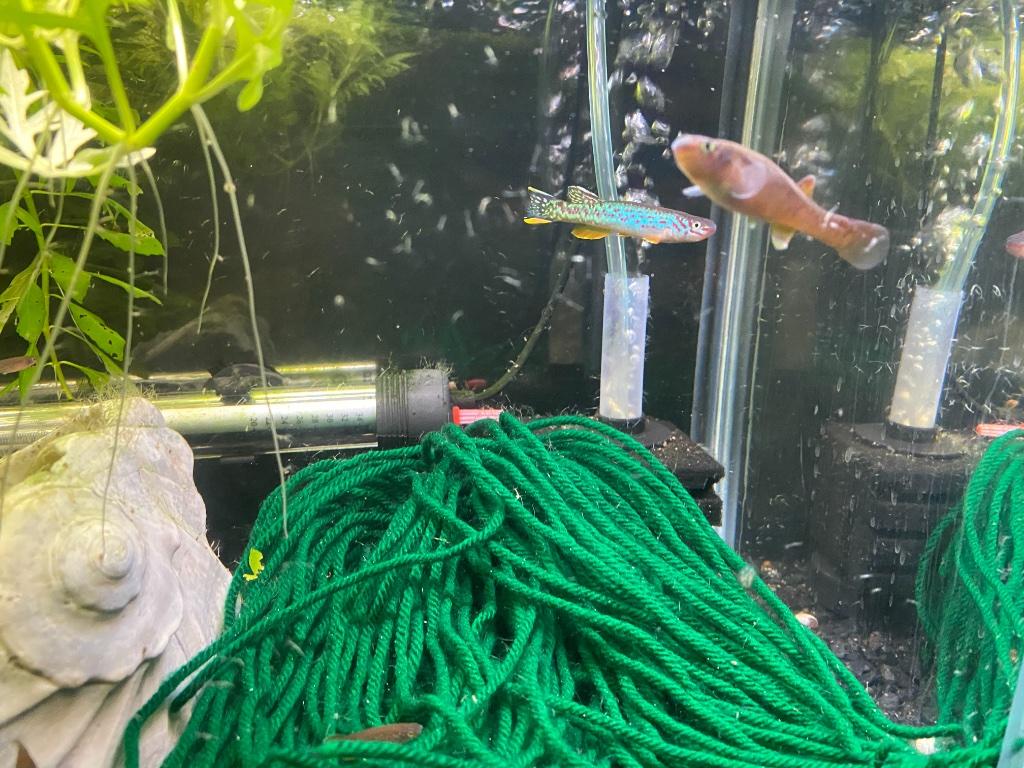
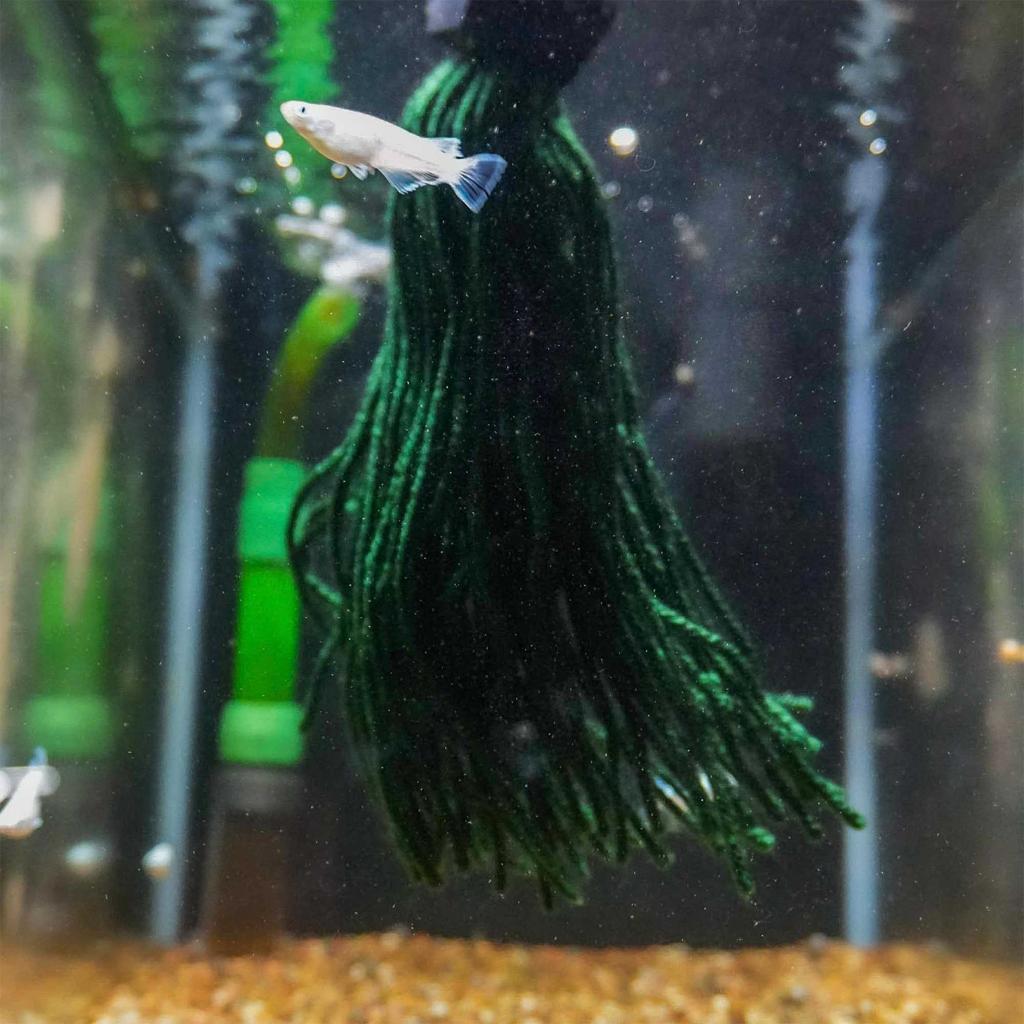
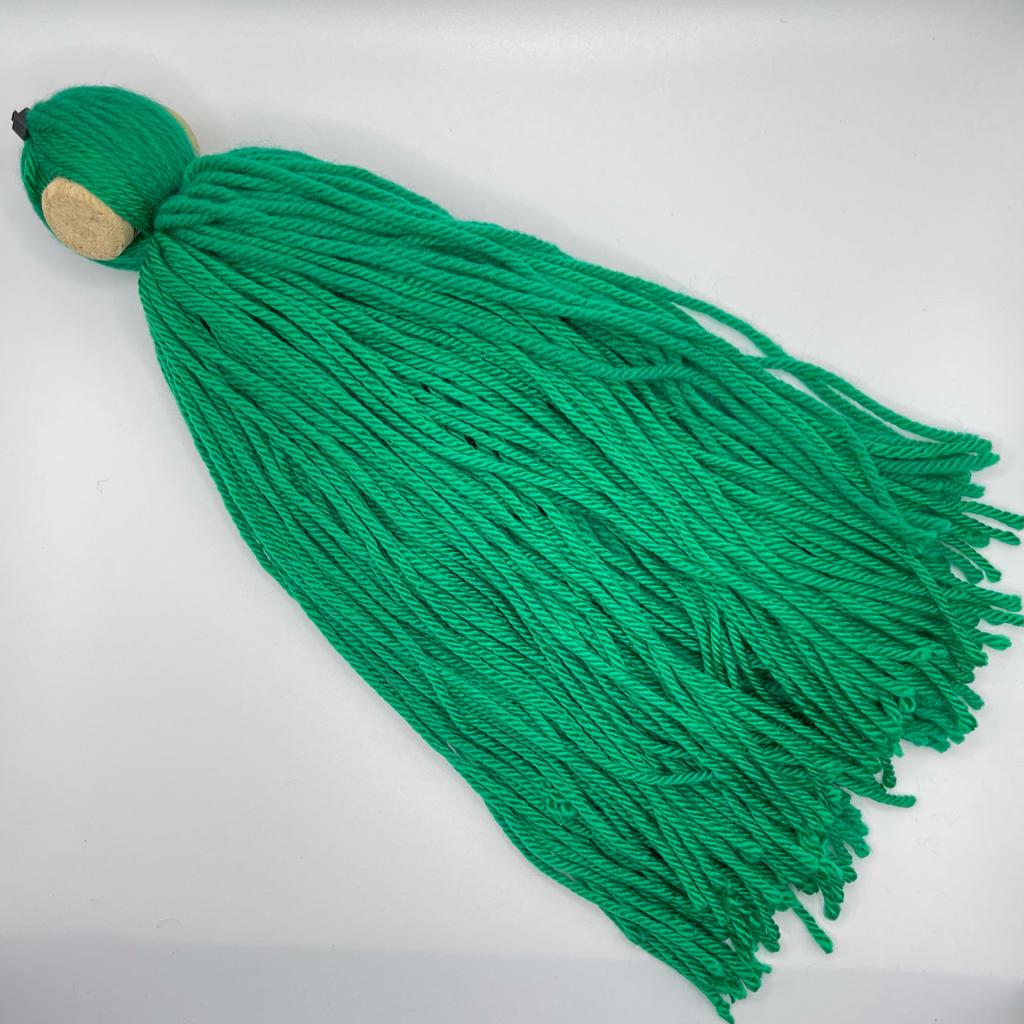
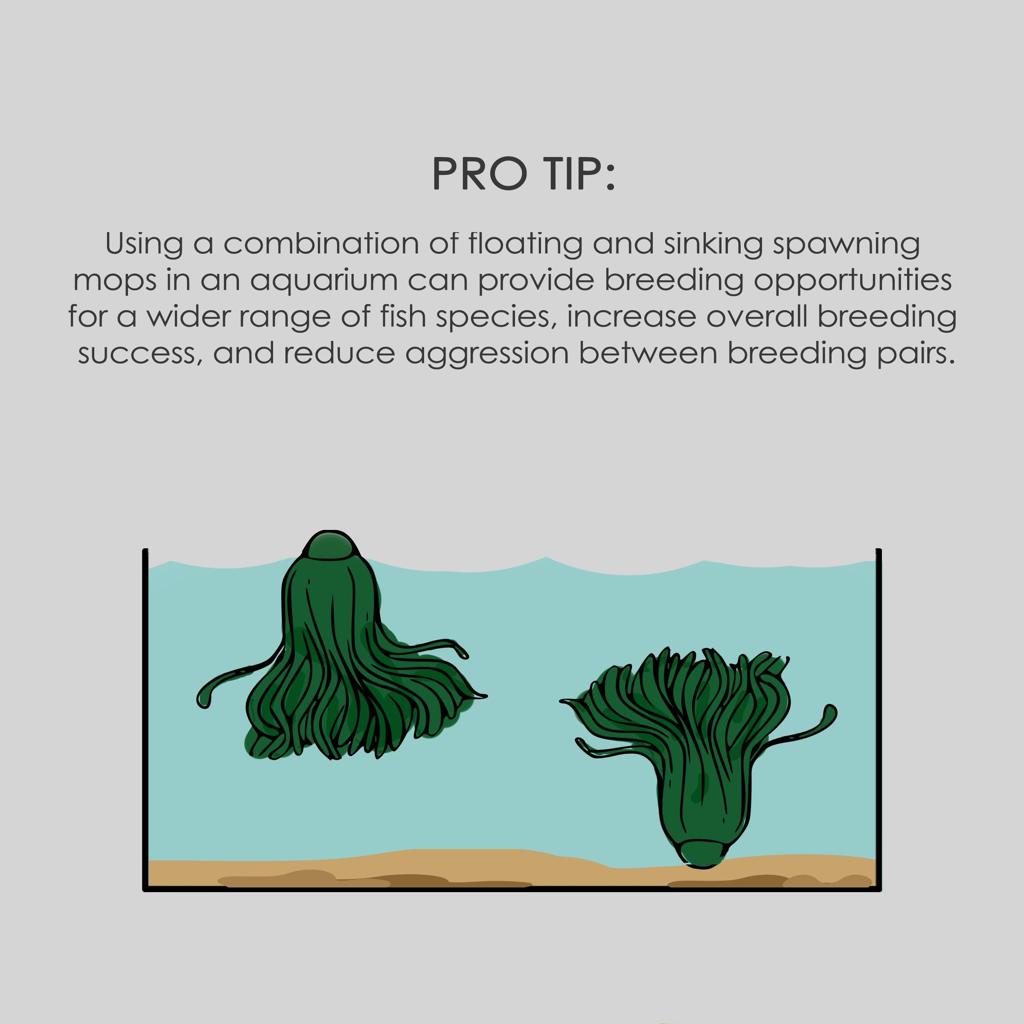
A floating mop is suspended from a cork, foam float or another suitable buoyant material.
4
Why floating mops work well
Many Aphyosemion naturally spawn among vegetation close to the water surface or in other plant structures throughout the water column.
The American Killifish Association notes that most Aphyosemion are commonly spawned on floating mops. Aphyosemion australe, for example, is specifically described as a species that spawns in floating mops.
A floating mop also has a practical advantage:
It is easy to remove and inspect.
You can simply lift the mop from the aquarium, examine the strands and pick out the eggs with tweezers or a fingertip.
Advantages
- Easy to inspect
- Easy to remove
- Eggs are usually easy to see
- Keeps eggs away from the aquarium substrate
- Particularly useful for species that favor upper levels
- Can be made long enough to extend toward the bottom
Possible disadvantage
A floating mop may not be the preferred spawning location for every pair.
Some fish may consistently ignore the upper part of the mop and deposit their eggs lower down.
Bottom Mops
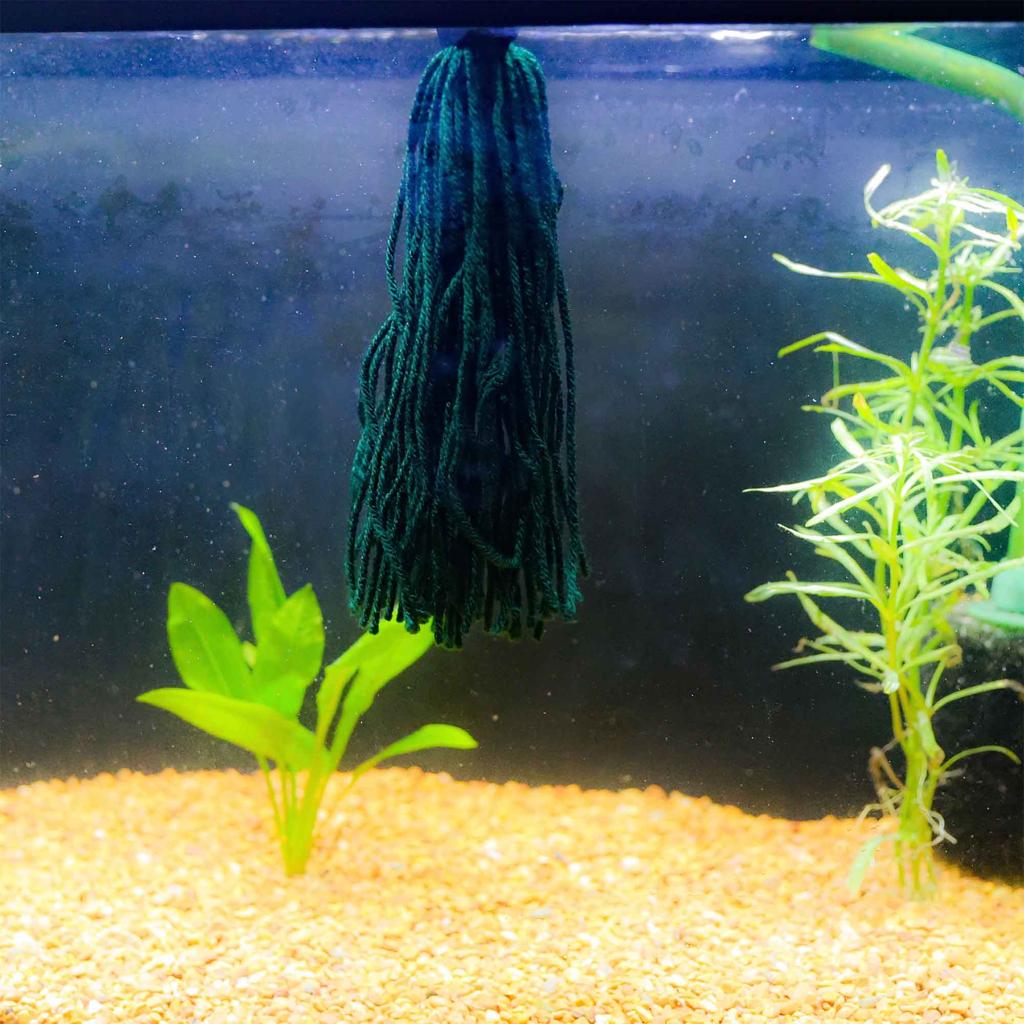
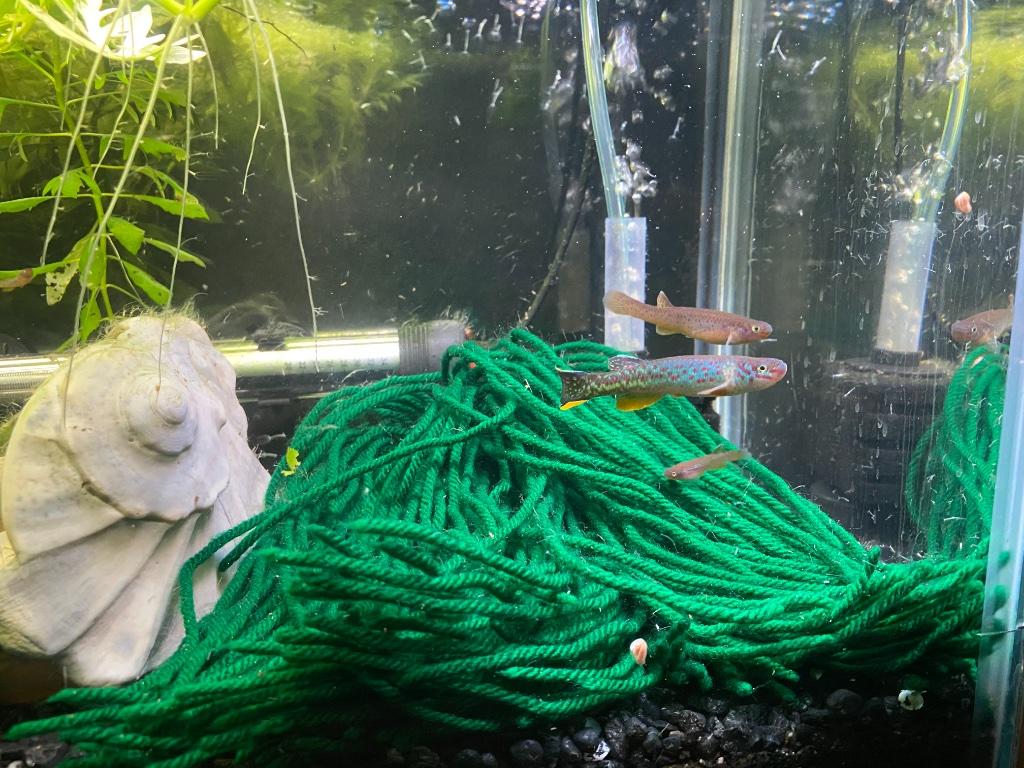
A bottom mop is made in essentially the same way, but without a float.
Once saturated with water, it sinks and rests loosely on the aquarium floor.
4
Bottom mops can be particularly useful when fish prefer to spawn near the lower part of the aquarium.
The American Killifish Association specifically describes bottom mops for bottom-spawning killifish, while also noting that many species will use either floating or bottom mops.
Some Aphyosemion breeding reports demonstrate this flexibility.
For example, breeding reports for Aphyosemion rectogoense describe fish spawning on the bottom when vegetation was available, while the same fish spawned at different levels when a long floating mop was introduced.
Floating vs. Bottom Mops
| Feature | Floating Mop | Bottom Mop |
|---|---|---|
| Position | Surface | Aquarium floor |
| Best for | Upper-level spawners | Lower-level spawners |
| Egg inspection | Very easy | Easy, but sometimes less convenient |
| Removal | Very easy | Very easy |
| Construction | Requires float | No float required |
| Egg collection | Excellent | Excellent |
| Suitable for Aphyosemion | Many species | Many species |
| Best approach | Test first | Test alongside floating mop |
The important point is that the position of the mop does not necessarily define the spawning behavior of the species.
Some Aphyosemion Use Both
This is where things become particularly interesting.
The idea that every species has one fixed spawning position is too simplistic.
The AKA’s general breeding information states that many killifish will lay eggs in either a floating or bottom mop. A long mop extending from the surface toward the bottom can therefore provide several spawning levels in a single structure.
There are also documented examples of individual Aphyosemion showing preferences for different parts of the aquarium.
In one Aphyosemion striatum breeding report, more eggs were found near the top of the floating mop than in the bottom mop.
This doesn’t mean that every A. striatum population will behave identically.
It demonstrates something more useful:
Your own fish should be allowed to tell you where they prefer to spawn.
A Long Floating Mop: The Best of Both Worlds?
One particularly useful design is a long floating mop whose strands extend almost to the bottom of the aquarium.
This creates spawning material throughout much of the water column.
The fish can choose:
- the upper section
- the middle
- the lower section
- strands lying against the bottom
This technique has been reported for several Aphyosemion breeding setups. For example, breeding information for A. exiguum describes a floating mop that reached the tank base, with eggs concentrated toward the lower portion in that particular setup.
For a new species, this can therefore be an excellent starting design.
Should You Use Two Mops?
Yes, especially when breeding a species for the first time.
A very simple experiment is:
Mop 1
Floating mop positioned near the surface.
Mop 2
Bottom mop lying loosely on the aquarium floor.
Keep the two mops otherwise similar:
- same yarn
- same color
- similar thickness
- similar softness
Then check both regularly.
After a week or two, you may discover a clear preference.
For example:
Floating mop: 32 eggs
Bottom mop: 7 eggs
That tells you considerably more than simply assuming that the species is a “floating mop spawner.”
Yarn Texture May Matter More Than Position
The physical position of the mop isn’t the only variable.
Texture can be extremely important.
A breeding report on Aphyosemion australe found that the fish strongly preferred softer yarn and largely ignored a harder-textured mop. The breeder tested different mop materials and colors before settling on softer yarn.
Therefore, if your fish ignore a mop, don’t immediately conclude:
“They don’t like floating mops.”
They may simply dislike the yarn.
Try:
- softer acrylic yarn
- a thicker mop
- darker yarn
- a different mop density
- a longer mop
- a second mop at another level
Where Are the Eggs?
Once you know where your fish prefer to spawn, egg collection becomes much easier.
Check:
Floating mop
Look particularly at:
- the dense inner strands
- areas just below the float
- sections where strands overlap
- the lower part of a long mop
Bottom mop
Inspect:
- the central dense section
- strands lying against the floor
- areas close to plants or shelter
- the underside and interior of the mop
A small flashlight can make translucent eggs considerably easier to spot.
Aphyosemion australe as an Example
Aphyosemion australe is a particularly useful example because it demonstrates how flexible spawning can be.
Breeding references report eggs being deposited in:
- floating mops
- bottom mops
- floating plants
- submerged plants
- and even gravel in some setups.
This makes it a poor candidate for rigid rules such as:
“A. australe always spawns at the surface.”
It doesn’t.
A breeding pair may have its own preferred location.
Why Individual Pairs Can Behave Differently
One of the most important lessons in killifish breeding is that species descriptions describe tendencies, not guarantees.
The AKA’s compilation of breeding experiences specifically discusses substantial differences between individual pairs, including differences in where fish deposit their eggs and how many eggs they produce.
This is particularly important when working with locality strains.
Two populations of the same species may behave somewhat differently, and two pairs from the same population may also show different preferences.
So don’t discard a spawning method simply because it didn’t work with one pair.
The Practical Setup I Recommend
For an unfamiliar Aphyosemion, start with a simple breeding aquarium containing:
1 × floating mop
plus
1 × bottom mop
Use soft acrylic yarn and keep the aquarium relatively simple so the eggs can be collected easily.
After several days of spawning, inspect both mops.
If most eggs are in the floating mop:
Keep the floating mop and optimize its size and density.
If most eggs are in the bottom mop:
Keep the bottom mop and perhaps remove the floating mop.
If eggs are everywhere:
Use both, or switch to a long floating mop reaching toward the bottom.
If there are almost no eggs:
Don’t immediately blame the mop.
Check:
- conditioning
- food quality
- sex ratio
- water conditions
- temperature
- age of the fish
- stress
- tank location
- mop texture
Changing the mop position can also be one of several useful adjustments when a pair refuses to spawn.
Floating or Bottom: Which Is Better?
There isn’t a universal winner.
For many Aphyosemion, I would start with a floating mop because it is easy to inspect and many species readily use it.
But if the fish consistently place their eggs lower in the aquarium, a bottom mop may produce better results.
The most reliable approach is therefore not to guess.
Give the fish a choice.
A floating mop and a bottom mop cost very little, take only a few minutes to make, and can reveal the spawning preference of your particular pair.
Best Practices
Use:
- Soft acrylic or nylon yarn
- Clean, well-rinsed mops
- A floating mop for many Aphyosemion
- A bottom mop when appropriate
- Long mops when spawning position is uncertain
- Regular egg inspection
- Separate spawning tanks when maximum egg collection is the goal
Avoid:
- Assuming every Aphyosemion behaves identically
- Hard, rough yarn
- Cotton or wool that deteriorates in water
- Changing several breeding variables simultaneously
- Assuming an ignored mop means the fish won’t breed
The American Killifish Association recommends acrylic or nylon yarn for spawning mops and notes that different species can spawn at different levels, making different mop configurations useful.
Quick Decision Guide
New Aphyosemion species?
↓
Start with a floating mop + bottom mop
↓
Collect eggs for several days
↓
Where are most eggs?
Top → Continue with floating mop
Bottom → Continue with bottom mop
Both → Use both or a long mop
None → Investigate breeding conditions and mop texture
The key lesson is simple: mop position is a tool for discovering spawning behavior, not a rigid rule that applies to every Aphyosemion.
