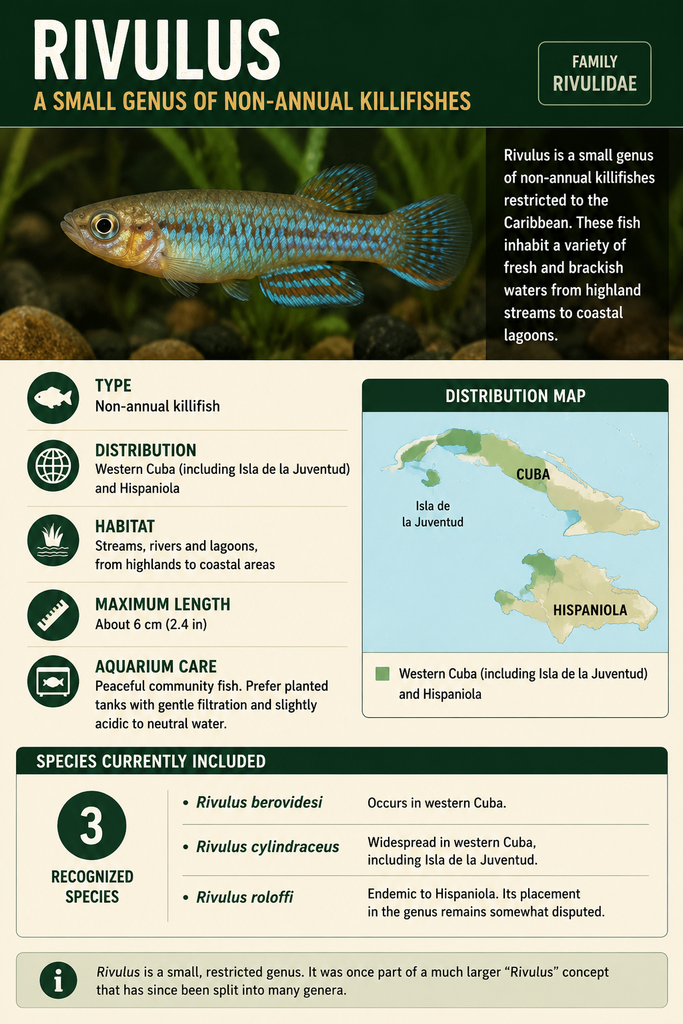
Rivulus breviceps, also known as the Short-headed Rivulus, is a species of killifish found in freshwater habitats throughout South America. These fish are known for their vibrant colors and intricate patterns, making them a popular choice for aquarium enthusiasts.
Rivulus breviceps has a rich history in the world of fishkeeping, with captive breeding programs helping to preserve this species in the wild. Conservation efforts have been successful in maintaining healthy populations of Short-headed Rivulus, ensuring their continued existence for future generations to enjoy.
One interesting aspect of Rivulus breviceps is their unique breeding behavior. Unlike many other fish species, Short-headed Rivulus are known to exhibit parental care, with male fish guarding nests of eggs until they hatch. This behavior is not only fascinating to observe, but it also helps to increase the survival rate of the offspring.
In recent years, Rivulus breviceps has become a focus of research for scientists studying the effects of climate change on freshwater ecosystems. As temperature and rainfall patterns shift, the habitats of Short-headed Rivulus are being altered, leading to changes in their behavior and breeding patterns. Understanding how these fish adapt to environmental changes can provide valuable insight into the broader impacts of climate change on aquatic life.
Overall, Rivulus breviceps is a fascinating species with a rich history and important ecological significance. By studying and protecting the Short-headed Rivulus, we can learn more about the delicate balance of life in freshwater habitats and work towards preserving these important ecosystems for future generations.
Why is Rivulus breviceps known as the Short-headed Rivulus?
Rivulus breviceps, commonly referred to as the Short-headed Rivulus, is a species of killifish known for its distinct short head shape. This unique characteristic sets it apart from other species of Rivulus. To learn more about the features and behaviors of the Short-headed Rivulus, continue reading below.
The Rivulus breviceps, also known as the Short-headed Rivulus, is a fascinating species of fish that belongs to the Rivulidae family. This small fish is native to South America, particularly found in regions like Brazil, Venezuela, and Colombia.
Physical Characteristics
– The Short-headed Rivulus is known for its small size, typically growing to only about 1.5 inches in length.
– It has a unique appearance with a short and rounded head, hence its common name.
Habitat
– These fish are often found in shallow streams, marshes, and ponds with slow-moving or stagnant water.
– They prefer habitats with plenty of vegetation for shelter and breeding.
Behavior
– Rivulus breviceps are known to be relatively peaceful fish, but males can display aggression towards one another during breeding season.
– They are carnivorous and feed on small invertebrates and insects that they find in their natural habitat.
Reproduction
– The breeding behavior of Short-headed Rivulus is interesting as they are annual killifish, meaning their eggs can survive outside of water by going through a period of dormancy.
– Males attract females by displaying vibrant colors and performing courtship dances.
Conservation Status
– Due to habitat loss and pollution, the population of Rivulus breviceps is declining in the wild.
– Conservation efforts are being made to protect their natural habitats and ensure their survival for future generations.
Statistics:
– According to the IUCN Red List, the conservation status of Rivulus breviceps is currently listed as Data Deficient, highlighting the need for further research and conservation actions to protect this species.
What is the scientific name of Short-headed Rivulus?
The scientific name of Short-headed Rivulus is Rivulus breviceps.
Where is the habitat of Rivulus breviceps?
Rivulus breviceps is commonly found in slow-moving streams and shallow waters in South America.
What is the size of Short-headed Rivulus?
Short-headed Rivulus can grow up to 5-6 cm in length.
What do Short-headed Rivulus eat?
Short-headed Rivulus primarily feed on small insects, worms, and crustaceans.
Are Short-headed Rivulus aggressive towards other fish?
Short-headed Rivulus are known to be peaceful and can be kept in a community aquarium with other small, non-aggressive fish.
How should Short-headed Rivulus be housed in an aquarium?
Short-headed Rivulus prefer densely planted aquariums with hiding spots and gentle water flow.
What is the lifespan of Short-headed Rivulus?
Short-headed Rivulus have an average lifespan of 2-3 years in captivity.
Can Short-headed Rivulus be bred in captivity?
Yes, Short-headed Rivulus can be bred in captivity with proper conditions such as a separate breeding tank with plants for spawning.
Are Short-headed Rivulus easy to care for?
Short-headed Rivulus are relatively easy to care for as long as their basic requirements such as water quality, diet, and tank setup are met.
Do Short-headed Rivulus require specific water parameters?
Short-headed Rivulus prefer slightly acidic water with a pH range of 6.0-7.0 and a temperature range of 22-26°C.
Conclusion
Overall, Rivulus breviceps, or Short-headed Rivulus, is a fascinating species of fish with unique physical characteristics and behavioral traits. From its distinct short head to its vibrant coloration and territorial nature, this fish presents an interesting subject for study and observation. Its preference for shallow, slow-moving waters and its ability to adapt to varying environmental conditions make it a versatile species that can thrive in a range of habitats.
The Short-headed Rivulus plays an important role in the ecosystem as a predator, feeding on small invertebrates and contributing to the balance of aquatic life. Its reproductive behavior, characterized by elaborate courtship displays and the production of adhesive eggs, showcases the intricate dynamics of fish mating rituals. Conservation efforts are crucial to preserving the habitats of Rivulus breviceps and ensuring the survival of this unique species. By understanding the biology and behavior of the Short-headed Rivulus, researchers can implement strategies to protect its populations and maintain the biodiversity of freshwater ecosystems where it resides.
