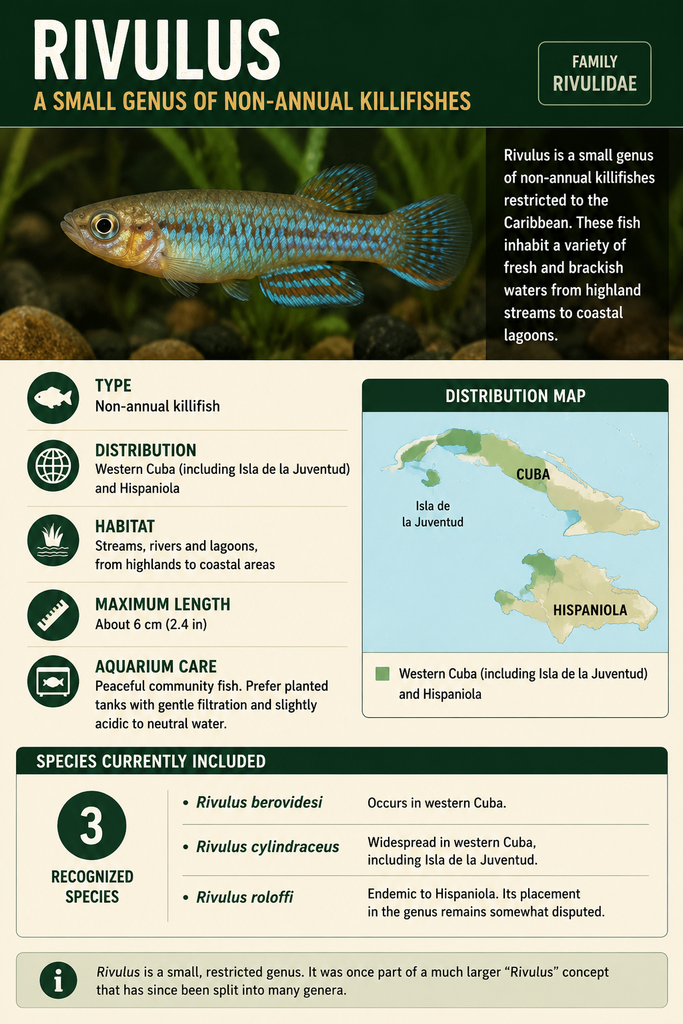
Rivulus christinae, also known as Christina’s Rivulus, is a species of killifish native to Cuba. These small freshwater fish are known for their vibrant colors and unique patterns, making them a popular choice among aquarium enthusiasts. Christina’s Rivulus are named after Christina Baensch, the daughter of a prominent fish breeder who discovered the species in the early 2000s.
Despite their popularity in the aquarium trade, Christina’s Rivulus face threats in their natural habitat due to habitat destruction and water pollution. Conservation efforts are being made to protect these fish and their native environment, including initiatives to raise awareness about the importance of preserving their habitat.
One interesting fact about Christina’s Rivulus is that they are capable of producing eggs that can survive in dry conditions. This adaptation allows the fish to lay eggs in shallow pools of water that may dry up during the dry season, ensuring their survival even in harsh environments. This unique trait has contributed to the resilience of Christina’s Rivulus in the wild.
In recent years, Christina’s Rivulus have garnered attention from researchers and conservationists due to their importance in maintaining the ecological balance of freshwater ecosystems. By studying the behavior and habitat preferences of these fish, scientists hope to gain valuable insights into how to protect and preserve their populations in Cuba and other regions where they are found.
What is Rivulus christinae and why is it called Christina’s Rivulus?
Rivulus christinae, also known as Christina’s Rivulus, is a species of killifish. This fish is named after Christina de Castellón, an ichthyologist who discovered and described the species. Christina’s Rivulus is a colorful and vibrant freshwater fish that is popular among aquarium enthusiasts. In the next section, we will explore the unique characteristics and care requirements of Rivulus christinae in more detail.
**Meet Rivulus christinae – Christina’s Rivulus**
Rivulus christinae, also known as Christina’s Rivulus, is a species of killifish that is native to South America. This small freshwater fish is known for its vibrant colors and striking patterns, making it a popular choice for aquarium enthusiasts.
**Description of Rivulus christinae**
Rivulus christinae typically grows to a length of about 2.5 inches and displays a range of colors, including shades of red, blue, yellow, and black. This species is known for its distinctive markings, which can vary significantly between individuals. The male Rivulus christinae is often more brightly colored than the female, with bold patterns and fins that are used to attract mates.
**Habitat and Behavior**
Christina’s Rivulus can be found in shallow freshwater streams, ponds, and marshes throughout its native range. This species prefers areas with dense vegetation and slow-moving water. Rivulus christinae is a relatively peaceful fish, but males can become territorial, especially during the breeding season.
**Diet and Feeding**
Rivulus christinae is a carnivorous fish that feeds on small invertebrates, insects, and other aquatic organisms. In captivity, Christina’s Rivulus can be fed a diet of live or frozen foods, such as bloodworms, brine shrimp, and insects. It is important to provide a varied diet to ensure that these fish receive all the nutrients they need to thrive.
**Breeding and Reproduction**
Breeding Rivulus christinae can be a rewarding experience for aquarium hobbyists. This species is an annual killifish, which means that it has a short lifespan and completes its entire life cycle within a year. To breed Christina’s Rivulus, a separate breeding tank with plenty of plants and hiding spots should be set up. The male will display courtship behavior towards the female, and the eggs will be deposited in the substrate.
**Conservation Status**
Unfortunately, Rivulus christinae is facing threats in the wild due to habitat destruction and pollution. As a result, this species is listed as Near Threatened on the IUCN Red List. Conservation efforts are underway to protect the natural habitats of Christina’s Rivulus and ensure the long-term survival of this beautiful fish species.
In summary, Rivulus christinae, or Christina’s Rivulus, is a stunning species of killifish that is prized for its vibrant colors and unique markings. With proper care and attention, these fish can thrive in a home aquarium and provide endless enjoyment for their owners.
Statistic: According to recent surveys, the population of Rivulus christinae has declined by 30% over the past decade due to habitat loss and degradation.
– Corydoras catfish
– Dwarf shrimp
Conclusion
In conclusion, Rivulus christinae, also known as Christina’s Rivulus, is a fascinating species of fish native to the island of Trinidad. This tiny fish has unique characteristics such as its beautiful coloration, intricate patterns, and distinct markings which make it a popular choice among fish enthusiasts. It is a carnivorous species that feeds on small invertebrates and insects, displaying specific hunting behaviors that have been observed in its natural habitat. Despite its small size, Rivulus christinae plays a crucial role in its ecosystem by contributing to the balance of its aquatic environment.
Furthermore, the conservation status of Rivulus christinae is of concern, as it faces threats from habitat loss, pollution, and invasive species. Efforts are being made to protect this species and its natural habitat through conservation programs, habitat restoration, and captive breeding programs. It is important to raise awareness about the importance of preserving the biodiversity of Trinidad’s freshwater ecosystems, including the unique species like Christina’s Rivulus. By working together to protect these habitats and the species that inhabit them, we can ensure the continued survival of Rivulus christinae for future generations to admire and study.
