Category Archives: Africa

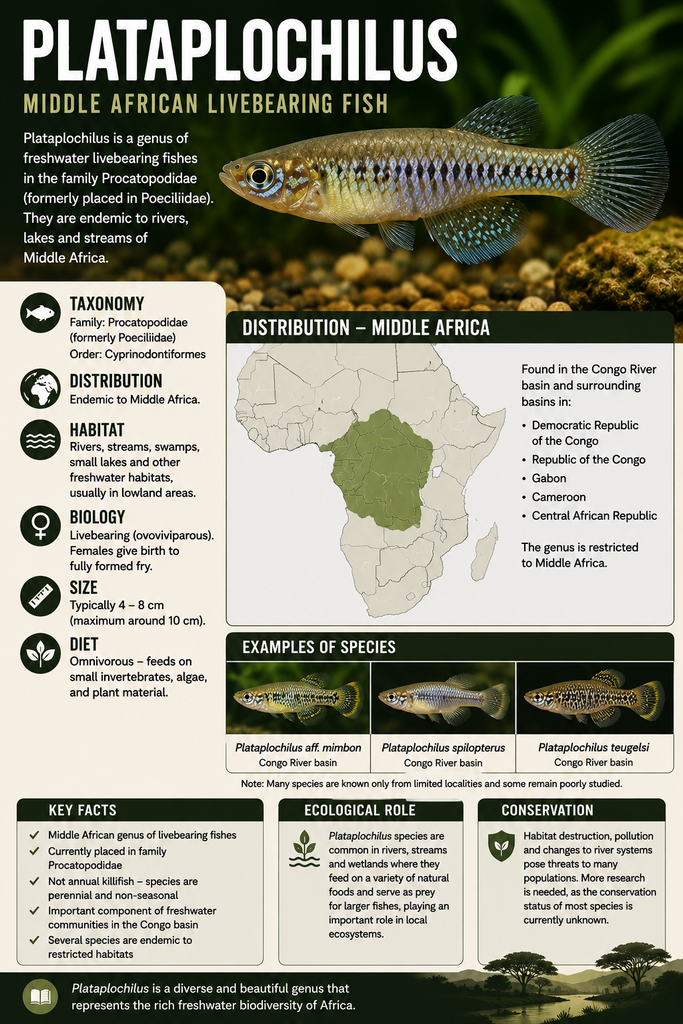
Plataplochilus

Plataplochilus is a genus of freshwater fish that belongs to the Aplocheilidae family, commonly known as “African killifish.” These small but vibrant fish are native to the rivers and streams of West Africa, particularly in Cameroon and Equatorial Guinea. With over twenty recognized species, Plataplochilus showcases a remarkable diversity of colors and patterns, making them popular amongst aquarium enthusiasts around the world.

The discovery and classification of Plataplochilus can be traced back to the early 20th century. Biologists and ichthyologists were captivated by the striking beauty of these fish, but their ecological significance remained largely unexplored. Over time, researchers began to uncover the key roles Plataplochilus plays in their freshwater ecosystems, particularly in controlling pest insect populations.

One of the intriguing aspects of Plataplochilus is its ability to adapt to extreme environmental conditions. These fish have developed astonishing strategies to survive, including unique reproductive strategies known as annual killifish. These strategies allow them to lay eggs in temporary water bodies that dry up during certain seasons. The dormant embryos can survive for several months until the rain returns, triggering hatching and repopulation.

In recent years, there has been a surge of interest in maintaining and conserving biodiversity, particularly in freshwater environments. Plataplochilus has become a focal point for conservation efforts due to its limited geographic range and vulnerability to habitat destruction. Conservation organizations have been implementing various measures to protect the habitats of these fish, as well as raising awareness about their ecological significance.

An alarming statistic connected to the conservation of Plataplochilus is that approximately one-third of freshwater fish species in Africa are threatened with extinction due to a variety of factors, such as habitat degradation, pollution, and climate change. Understanding the unique ecological roles of species like Plataplochilus is crucial in developing comprehensive conservation strategies and ensuring the long-term survival of these remarkable creatures.

By studying and appreciating Plataplochilus and its fellow African killifish, we gain valuable insights into the delicate balance of our planet’s freshwater ecosystems. Moreover, these beautiful fish serve as a reminder of the incredible diversity that exists within our natural world and the importance of preserving it for future generations.

What is Plataplochilus and How Does It Impact Fishkeeping?

In this article, we will delve into the fascinating world of Plataplochilus, a unique fish species that holds immense value for fishkeeping enthusiasts. Plataplochilus, commonly known as rainbow killifish, is a small, vibrant freshwater fish indigenous to various regions in Africa. These beautiful creatures captivate hobbyists with their brilliant colors, intricate patterns, and interesting behavior, making them a popular choice for aquariums. To fully understand the characteristics, care requirements, and compatibility of Plataplochilus in your fishkeeping journey, let’s explore this topic in detail.

Diving into the Answer to Plataplochilus

Plataplochilus is a genus of freshwater fish that belongs to the family Nothobranchiidae. This genus is native to the African continent, specifically found in various river systems in West Africa. Plataplochilus fishes are small-sized, usually measuring around 2-3 inches in length. They are known for their vibrant colors and fascinating patterns which make them popular among aquarium enthusiasts.

Plataplochilus fishes are primarily found in slow-moving or stagnant water bodies such as swamps, marshes, and floodplains. They prefer to inhabit areas with dense vegetation, as it provides them with ample hiding places and opportunities for feeding. These fishes are known to be highly adaptable and can survive in a range of water conditions, including slightly brackish water.

One of the interesting aspects of Plataplochilus is their breeding behavior. These fishes are oviparous, meaning that they reproduce by laying eggs. The male Plataplochilus species are known to be highly territorial, creating small territories to attract and court females. Once the female is ready to lay eggs, she deposits them in a suitable location, often within the vegetation. The male then fertilizes the eggs before they hatch.

Plataplochilus fish

Plataplochilus Diet

The diet of Plataplochilus primarily consists of small invertebrates such as insects, crustaceans, and worms. They are opportunistic feeders and will consume any available food source in their environment. In captivity, it is important to provide them with a varied diet that replicates their natural feeding habits to ensure their overall health and well-being.

Plataplochilus Conservation

The conservation status of Plataplochilus species varies across its range. Some species are considered to be of Least Concern, indicating that they are not currently at significant risk of extinction. However, other species within the genus are facing threats such as habitat destruction and pollution, which puts them at a higher risk of population decline. It is crucial to implement conservation measures to protect their natural habitats and ensure their long-term survival.

Plataplochilus Statistics

According to recent surveys, there are approximately 10 recognized species within the Plataplochilus genus. These species exhibit a wide range of colors and patterns, making them highly valued in the aquarium trade. However, specific population statistics for each species are limited, highlighting the need for further research and conservation efforts to accurately assess their abundance in the wild.

Plataplochilus FAQ

1. What is Plataplochilus?

is a genus of small freshwater fish belonging to the family Poeciliidae. They are commonly known as the Redeye panchax and are native to Africa.

2. How big do Plataplochilus fish grow?

are generally small in size, with males reaching a maximum length of about 5 centimeters (2 inches), while females are slightly larger, growing up to 6 centimeters (2.4 inches).

3. What is the natural habitat of Plataplochilus fish?

are found in shallow, slow-moving or stagnant waters such as swamps, marshes, rice paddies, and temporary pools in the African savannah regions.

4. Do Plataplochilus fish require special care in an aquarium?

relatively hardy and adaptable, making them suitable for aquariums. They require a well-maintained tank with clean water, moderate filtration, and regular feeding. Providing plants and some hiding spots would recreate their natural habitat and make them more comfortable.

5. What do Plataplochilus fish eat?

are omnivorous. In the wild, they feed on small insects, crustaceans, and some plant matter. In an aquarium, they can be fed a diet of quality flake food, supplemented with live or frozen daphnia, brine shrimp, or bloodworms.

6. Can Plataplochilus fish be kept with other fish?

are generally peaceful, but males may exhibit some aggression toward each other. They can be kept with other small, peaceful fish that occupy different levels of the aquarium. It is advisable not to keep them with very tiny fish that might be seen as potential prey.

7. How often should the water in the tank be changed?

Regular water changes are important to maintain good water quality in the tank. It is recommended to change about 25% of the water every two weeks, or more frequently if necessary.

8. Can Plataplochilus fish be bred in captivity?

Yes, can be bred in captivity. Breeding is relatively easy, and they are livebearers. The female fish give birth to small fry, usually numbering around 10 to 15, which are already capable of swimming and feeding on their own.

9. Are they suitable for beginners?

can be suitable for beginners. They are generally low-maintenance and adaptable, but some experience with aquarium keeping is still recommended to ensure their well-being.

10. Are they endangered?

Some species are considered threatened due to habitat destruction and pollution. It is important to support conservation efforts and avoid collecting fish from the wild to preserve their populations in their natural habitats.

Conclusion

In conclusion, Plataplochilus is a unique and interesting genus of killifish found primarily in the rivers and streams of West and Central Africa. This article has discussed the key points and insights related to Plataplochilus, shedding light on its physical characteristics, habitat, behavior, and conservation status.

Firstly, Plataplochilus is easily distinguished by its elongated body shape, vibrant coloration, and prominent fins. These fish have adapted to various habitats, inhabiting slow-moving streams, swamps, and temporary pools. Their ability to survive in these different environments is due in part to their ability to aestivate during the dry season, burrowing into the mud until the return of the rainy season.

Secondly, the behavior of Plataplochilus is fascinating to observe. They are highly territorial and display complex courtship rituals. Males engage in aggressive territorial disputes, flashing their bright colors and fins to attract females. These fish are also known to display a unique breeding strategy called egg scattering, where they lay their eggs among vegetation, ensuring the survival of the species.

Lastly, the conservation status of Plataplochilus is a concern. Deforestation, water pollution, and habitat destruction are threatening their populations. Efforts must be made to protect their natural habitats, implement conservation measures, and promote sustainable fishing practices to ensure the survival of these unique and beautiful fish.

Overall, Plataplochilus deserves attention and conservation efforts to preserve their unique characteristics and contribute to the rich biodiversity of African freshwater ecosystems.

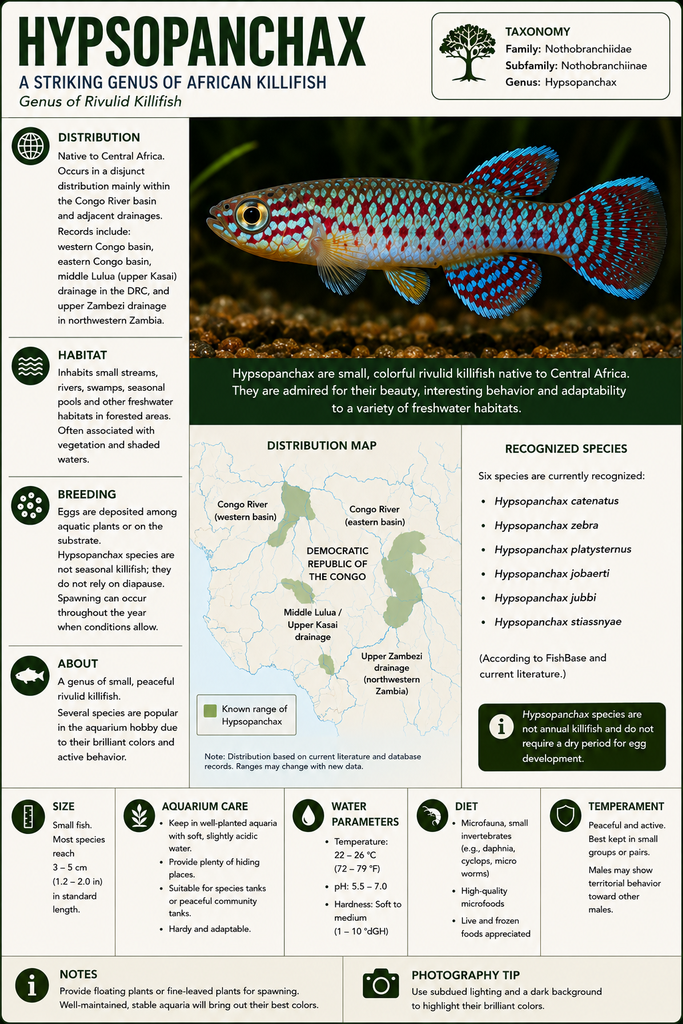
Hypsopanchax

Hypsopanchax, also known as killifish, are a fascinating group of tropical freshwater fish that capture the attention of hobbyists and researchers alike. These small fish are found in various parts of Africa, particularly in the rainforest regions. With over 120 recognized species, Hypsopanchax enthusiasts can choose from a wide array of colorful and unique specimens to keep in their aquariums.

Killifish have been popular in the aquarium hobby for many decades due to their stunning colors, intricate patterns, and interesting behavior. They are known for their ability to adapt to various water conditions, making them suitable for both beginners and experienced fish keepers. What makes them particularly captivating is their unique breeding strategy. Unlike many other fish species, they deposit their eggs in the substrate or on vegetation, which can withstand periods of dryness. This adaptation allows the eggs to survive even in temporary pools that may quickly dry up during the dry season. Once the rains return, these eggs hatch into tiny fry, restarting the life cycle.

While killifish have long been admired for their beauty, they are also increasingly valued for their scientific significance. Researchers have found that certain species of Hypsopanchax possess unique traits and adaptations that could provide valuable insights into evolutionary biology and genetic research. In particular, some killifish have the ability to enter into a state of diapause, a dormancy period during which their metabolism slows down, allowing them to survive harsh and unpredictable environments. Understanding the mechanisms behind diapause in killifish could potentially have implications for human health, as it may shed light on treatments for metabolic diseases and aging-related conditions.

One striking statistic related to killifish is their incredibly short lifespan. While most tropical freshwater fish can live for several years, many species of Hypsopanchax have an average lifespan of only 9 to 12 months. This rapid life cycle makes them excellent subjects for scientific experiments and breeding projects. Their short lifespan also means that it is essential to preserve and protect their natural habitats to ensure the survival of these magnificent creatures.

In conclusion, the world of Hypsopanchax, or killifish, is one that encompasses both aesthetic beauty and scientific significance. With their vibrant colors, unique breeding strategies, and genetic adaptations, these fish continue to captivate aquarium enthusiasts and researchers alike. By studying their remarkable traits, we gain a deeper understanding of their evolutionary biology and potentially unlock vital knowledge that could benefit numerous fields, from genetics to human health.

Look which killifish eggs are available for sale!

What are the benefits and characteristics of Hypsopanchax?

Hypsopanchax is a genus of fish that offers numerous advantages and unique features for aquarium enthusiasts. These stunning freshwater fish have vibrant colors, making them a popular choice among hobbyists. With their peaceful nature, Hypsopanchax can be easily kept with other compatible species, creating a harmonious aquatic environment. Furthermore, their small size and low-maintenance requirements make them suitable for both beginners and experienced fish keepers. Discover more about the fascinating characteristics and care requirements of Hypsopanchax in the following section.

The Answer to Hypsopanchax

Description and Habitat

Hypsopanchax is a genus of freshwater fish belonging to the Poeciliidae family, which includes popular aquarium species such as guppies and mollies. These small-sized fish are native to the rivers and streams of West Africa, particularly in countries like Sierra Leone, Liberia, and Guinea.

Known for their vibrant colors, Hypsopanchax species are highly sought after by aquarium enthusiasts. They exhibit a range of stunning hues, including shades of blue, red, orange, and yellow, making them a visually captivating addition to any tank.

In their natural habitat, Hypsopanchax fish live in slow-moving water bodies with dense vegetation. They prefer areas with submerged plants, fallen leaves, and branches, as these provide both shelter and hunting grounds for their prey.

Behavior and Diet

Hypsopanchax species are generally peaceful and can coexist with other small-sized fish in community aquariums. Males of the species are known for their territorial nature and may display aggression towards each other if not provided with enough space.

These fish are omnivorous, meaning they eat both plant matter and small invertebrates. In the wild, their diet consists of insect larvae, small crustaceans, and algae. In captivity, they can be fed a varied diet consisting of high-quality fish pellets, flakes, and frozen or live foods such as brine shrimp or daphnia.

Reproduction and Lifespan

Hypsopanchax fish are livebearers, which means they give birth to live young rather than laying eggs. The males display impressive courtship behavior, often performing elaborate dances and displaying their colorful fins to attract the females.

After mating, the females develop a gestation period of around 3-4 weeks before giving birth to fully formed fry. A single female can produce around 20-50 fry per batch, depending on the species. It is important to provide ample hiding places and vegetation for the fry to seek shelter from potential predators.

The lifespan of Hypsopanchax fish is around 2-3 years, although with proper care and a suitable environment, they can live longer.

Conservation Status

Several species of Hypsopanchax are currently at risk due to habitat destruction and pollution. Rapid urbanization and deforestation in their native range have led to a decline in their populations. Additionally, the introduction of non-native fish species has resulted in competition for resources and habitat.

Conservation efforts are underway to protect and preserve these unique fish species. Initiatives include the establishment of protected areas, promotion of sustainable aquarium trade practices, and public awareness campaigns about the importance of conserving freshwater ecosystems.

Conclusion

Hypsopanchax fish are fascinating creatures that have captivated aquarium enthusiasts with their vibrant colors and interesting behavior. Their natural beauty and enchanting courtship displays make them a popular choice for hobbyists looking to add diversity to their aquariums. However, it is crucial to remember the conservation challenges they face and work towards ensuring their continued survival in the wild.

Statistic: According to recent research, over 40% of Hypsopanchax species are currently classified as either endangered or critically endangered.

FAQs for Hypsopanchax

1. What is a Hypsopanchax?

is a small freshwater fish belonging to the family Poeciliidae. It is commonly found in rivers and streams of Western Africa.

2. What is the average size?

An adult Hypsopanchax typically grows to a size of 2-3 inches (5-8 cm).

3. How should I set up the aquarium for them?

It is recommended to provide the fish with a well-planted aquarium that mimics its natural habitat. Additionally, provide some open swimming space and ensure the water parameters are suitable for the species.

4. What water parameters are ideal for Hypsopanchax?

prefers slightly acidic to neutral water with a temperature range of 72-78°F (22-26°C). The pH level should be around 6.5-7.5, and hardness around 5-15 dGH.

5. What should I feed my Hypsopanchax?

is predominantly carnivorous. You can offer them a variety of live or frozen foods like brine shrimp, bloodworms, and small insects. Additionally, they can also accept high-quality flakes or pellets.

6. Can Hypsopanchax be kept with other fish?

Yes, Hypsopanchax can coexist with other peaceful fish species. However, avoid keeping them with larger or aggressive fish, as they may become targets due to their small size.

7. How often should I perform water changes in the tank?

Regular partial water changes of around 25-30% every 1-2 weeks are recommended for maintaining the water quality for Hypsopanchax.

8. Are Hypsopanchax susceptible to any specific diseases?

Like most fish, Hypsopanchax can be susceptible to various common fish diseases such as ich, fin rot, and parasitic infections. Maintaining good water quality, providing a balanced diet, and minimizing stress can help prevent these issues.

9. Can I breed Hypsopanchax in my aquarium?

Yes, breeding Hypsopanchax can be achieved in a well-maintained aquarium. Provide appropriate hiding places and separate breeding tanks to increase the chances of successful breeding.

10. How long do Hypsopanchax typically live?

With proper care and a suitable environment, Hypsopanchax can live for about 2-4 years.

Conclusion

In conclusion, Hypsopanchax is a fascinating genus of killifish that is known for its stunning colors and unique behaviors. These fish are found in various regions of Africa and are highly adaptable to different water conditions. One key characteristic of Hypsopanchax is their ability to undergo diapause, a state of suspended development that helps them survive in harsh environments. This adaptive trait is crucial for their survival and allows them to successfully reproduce when conditions improve.

Another important aspect of Hypsopanchax is their remarkable courtship and spawning behaviors. Males of this species are known for their elaborate displays to attract females, which involve vibrant color patterns, fin flaring, and intricate movements. The courtship rituals often take place near the surface of the water, creating a breathtaking spectacle. Moreover, Hypsopanchax exhibits a unique spawning behavior called “egg laying on the substrate.” Unlike many other fish species, Hypsopanchax does not lay eggs on plants or build nests but instead releases eggs directly onto the substrate. This behavior helps protect the eggs from potential predators and ensures a higher survival rate for the offspring.

Overall, Hypsopanchax is an intriguing genus of fish with fascinating behaviors and adaptations. Their ability to survive in harsh environments and reproduce successfully showcases their resilience and evolutionary strategies. The striking courtship displays and specialized spawning behaviors make Hypsopanchax a captivating species to study and observe in both the wild and aquarium settings.

Hypsopanchax species:

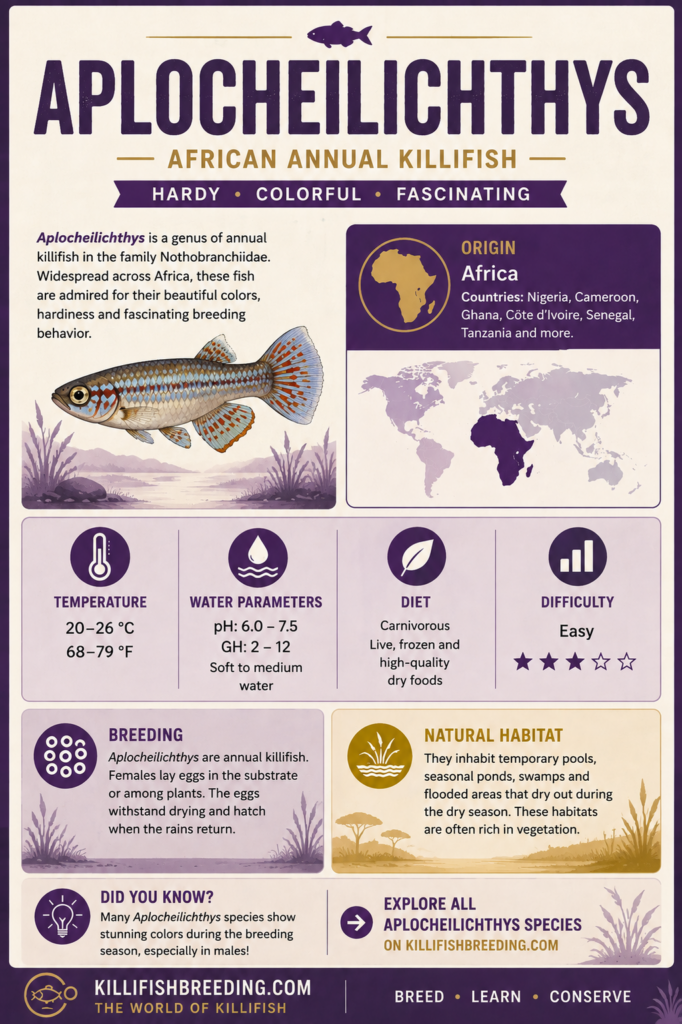
Aplocheilichthys


Aplocheilichthys is a genus of small freshwater fish belonging to the family Aplocheilichthyidae. These fish are commonly known as “aplocheilichthys” or simply “aplos” among aquarium enthusiasts. The genus Aplocheilichthys includes several species, each with its own unique characteristics and habitat preferences. In this article, we will explore the fascinating world of Aplocheilichthys, delving into their biology, behavior, care in captivity, and conservation status.

Taxonomy and Classification:

Aplocheilichthys is a genus of ray-finned fish classified under the order Cyprinodontiformes. They belong to the family Aplocheilichthyidae, which is a relatively small family of freshwater fish found primarily in Africa. The genus Aplocheilichthys comprises numerous species, and new ones continue to be described as researchers delve deeper into the diversity of these fascinating fish.

Physical Characteristics:

Aplocheilichthys species typically have slender, elongated bodies with a streamlined shape. They have a characteristic mouth with a terminal position, meaning it is located at the tip of the snout. Their fins are well-developed and often sport vibrant colors and patterns, which can vary significantly between species.

The coloration of Aplocheilichthys fish can range from subdued earthy tones to striking and vivid hues, depending on the species and their habitat. Some common colors include shades of red, blue, yellow, and green, often combined with intricate patterns of spots, stripes, or bars.

Habitat and Distribution:

Aplocheilichthys species are native to various regions across Africa, with their distribution primarily concentrated in West and Central Africa. They inhabit a range of freshwater environments, including rivers, streams, ponds, and swamps. These fish are well-adapted to a variety of habitats, which has contributed to their success in the wild.

Their preferred habitats often have dense aquatic vegetation, as Aplocheilichthys fish use these plants for shelter and protection. In the wild, they are opportunistic feeders, consuming a diet that typically includes small invertebrates, algae, and detritus.

Behavior and Reproduction:

Aplocheilichthys are known for their interesting behaviors, both in the wild and in captivity. In their natural habitat, they are generally peaceful and tend to live in small groups. They are also known to exhibit courtship and mating behaviors, with males often displaying vibrant colors and performing elaborate dances to attract females.

Reproduction in Aplocheilichthys is primarily accomplished through egg laying. The female deposits her eggs in plant substrates, and the male fertilizes them externally. These eggs are adhesive, sticking to the plants, where they are protected from potential predators. The parents may guard the eggs to ensure their safety.

Once the fry (young fish) hatch, they are often left to fend for themselves. In captivity, it is essential to provide ample hiding places and vegetation for the fry to seek shelter, as they can be vulnerable to predation.

Care in Captivity:

Aplocheilichthys species are popular among aquarium enthusiasts due to their striking colors and intriguing behaviors. Keeping these fish in a home aquarium can be a rewarding experience, but it also requires careful consideration of their specific needs.

  1. Aquarium Size: A suitable aquarium for Aplocheilichthys should be adequately sized, with a minimum tank size of 20 gallons for a small group of fish. Ensure that the tank is well-maintained with a stable temperature and water quality.
  2. Water Parameters: These fish prefer slightly acidic to neutral water conditions. The pH level should ideally be between 6.5 and 7.5, with a water temperature ranging from 72°F to 78°F (22°C to 26°C).
  3. Filtration and Water Quality: Proper filtration is crucial to maintain good water quality. Regular water changes and routine maintenance are essential to keep the aquarium environment healthy.
  4. Decor and Substrate: Aplocheilichthys fish appreciate aquariums with plenty of hiding spots and dense vegetation. Use fine gravel or sand as a substrate, and include live or artificial plants to mimic their natural habitat.
  5. Diet: In captivity, Aplocheilichthys are omnivorous and will readily accept a variety of foods, including high-quality flake food, live or frozen foods like brine shrimp, daphnia, and small insects. A varied diet helps ensure their nutritional needs are met.
  6. Compatibility: These fish are generally peaceful but can be territorial during breeding or if kept in cramped conditions. It’s essential to provide enough space and ensure compatible tankmates.
  7. Breeding: If you plan to breed Aplocheilichthys, consider providing suitable breeding conditions, including plenty of plants for egg deposition and separate breeding tanks to protect fry from adult fish.

Conservation Status:

The conservation status of Aplocheilichthys species varies, with some facing threats due to habitat destruction and pollution. Some Aplocheilichthys species have relatively small ranges and are vulnerable to habitat loss and water pollution. Therefore, it is crucial to support conservation efforts and promote responsible aquarium keeping practices, including not acquiring wild-caught specimens and avoiding the release of non-native species into the wild.

Conclusion:

Aplocheilichthys fish are captivating and colorful additions to the world of freshwater aquariums. Their striking appearance, interesting behaviors, and relatively straightforward care requirements make them popular choices among hobbyists. However, it is essential to research the specific needs of the Aplocheilichthys species you plan to keep and ensure you provide them with a suitable and well-maintained aquarium environment. Additionally, always consider the conservation status of these fish and act responsibly to protect their natural habitats and populations in the wild.

Species:

  1. Aplocheilichthys antinorii
  2. Aplocheilichthys arnoldi
  3. Aplocheilichthys bukobanus
  4. Aplocheilichthys christyi
  5. Aplocheilichthys johnstoni
  6. Aplocheilichthys katangae
  7. Aplocheilichthys kingii
  8. Aplocheilichthys lamperti
  9. Aplocheilichthys macrophthalmus
  10. Aplocheilichthys myersi
  11. Aplocheilichthys normani
  12. Aplocheilichthys ocellatus
  13. Aplocheilichthys progrediens
  14. Aplocheilichthys rubrostigma
  15. Aplocheilichthys ruhuhuensis
  16. Aplocheilichthys sjoestedti
  17. Aplocheilichthys spilauchen
  18. Aplocheilichthys spurrelli
  19. Aplocheilichthys togolensis
  20. Aplocheilichthys Uvinca
  21. Aplocheilichthys vitschumbaensis

Pronothobranchius kiyawensis

Abstract: This extensive article delves into the fascinating world of Pronothobranchius kiyawensis, an exquisite and endangered species of killifish. Through an in-depth examination of its taxonomy, physical traits, natural habitat, aquarium care, breeding behaviors, and its critical conservation status and significance, readers will gain a profound understanding of this remarkable fish and the urgent need for its preservation.

Introduction

Pronothobranchius kiyawensis, an enchanting and endangered species of killifish, has captivated the interest of aquarists and conservationists alike. This article embarks on an informative journey to unveil the mysteries surrounding this exceptional fish, including its taxonomy and classification, physical attributes, native habitat, aquarium setup and care, breeding behaviors, and the pressing issue of its conservation status and importance.

Taxonomy and Classification

Pronothobranchius kiyawensis belongs to the family Nothobranchiidae and the order Cyprinodontiformes, which encompasses a diverse array of killifish species, each distinguished by its unique characteristics. The genus Pronothobranchius comprises several species, with each one exhibiting its distinct features and distribution.

Species Name: Pronothobranchius kiyawensis

Genus: Pronothobranchius

Family: Nothobranchiidae

Order: Cyprinodontiformes

Physical Characteristics

Pronothobranchius kiyawensis boasts an array of striking physical traits that set it apart within the world of killifish:

Size: Pronothobranchius kiyawensis typically reaches a size of 3 to 5 centimeters (approximately 1.2 to 2 inches), making it a small-sized fish that is well-suited for aquariums. Males often exhibit slightly larger sizes than females.

Coloration: These fish are renowned for their vibrant and eye-catching coloration. Pronothobranchius kiyawensis is adorned with a variety of hues, including iridescent blues, fiery reds, and intricate patterns. Males tend to display more vivid colors, especially during courtship and territorial displays.

Fins: Pronothobranchius kiyawensis features elongated dorsal and anal fins that are often richly adorned with intricate patterns and vibrant colors. These fins play a significant role in courtship rituals and are a defining characteristic of this species.

Lifespan: The typical lifespan of Pronothobranchius kiyawensis is relatively short, with individuals living for approximately 12 to 18 months. This concise lifespan is a common trait among annual killifish species.

Habitat and Distribution

Pronothobranchius kiyawensis is indigenous to the ephemeral water bodies of East Africa, specifically in Kenya and Tanzania. These temporary water bodies include seasonal streams, rain-filled pools, and puddles that emerge during the rainy season and gradually dry up as the dry season progresses. This species has evolved to thrive in these ever-changing environments.

The natural habitat of Pronothobranchius kiyawensis is primarily found in the coastal regions of Kenya and Tanzania, particularly in proximity to Lake Kiyawi, after which the species is named. The surrounding areas are characterized by savannah landscapes and tropical climates, offering a home to a diverse array of aquatic and terrestrial species.

Tank Setup

When establishing the ideal tank setup for Pronothobranchius kiyawensis, it is crucial to replicate the ephemeral nature of their native habitat. Here are some key considerations:

Tank Size: A relatively small aquarium, such as a 10 to 20-gallon tank, is suitable for housing a small group of Pronothobranchius kiyawensis. This size allows for easy maintenance and observation.

Water Parameters: These fish thrive in water with temperatures ranging from 20 to 26°C (68 to 79°F) and a slightly acidic to neutral pH level of 6.5 to 7.5. The water hardness should be maintained at around 4 to 10 dGH.

Substrate: Given their natural habitat, it is advisable to use a sandy substrate in the tank. This substrate should mimic the sandy or muddy bottoms of temporary pools.

Filtration: While providing clean and well-oxygenated water is essential, a gentle filtration system is recommended to avoid disturbing the sandy substrate, as these fish are adapted to quiet, slow-moving waters.

Vegetation and Hiding Spots: Incorporating live or artificial plants, driftwood, and rock formations will offer hiding spots for the fish and create a more natural and visually appealing environment.

Lighting: Pronothobranchius kiyawensis does not have specific lighting requirements. However, providing a natural daylight cycle with moderate lighting is suitable.

Breeding caves or shelters: Adding breeding caves or shelters, such as PVC pipes or ceramic pots, can encourage breeding behaviors and protect the eggs.

Breeding

The breeding behavior of Pronothobranchius kiyawensis is as captivating as it is crucial for its conservation. As annual killifish, their lifecycle is adapted to the ephemeral nature of their habitat:

Courtship Display: Males of Pronothobranchius kiyawensis engage in impressive courtship displays to attract females. These displays often involve vibrant coloration, fin extensions, and intricate swimming patterns. Males vie for the attention of females, leading to territorial disputes.

Spawning: Once a pair forms a connection, the female will lay her eggs, typically buried within the substrate, resembling their natural behavior in ephemeral pools.

Egg Incubation: Eggs of Pronothobranchius kiyawensis require a dry period for incubation. Aquarists can collect the eggs, store them in a dry environment with controlled humidity, and then return them to the water for hatching. The length of the dry period is an essential factor in determining the sex ratio of the hatched fry.

Hatching: Once the eggs are re-submerged, the fry hatch and begin their life cycle in the water. Special care is necessary to ensure the successful transition from the dry incubation period to the aquatic environment.

Rearing Fry: Rearing the fry of Pronothobranchius kiyawensis involves providing suitable live foods, such as microworms and baby brine shrimp, to support their growth. Maintaining appropriate water conditions and nutrition is crucial for the health and survival of the fry.

Aquarium Care and Considerations

Caring for Pronothobranchius kiyawensis in the aquarium requires attention to specific considerations to ensure their well-being and longevity:

Water Quality: Maintaining clean water with stable parameters, as mentioned earlier, is paramount for the health of these fish. Regular water changes and monitoring of water parameters are essential.

Feeding: Pronothobranchius kiyawensis are carnivorous and prefer live or frozen foods such as daphnia, brine shrimp, and bloodworms. Providing a varied diet is crucial to meet their nutritional requirements.

Tank Mates: Selecting appropriate tank mates is important. Avoid housing them with aggressive or larger fish that may intimidate or harm these small killifish. Peaceful and similarly-sized species are ideal companions.

Breeding Tanks: Breeding Pronothobranchius kiyawensis may require separate breeding tanks for maintaining optimal conditions during the dry incubation period. These tanks should be equipped with suitable shelters and conditions for successful breeding.

Conservation Status and Importance

Pronothobranchius kiyawensis, like many other killifish species, faces numerous challenges in the wild that necessitate urgent conservation efforts. The significance of conserving this species extends beyond the aquarium hobby and into the broader realm of biodiversity and ecology:

Habitat Threats: The native habitat of Pronothobranchius kiyawensis is under constant threat due to factors such as habitat destruction, pollution, and climate change. The ephemeral water bodies they rely on are increasingly endangered.

Biodiversity: These killifish contribute to the overall biodiversity of their ecosystem, playing essential roles in their food web and ecosystem balance.

Scientific Research: Studying these fish in captivity can provide insights into their biology, behavior, and life history, contributing to scientific knowledge about the broader family of Nothobranchiidae.

Conservation Programs: Several organizations and aquarists have initiated breeding and conservation programs to safeguard Pronothobranchius kiyawensis and other endangered killifish species. These programs aim to maintain genetically diverse populations in captivity, which may eventually support reintroduction efforts.

Public Awareness: Raising awareness about the conservation status and ecological importance of Pronothobranchius kiyawensis is crucial. Public support can bolster efforts to protect their natural habitat and conserve their populations.

Conclusion

Pronothobranchius kiyawensis, with its mesmerizing beauty and precarious conservation status, serves as a poignant symbol of the delicate balance of life in ephemeral habitats. This remarkable species underscores the importance of preserving biodiversity and the vital role that dedicated aquarists and conservationists play in ensuring the survival of threatened species.

By delving into its taxonomy, physical traits, natural habitat, aquarium care, breeding behaviors, and the challenges it faces, we gain a profound understanding of Pronothobranchius kiyawensis and the imperative need for its conservation. As we look to the future, the continued efforts to protect and conserve this extraordinary fish species serve as a testament to our commitment to preserving the diverse and fragile tapestry of life on our planet.

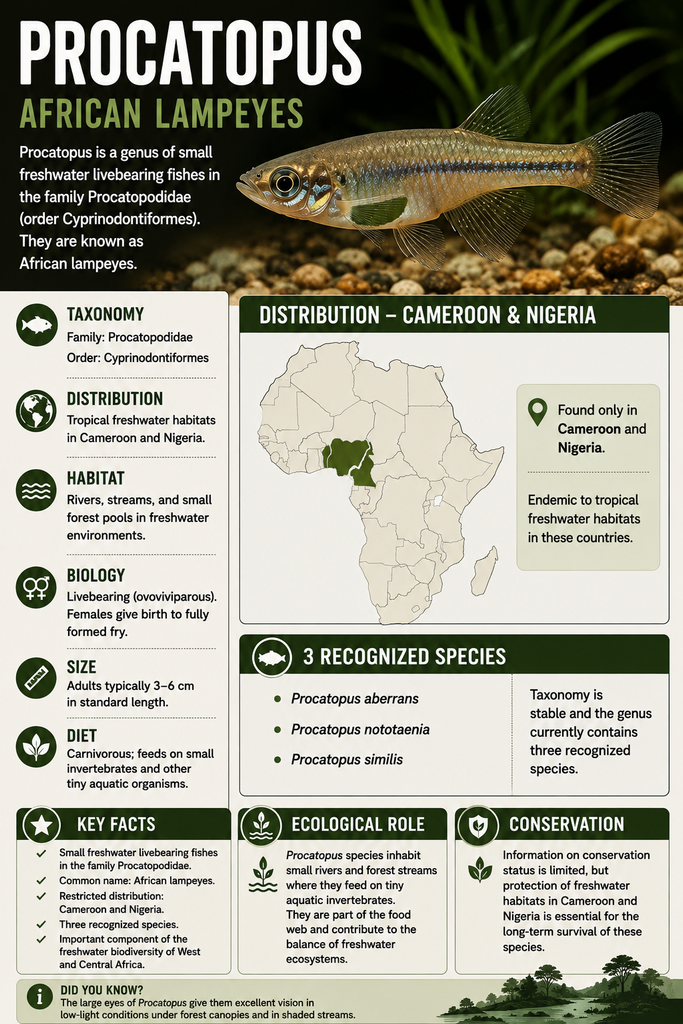
Procatopus


Procatopus, a genus of killifish, offers enthusiasts and researchers a diverse and captivating array of species. These fish are renowned for their vivid colors, unique behaviors, and fascinating biology. In this comprehensive article, we will explore Procatopus in depth, covering various aspects including their natural habitat, behavior, biology, and conservation status, as well as insights into their care and maintenance in aquariums.

Introduction

Procatopus is a genus of killifish belonging to the family Nothobranchiidae. These fish are native to West Africa and can be found in various countries, including Guinea, Sierra Leone, Liberia, Ivory Coast, Ghana, Togo, and Benin. Procatopus is appreciated by aquarists for their striking colors, intriguing behaviors, and relatively manageable care requirements.

Physical Characteristics

The physical characteristics of Procatopus species can vary, but they typically exhibit a slender, elongated body. Their colors are vibrant and can include shades of red, orange, yellow, blue, and green. Males often display more vivid colors than females and may have extended fins and other ornamental features to attract mates. The size of Procatopus species can vary, with most species reaching lengths of 3 to 5 inches (7.5 to 12.5 cm).

Behavior and Reproduction

Procatopus species are known for their interesting behaviors, particularly in the context of courtship and reproduction. Males establish territories and engage in courtship displays to attract females. These displays may involve vibrant coloration, fin extensions, and intricate dances.

The reproductive strategy of Procatopus is not as extreme as that of annual killifish, which lay their eggs in temporary pools, but it is nonetheless intriguing. These fish typically lay their eggs in plants or other submerged vegetation. Once fertilized, the eggs are often left in the care of the female, who guards and tends to them. The incubation period can vary depending on the species and environmental conditions, but it typically lasts for several weeks. After hatching, the young fish are often cared for by the female before they become independent.

Habitat and Distribution

Procatopus species are primarily found in West Africa, inhabiting a variety of freshwater environments. They are often encountered in rivers, streams, and small ponds with slow to moderate water flow. Their distribution can be quite localized, with some species restricted to specific regions within a single country.

The natural habitat of Procatopus fish is characterized by densely vegetated areas, submerged wood, and a mixture of sand and leaf litter on the substrate. This diverse environment provides ample hiding spots, breeding grounds, and foraging opportunities for these fish.

Conservation Status

The conservation status of Procatopus species varies depending on the specific species and its range. Some species may face threats due to habitat destruction, pollution, and overcollection for the aquarium trade, while others may have relatively stable populations.

Conservation efforts for Procatopus and other killifish species are essential to ensure their long-term survival. Habitat preservation, sustainable collection practices, and research into the biology and distribution of these fish are all crucial steps in their conservation.

Care in Aquariums

Procatopus fish are popular among aquarium enthusiasts due to their striking colors and relatively manageable care requirements. Here are some key considerations for their care in aquariums:

  1. Tank Size: A tank with a capacity of at least 20-30 gallons is recommended for keeping Procatopus species. A larger tank allows for better water quality management and provides ample swimming space.
  2. Water Parameters: Procatopus fish prefer soft to moderately hard water with a pH range of 6.0 to 7.5. Maintain a water temperature between 72°F and 78°F (22°C to 26°C).
  3. Substrate and Decor: Mimic their natural habitat by using fine sand or gravel as substrate. Provide plenty of plants, driftwood, and hiding places. Live plants can help maintain water quality.
  4. Feeding: These fish are primarily carnivorous and will accept a variety of foods, including high-quality flakes, pellets, live or frozen foods such as brine shrimp, bloodworms, and small insects. Offer a varied diet to ensure their nutritional needs are met.
  5. Tank Mates: Procatopus species are generally peaceful, but tank mates should be chosen carefully. Avoid keeping them with aggressive or fin-nipping species. Suitable tank mates can include other peaceful fish of similar size.
  6. Water Quality: Regular water changes are crucial to maintain water quality. Test the water parameters regularly and ensure good filtration and circulation in the tank.
  7. Breeding: If you wish to breed Procatopus in captivity, a separate breeding tank with suitable plants for egg deposition is necessary. The presence of hiding places and floating plants can help protect the eggs and fry.
  8. Selective Breeding: Many Procatopus species exhibit remarkable color variations, and some hobbyists engage in selective breeding to enhance and stabilize these colors.
Conclusion

Procatopus fish offer a captivating and rewarding experience for aquarium enthusiasts. Their vibrant colors, intriguing behaviors, and relatively manageable care requirements make them an attractive addition to the world of aquarium keeping. To provide them with the best care, it’s crucial to understand and replicate their natural habitat conditions in the aquarium. Additionally, conservation efforts are vital to ensure the preservation of Procatopus species in the wild and the continued availability of these remarkable fish for aquarists. By creating suitable environments and practicing responsible aquarium keeping, enthusiasts can enjoy the beauty and charm of Procatopus fish in their own tanks.

Diapteron


Diapteron: A Fascinating Genus of African Cichlids

Introduction:

Diapteron is a genus of cichlid fish that holds a special place among aquarists and ichthyologists alike due to its unique characteristics and captivating behavior. These freshwater fish are native to the African continent, specifically found in Lake Tanganyika, one of the Great African Rift Lakes. In this comprehensive article, we will delve into the world of Diapteron cichlids, exploring their natural habitat, physical characteristics, behavior, breeding, and their role in the aquarium hobby.

Taxonomy and Classification:

The genus Diapteron is part of the Cichlidae family, which is one of the largest families of freshwater fishes, known for their remarkable diversity and adaptability. Within the genus Diapteron, there are several recognized species, each with its own unique traits and characteristics. Some of the most well-known species within this genus include Diapteron auratus, Diapteron georgiae, and Diapteron cyanostictum, among others.

Habitat and Distribution:

Diapteron cichlids are native to Lake Tanganyika, which is one of the largest and oldest freshwater lakes in the world. Lake Tanganyika is situated in East Africa, bordered by Burundi, Tanzania, Zambia, and the Democratic Republic of Congo. This lake is renowned for its exceptional biodiversity, housing numerous species of cichlids, many of which are found nowhere else in the world.

Lake Tanganyika is characterized by its clear, deep waters and a unique geological history that has contributed to its rich and diverse aquatic life. Diapteron cichlids, like many other species in the lake, have adapted to this environment, which includes rocky substrates, sandy bottoms, and various aquatic plants.

Physical Characteristics:

Diapteron cichlids exhibit a range of physical characteristics that make them intriguing and desirable for aquarium enthusiasts. Here are some key traits commonly associated with these fish:

  1. Size: Diapteron cichlids vary in size depending on the species, with some reaching lengths of up to 15-20 centimeters (6-8 inches) in adulthood.
  2. Coloration: The coloration of Diapteron cichlids is diverse and often stunning. They can display a range of colors, including shades of yellow, blue, green, and even red. The coloration can vary between sexes, with males typically exhibiting more vibrant colors to attract females.
  3. Body Shape: Diapteron cichlids typically have elongated bodies, adapted for swimming among the rocky crevices and caves of Lake Tanganyika. Their bodies are streamlined, which helps them navigate their habitat efficiently.
Behavior:

The behavior of Diapteron is another aspect that makes them captivating to both aquarium enthusiasts and researchers. Here are some noteworthy behavioral characteristics:

  1. Territorial Nature: Diapteron cichlids are known for their territorial behavior, especially during the breeding season. In the wild, they establish territories among rocky crevices and defend them vigorously against intruders.
  2. Mating and Courtship: Courtship rituals among Diapteron are complex and often involve elaborate displays by the males. Males showcase their vibrant colors and engage in ritualistic dances to attract females. Once a pair has formed, they engage in cooperative parenting, with both parents guarding and tending to their eggs and fry.
  3. Feeding Behavior: In their natural habitat, Diapteron cichlids are omnivorous, feeding on a diet that includes small invertebrates, zooplankton, and algae. In captivity, they readily accept a variety of prepared foods, such as high-quality cichlid pellets, live or frozen foods, and even some vegetable matter.
Breeding:

Breeding Diapteron cichlids can be a rewarding experience for aquarists interested in maintaining and conserving these unique fish. Here are key aspects of their breeding behavior:

  1. Pair Formation: Diapteron cichlids typically form monogamous pairs for breeding. Once a pair has formed, they select a suitable location within their territory to lay their eggs.
  2. Egg Laying and Parental Care: The female deposits her eggs in a carefully prepared nest, often in a sheltered spot among rocks or in a cave. Both parents take an active role in guarding and tending to the eggs and later, the fry. They protect the nest from potential threats and fan the eggs to provide oxygen.
  3. Fry Rearing: After hatching, the fry are carefully guarded by the parents. They are initially fed small zooplankton and later transition to more solid foods. Successful breeding of Diapteron cichlids can be challenging due to their specific care requirements, but it is achievable with proper preparation and dedication.
Aquarium Care and Maintenance:

For aquarists interested in keeping Diapteron cichlids, it’s essential to provide a suitable environment that mimics their natural habitat. Here are some important considerations:

  1. Tank Size: Diapteron cichlids can be kept in aquariums of various sizes, depending on the species and the number of fish you plan to keep. A tank with a capacity of at least 30 gallons is recommended for a small community of these cichlids.
  2. Substrate: A sandy or fine gravel substrate is ideal for Diapteron cichlids. This substrate mimics the sandy bottoms of Lake Tanganyika and allows them to engage in natural behaviors like digging and sifting.
  3. Rockwork and Caves: Provide ample hiding places and shelter in the form of rocks, caves, and crevices. Diapteron cichlids appreciate these structures for territorial purposes and as potential nesting sites.
  4. Water Quality: Maintain good water quality with a pH level in the range of 7.8 to 9.0 and a water temperature between 75 to 82°F (24 to 28°C). Regular water changes are essential to keep the environment clean and stable.
  5. Tankmates: Carefully select tankmates that are compatible with Diapteron cichlids. While they can coexist with other Lake Tanganyika cichlids, avoid mixing them with aggressive or overly territorial species that may disrupt their territories.
Conservation Status:

Cichlids of Lake Tanganyika, including species in the Diapteron genus, face conservation challenges due to habitat degradation and overfishing. As the human population around the lake grows, so does the demand for its resources, leading to increased pressures on its aquatic ecosystems.

Efforts are underway to conserve the unique biodiversity of Lake Tanganyika, including the cichlid species. These efforts involve habitat preservation, sustainable fishing practices, and research aimed at better understanding and protecting the lake’s diverse fish fauna.

Conclusion:

Diapteron cichlids, native to Lake Tanganyika in Africa, are captivating fish that have earned a special place in the hearts of aquarium enthusiasts and researchers alike. Their vibrant colors, unique behaviors, and complex breeding rituals make them fascinating subjects for study and observation. While maintaining and breeding Diapteron cichlids can be challenging, the rewards of witnessing their natural behaviors and contributing to their conservation make it a worthwhile endeavor. As we continue to learn more about these remarkable fish, we gain a deeper appreciation for the incredible diversity of life found in the world’s freshwater ecosystems.

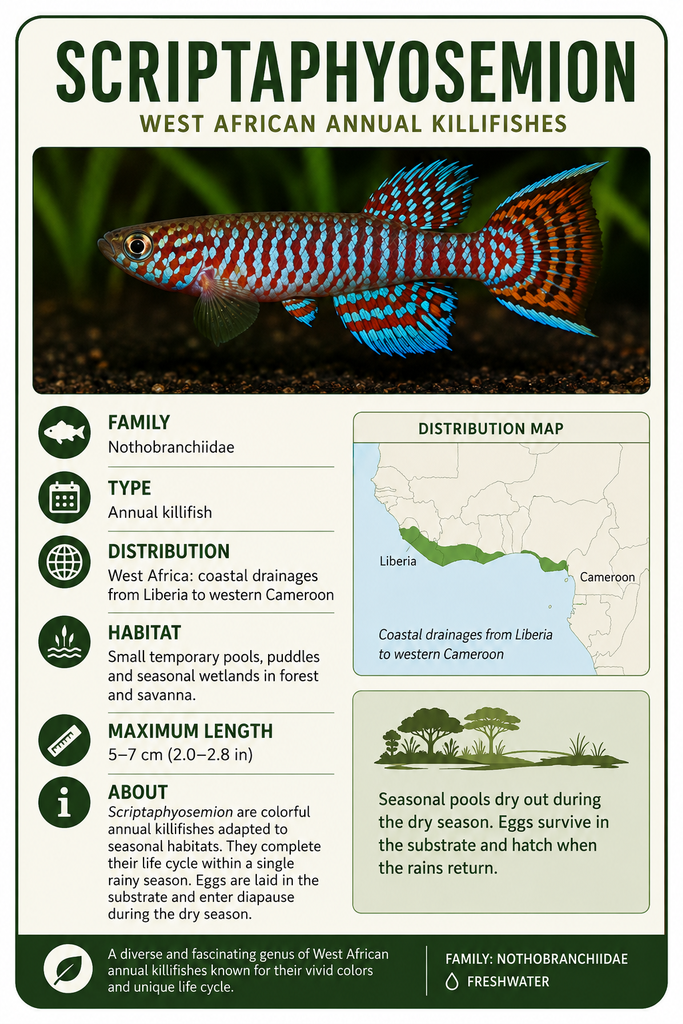
Scriptaphyosemion (Roloffia)


Scriptaphyosemion: Exploring the Enigmatic World of These Dwarf Killifish

Scriptaphyosemion, a genus of small, colorful killifish, is celebrated among fish enthusiasts for its captivating beauty and fascinating behavior. These charming little fish, often referred to as “dwarf killifish,” belong to the family Nothobranchiidae and are known for their vibrant colors, unique courtship rituals, and their ability to thrive in relatively small aquatic environments. In this comprehensive 2000-word article, we’ll dive into the captivating world of Scriptaphyosemion, exploring their natural habitat, physical characteristics, behavior, breeding strategies, and care in captivity.

Introduction to Scriptaphyosemion:

Scriptaphyosemion is a genus of freshwater fish that is primarily found in the tropical and subtropical regions of Africa. These small fish are known for their striking colors, elaborate breeding behaviors, and adaptability to a wide range of aquatic environments. They are often kept by aquarists and fish enthusiasts due to their beauty and intriguing behaviors.

The genus Scriptaphyosemion includes numerous species, each with its unique characteristics and coloration. These species are often found in regions that experience distinct wet and dry seasons, which has influenced their breeding strategies and behaviors. Scriptaphyosemion fish have evolved to thrive in small temporary pools and streams, making them well-suited for life in confined aquariums.

Natural Habitat:

The natural range of Scriptaphyosemion species extends across several African countries, including Cameroon, Nigeria, Gabon, and Equatorial Guinea. These fish inhabit various freshwater bodies, such as streams, creeks, swamps, and temporary rainforest pools. Their specific habitat preferences can vary by species and location, but they are typically associated with densely vegetated, slow-moving waters. Here is a brief overview of their natural habitat:

  1. Cameroon: Cameroon is a significant part of the native range of Scriptaphyosemion species. These fish can be found in various regions of the country, including the dense tropical rainforests.
  2. Nigeria: Scriptaphyosemion are also present in Nigeria, particularly in the southern and western regions. In Nigeria, they inhabit lush, humid environments.
  3. Gabon: Some Scriptaphyosemion species can be found in Gabon, which is located to the west of Cameroon. In Gabon, these fish reside in the dense forests and aquatic habitats.
  4. Equatorial Guinea: In Equatorial Guinea, Scriptaphyosemion can be spotted in a range of aquatic environments, including rainforest streams and marshes.

Their natural habitats are characterized by warm, humid conditions and regular rainfall. The cyclic nature of wet and dry seasons in these regions has influenced the life history strategies and reproductive behaviors of Scriptaphyosemion species.

Physical Characteristics:

Scriptaphyosemion fish are renowned for their vibrant colors and striking physical characteristics. Here are some key features of these captivating fish:

  1. Size: These fish are relatively small, with adults typically measuring between 1.5 to 2.5 inches (3.8 to 6.4 cm) in length.
  2. Coloration: One of the most distinctive features of Scriptaphyosemion is their vivid and diverse coloration. They display a wide range of colors, including shades of blue, red, yellow, green, and even metallic hues. Their colors often feature intricate patterns, making them visually captivating.
  3. Fin Structure: Scriptaphyosemion fish have a typical fin structure for killifish, including two dorsal fins and a single anal fin. Each of these fins may feature its unique coloration and patterns.
  4. Caudal Fin: The caudal fin, or tail fin, is well-developed and typically forked. The upper lobe is often slightly larger than the lower lobe, contributing to their agile swimming abilities.
  5. Elongated Body: The body of Scriptaphyosemion is elongated and streamlined, which is well-suited for navigating their natural habitats in streams and small pools.
  6. Variable Coloration: These fish exhibit significant individual and population variability in coloration. Different species may showcase distinct color patterns, which adds to the allure for fish enthusiasts.
Behavior:

Scriptaphyosemion fish display a range of interesting behaviors, especially concerning their breeding and territorial disputes. Here are some of their behavioral characteristics:

  1. Territorial Nature: Male Scriptaphyosemion fish are known for their territorial behavior. They often establish and defend territories near the water’s edge. These territories serve as prime locations for attracting females and engaging in courtship displays.
  2. Breeding Displays: During the breeding season, males display their striking colors and engage in elaborate courtship rituals. These displays can include swimming in front of the female, showing off their vibrant colors, and performing graceful movements to capture her attention.
  3. Predatory Behavior: Scriptaphyosemion are opportunistic feeders and readily consume small aquatic invertebrates, including insects and aquatic crustaceans.
  4. Nocturnal Activity: These fish are often more active during dawn and dusk, which is a common trait among many killifish species.
  5. Camouflage and Ambush Predation: They have adapted to lurking in aquatic vegetation and among submerged debris. This behavior allows them to surprise and capture prey that swims too close.
  6. Social Behavior: The degree of social behavior can vary among individuals and populations. While some may be more solitary, others might form loose shoals or groups during non-breeding periods.
Breeding and Reproduction:

The breeding behavior of Scriptaphyosemion fish is one of the most captivating aspects of their biology. Here is a detailed overview of their reproductive process:

  1. Territorial Displays: As the breeding season approaches, male Scriptaphyosemion fish become more territorial and establish small territories near the water’s edge. These territories serve as prime locations for attracting females and engaging in courtship displays.
  2. Courtship Rituals: When a female enters their territory, the male engages in courtship displays. These displays can include swimming in front of the female, showing off their vibrant colors, and performing graceful movements to capture her attention.
  3. Egg-Laying: After successful courtship, the female will lay her eggs. In the wild, these fish often scatter their eggs among aquatic plants or other suitable structures. This behavior is intended to keep the eggs safe from potential threats.
  4. Male Fertilization: Male Scriptaphyosemion fish will quickly follow the female and fertilize the eggs. The presence of the male during egg-laying is essential for successful fertilization.
  5. Parental Care: In some populations, both males and females may exhibit parental care. This can involve guarding the eggs from potential threats or predators. The degree of parental care can vary depending on environmental conditions.
  6. Incubation Period: The incubation period for the eggs varies depending on temperature and environmental factors. Typically, it ranges from a few weeks to a couple of months.
  7. Hatching and Fry: When the eggs hatch, tiny fry emerge. These fry are generally self-sufficient and start feeding on small aquatic invertebrates and microorganisms present in their environment.
  8. Survival Challenges: The fry face various challenges, including predation from other fish and invertebrates. Not all fry will survive to adulthood, which is a common theme among many fish species.
  9. Short Lifespan: Like many killifish species, Scriptaphyosemion fish have a relatively short lifespan, often living for about a year or slightly longer.
In Captivity:

Keeping Scriptaphyosemion fish in captivity can be a rewarding experience, but there are important considerations for their care:

  1. Aquarium Size: These fish do not require a large aquarium, making them suitable for smaller setups. A 10 to 20-gallon tank is often sufficient for a small group of Scriptaphyosemion.
  2. Water Parameters: Maintain a tropical freshwater setup with temperatures between 72°F and 78°F (22°C to 26°C). Ensure that the water is clean and well-filtered.
  3. Aquarium Decor: Provide plenty of hiding places, such as aquatic plants and driftwood, as well as a sandy or fine-gravel substrate that mimics their natural habitat.
  4. Feeding: Scriptaphyosemion fish are opportunistic feeders and will accept a variety of live and frozen foods, including small insects, daphnia, brine shrimp, and high-quality flake or pellet foods.
  5. Compatibility: When keeping multiple individuals, monitor them closely, as males can become territorial and may display aggression. Provide ample hiding spots to minimize conflicts.
  6. Breeding: Breeding these fish in captivity can be a rewarding experience. Simulate their natural conditions, including temperature fluctuations and a breeding tank with plenty of plants and hiding spots. Remember to separate the adults from the fry to prevent predation.
  7. Water Quality: Regular water changes and water testing are essential to maintain stable water parameters, as they are sensitive to poor water quality.
  8. Tankmates: Carefully select tankmates that are compatible with Scriptaphyosemion fish. Avoid larger, aggressive fish that might pose a threat to them.
  9. Disease Prevention: Monitor the health of your fish and ensure that they are not stressed, as stress can make them more susceptible to diseases. Quarantine new fish before introducing them to the main tank.
Conservation and Threats:

The conservation status of Scriptaphyosemion species is not well-documented, but they are generally not considered endangered. However, they do face threats from habitat destruction and pollution in their natural range, which can impact their populations. It is essential to support responsible collection practices and the preservation of their natural habitats to ensure their long-term survival.

Conclusion:

Scriptaphyosemion, the dwarf killifish, is a captivating genus of fish that has charmed aquarists and fish enthusiasts with its vibrant colors, unique breeding behaviors, and intriguing adaptation to various aquatic environments. Their adaptability to small temporary pools and streams in the tropical and subtropical regions of Africa makes them an interesting addition to home aquariums. As with any fish species, it’s crucial to understand their specific care requirements and provide them with the right conditions to thrive. By appreciating and respecting the natural habitats of Scriptaphyosemion, we can contribute to the conservation of these remarkable fish and ensure that they continue to enchant future generations of fishkeepers.

Pachypanchax


Pachypanchax is a genus of small freshwater fish known for their vibrant colors and interesting behaviors. These fish belong to the family Aplocheilidae and are primarily found in Madagascar and nearby islands in the Indian Ocean. The genus Pachypanchax comprises several species, each with its unique characteristics and distributions.

Taxonomy and Classification:

Pachypanchax is a genus of fish belonging to the family Aplocheilidae, which is part of the order Cyprinodontiformes. The family Aplocheilidae includes various small freshwater fish species found in Africa, Madagascar, and some Indian Ocean islands. The genus Pachypanchax is specific to the region of Madagascar and nearby islands.

Physical Characteristics:

Pachypanchax species exhibit a range of physical characteristics, with variations between species and populations. However, there are some general features that are common among them:

  1. Size: Pachypanchax species are relatively small, with most individuals reaching lengths of 4 to 8 centimeters (approximately 1.6 to 3.1 inches). Their small size makes them suitable for keeping in aquariums.
  2. Coloration: These fish are known for their vibrant and diverse colors, which can include shades of blue, green, red, yellow, and black. The exact coloration can vary significantly between species and even among individuals.
  3. Body Shape: Pachypanchax typically have elongated bodies with a streamlined shape, allowing them to navigate through their aquatic habitats with ease.
  4. Sexual Dimorphism: In some species, males and females may exhibit differences in coloration and fin morphology, particularly during the breeding season.
Habitat and Distribution:

Pachypanchax species are primarily found in Madagascar and nearby islands in the Indian Ocean. They inhabit a variety of freshwater habitats, including streams, rivers, ponds, marshes, and rice paddies. These adaptable fish have also colonized different environments, including urban areas, where they can be found in drainage ditches and small water bodies.

Their ability to thrive in diverse habitats and tolerate varying water conditions contributes to their success as a group.

Behavior:

The behavior of Pachypanchax species is influenced by their habitat and social interactions:

  1. Feeding: Pachypanchax are omnivorous and primarily feed on small aquatic invertebrates, insects, algae, and detritus. They have keen vision and use quick movements to capture prey in their environment.
  2. Schooling: In the wild, these fish often form schools, which provides protection against predators and helps them find food more efficiently.
  3. Territorial Behavior: During the breeding season, males may become territorial and engage in aggressive interactions with other males to establish and defend a breeding territory.
Reproduction:

Pachypanchax species employ a unique mode of reproduction known as oviparous reproduction, which involves the following steps:

  1. Courtship: Courtship behaviors vary between species but often involve male displays, such as fin spreading, circling, and zigzag swimming, to attract females.
  2. Egg Deposition: Females release adhesive eggs that attach to aquatic vegetation or substrate. The number of eggs produced can vary among species and individuals.
  3. Fertilization: Males release sperm to fertilize the eggs externally. This external fertilization process typically occurs near the egg deposition site.
  4. Parental Care: In some species, males may provide some level of parental care, such as guarding the eggs and young fry. However, the extent of parental care varies among species.
  5. Rapid Development: Pachypanchax eggs hatch relatively quickly, and the fry are often independent from an early age.
Role in Scientific Research:

Pachypanchax species are of interest in scientific research for several reasons:

  1. Conservation Biology: Given their restricted distributions, some Pachypanchax species are of conservation concern. They serve as important study subjects for researchers working on the conservation and protection of freshwater ecosystems in Madagascar and nearby islands.
  2. Biodiversity Studies: The diverse species within the genus Pachypanchax contribute to the overall biodiversity of Madagascar and surrounding regions, making them valuable subjects for biodiversity and evolutionary studies.
  3. Aquaculture Potential: Some species of Pachypanchax may have potential for small-scale aquaculture, providing a source of income and food security for local communities.
Presence in the Aquarium Hobby:

Several Pachypanchax species are popular among aquarium enthusiasts due to their vibrant colors and adaptability to aquarium conditions. When keeping Pachypanchax species in an aquarium, here are some key considerations:

  1. Tank Size: Depending on the species, a small aquarium with a capacity of at least 10 gallons may be suitable for a small group of Pachypanchax.
  2. Water Parameters: Pachypanchax are adaptable but generally prefer slightly alkaline to neutral water with a pH range of 6.5 to 7.5. The water temperature should be maintained between 70°F and 75°F (21°C to 24°C).
  3. Habitat Setup: Create a well-planted aquarium with hiding places and suitable substrate. Provide adequate filtration and regular water changes to maintain water quality.
  4. Diet: Offer a varied diet that includes high-quality flakes, pellets, live or frozen foods such as daphnia and brine shrimp, and occasional vegetable matter.
  5. Compatibility: Pachypanchax are generally peaceful and can be kept with other small, non-aggressive fish species. Avoid keeping them with larger or aggressive tankmates.

In conclusion, Pachypanchax, the colorful and diverse group of freshwater fish native to Madagascar and nearby islands, are captivating subjects of study and a popular choice among aquarium enthusiasts. Their adaptability, vibrant colors, and significance in scientific research make them fascinating and valuable in both their natural habitats and captivity. Understanding their biology, natural behaviors, and care requirements is essential for their well-being and conservation.

Lamprichthys


Lamprichthys is a genus of freshwater fish that belongs to the family Poeciliidae. These fish are commonly referred to as lampeyes due to their distinctive, bright, and reflective eyes. The genus is known for its diverse species, which are primarily found in Africa, particularly in the Great Lakes region. In this article, we will explore the characteristics, habitat, behavior, and conservation status of Lamprichthys fish.

Taxonomy and Classification:

Lamprichthys is a genus within the family Poeciliidae, which is commonly known as livebearers or livebearing fish. This family includes various species of fish known for their unique reproductive strategy of giving birth to live offspring, as opposed to laying eggs. The genus is part of the larger order Cyprinodontiformes, which comprises numerous other fish families.

Species Diversity:

The Lamprichthys genus is known for its diversity of species, with many different species having been identified and described. Some of the most well-known species include:

  1. Lamprichthys tanganicanus: This species is often found in Lake Tanganyika, one of Africa’s Great Rift Lakes. It is known for its striking coloration, which can vary from bright orange to yellow. Lamprichthys tanganicanus is a popular choice among aquarium enthusiasts due to its vibrant appearance.
  2. Lamprichthys australis: Native to Lake Malawi, Lamprichthys australis is another species within the genus. It exhibits sexual dimorphism, with males displaying more vibrant colors and elongated fins compared to females.
  3. Lamprichthys tenuis: This species is found in Lake Victoria and its surrounding waters. It is characterized by its slender body shape and relatively plain coloration compared to some other Lamprichthys species.
  4. Lamprichthys meleagris: Native to Lake Victoria, Lamprichthys meleagris is known for its distinct spotted pattern. The males of this species are particularly striking, with a combination of iridescent blue and yellow colors.
Physical Characteristics:

Lamprichthys species exhibit a range of physical characteristics, but there are some commonalities among them. These include:

  • Lampeye: The most characteristic feature is their large and reflective eyes, which give them their common name, lampeye.
  • Coloration: They are known for their vibrant and diverse coloration, which varies from species to species. Many display iridescent colors and patterns, making them visually striking.
  • Size: The size can vary, but they are generally small to medium-sized fish. They typically range from a few centimeters to around 10 centimeters in length, depending on the species.
  • Fin Characteristics: These fish often have distinct fin shapes and sizes, with males typically having more elongated fins compared to females. These fins can also be colorful and adorned with patterns.
Habitat and Distribution:

Lamprichthys fish are primarily found in the freshwater lakes and rivers of Africa, with a focus on the Great Lakes region. Some of the specific lakes where Lamprichthys species are known to inhabit include:

  • Lake Tanganyika: Several Lamprichthys species, such as Lamprichthys tanganicanus, are found in this large, ancient lake in East Africa.
  • Lake Malawi: Lamprichthys australis is among the species that call Lake Malawi home.
  • Lake Victoria: Lamprichthys meleagris and Lamprichthys tenuis are examples of species found in Lake Victoria.

These fish often inhabit various aquatic environments within these lakes, including rocky shores, sandy bottoms, and submerged vegetation.

Diet and Feeding Behavior:

They are omnivorous, meaning they have a diverse diet that includes both plant and animal matter. In their natural habitat, they feed on a variety of small aquatic organisms, such as zooplankton, algae, and small invertebrates. In captivity, they can be fed a balanced diet consisting of high-quality flake food, pellets, live or frozen food, and vegetable matter to ensure their nutritional needs are met.

Reproductive Strategy:

One of the most fascinating aspects is their reproductive strategy. Like other members of the Poeciliidae family, Lamprichthys are livebearers. This means that instead of laying eggs, females give birth to live, fully developed offspring.

Mating typically occurs when males display their vibrant colors and fin displays to attract females. After mating, the females undergo a gestation period during which the embryos develop within their bodies. Once the embryos are fully developed, the female gives birth to live fry.

This reproductive strategy provides several advantages, including increased survival rates for offspring since they are born in a more advanced state and have a better chance of escaping predators.

Conservation Status:

The conservation status of these species varies depending on the specific species and their respective habitats. Some Lamprichthys species are not currently assessed, while others may be of conservation concern due to habitat degradation, pollution, and introduced species in their native environments.

Conservation efforts in the Great Lakes region of Africa are crucial to preserving the unique biodiversity of these ecosystems, including Lamprichthys fish. Efforts to protect and restore their natural habitats, manage introduced species, and promote sustainable fishing practices are essential for the long-term survival of these species.

Conclusion:

Lamprichthys fish are a fascinating group of freshwater fish known for their striking appearance, unique reproductive strategy, and presence in the Great Lakes of Africa. With their vibrant colors, distinctive eyes, and varied species, they have captured the interest of aquarium enthusiasts and researchers alike. However, the conservation of Lamprichthys species is a growing concern, emphasizing the need for continued efforts to protect their natural habitats and ensure their survival for future generations to appreciate and study.

Fundulosoma

Fundulosoma is a diverse and captivating genus of freshwater fish belonging to the family Nothobranchiidae, which is part of the order Cyprinodontiformes. This genus comprises several species of killifish that are known for their vibrant colors, unique behaviors, and adaptability to various aquatic environments. Native to tropical and subtropical regions of Africa, Fundulosoma species have become prized finds for aquarium enthusiasts and aquarists worldwide. In this comprehensive essay, we will embark on a journey to explore the taxonomy, habitat, behavior, reproduction, care, and conservation of Fundulosoma killifish, shedding light on the significance of this genus in the world of ornamental fishkeeping and aquatic biology.

Taxonomy and Classification

Fundulosoma species belong to the family Nothobranchiidae within the order Cyprinodontiformes. Taxonomically, their classification can be summarized as follows:

  • Kingdom: Animalia
  • Phylum: Chordata
  • Class: Actinopterygii
  • Order: Cyprinodontiformes
  • Family: Nothobranchiidae
  • Genus: Fundulosoma

Within the genus Fundulosoma, there are several recognized species, each with its unique characteristics and distribution. These species have contributed to the fascination of aquarists and researchers alike, offering valuable insights into the diverse world of killifish.

Habitat and Distribution

Fundulosoma species are primarily found in freshwater habitats across tropical and subtropical regions of Africa. Their distribution spans multiple countries, including Nigeria, Cameroon, and Equatorial Guinea. These fish are adaptable to a range of aquatic environments, including slow-moving streams, small rivers, swamps, and seasonal puddles or ponds.

In their natural habitats, Fundulosoma species often inhabit the marginal areas of water bodies, seeking refuge among aquatic plants, submerged roots, and leaf litter. Their ability to thrive in various water conditions and habitats has contributed to their survival and their popularity in the aquarium trade.

Physical Characteristics

Fundulosoma species are celebrated for their vibrant colors and unique physical features. While there can be variations among individual fish and species, some common characteristics include:

  • Size: Fundulosoma species are relatively small, with adult lengths typically ranging from 4 to 6 centimeters (approximately 1.5 to 2.5 inches).
  • Coloration: These fish exhibit a striking combination of colors, with males often displaying bright shades of blue, red, yellow, and green on their fins and bodies. Females tend to have more subdued colors.
  • Body Shape: They possess an elongated, slightly flattened body shape, which is typical of killifish species. Their dorsal and anal fins may be elongated, adorned with intricate patterns and extensions.
  • Facial Features: Fundulosoma species have relatively small mouths adapted for carnivorous feeding habits. Their eyes are well-developed, allowing them to detect prey and navigate their complex habitats.
  • Fins: These fish have well-developed dorsal, anal, and caudal fins, which contribute to their agility and swimming abilities. Their pelvic and pectoral fins are also prominent.
  • Markings: Males often display distinctive markings on their bodies and fins, which are used for species recognition and courtship displays.
Behavior and Feeding

Fundulosoma species exhibit intriguing behaviors and feeding habits that reflect their adaptations to their natural habitats. Here are some key aspects of their behavior:

Territorial Behavior: Like many other killifish species, Fundulosoma species can be territorial, especially during the breeding season. Males often establish and defend territories, which they use to attract females and engage in courtship displays.

Aggression: While they can be kept in community aquariums, these fish are known for their territorial and sometimes aggressive behavior, especially when breeding or defending their territory. Care should be taken when selecting tank mates to avoid excessive aggression.

Feeding Habits: Fundulosoma species are carnivorous and primarily feed on small invertebrates, insects, and other aquatic organisms in their natural habitats. In captivity, they readily accept a diet of high-quality pellet or flake foods supplemented with live or frozen prey such as brine shrimp, daphnia, and bloodworms.

Social Structure: In the wild, these fish may form loose social groups or schools, particularly when foraging for food. In captivity, their social dynamics can vary based on the tank setup and the presence of other fish.

Reproductive Strategies

Fundulosoma species are known for their fascinating reproductive behaviors and unique adaptations to their dynamic habitats. Here are some common aspects of their reproductive strategies:

Courtship Displays: During the breeding season, males perform elaborate courtship displays to attract females. These displays often involve fin extensions, vibrant colors, and intricate body movements.

Egg Deposition: After successful courtship, the female lays her eggs among the vegetation or substrate, often in shallow waters. The eggs are adhesive and can stick to plants or other surfaces.

Incubation: Unlike many other fish species, Fundulosoma species do not provide parental care. Instead, the eggs are left to develop and hatch on their own, relying on the surrounding environment.

Adaptations to Seasonal Habitats: One of the most remarkable aspects of their reproductive strategy is their adaptation to seasonal habitats. In the wild, some populations of Fundulosoma species lay their eggs in areas that become temporarily flooded during the rainy season. The eggs remain dormant until the habitat floods again, triggering hatching.

Care and Maintenance in Aquariums

Keeping Fundulosoma species in aquariums can be a rewarding experience, but it requires careful consideration of their specific needs. Here are some key points to keep in mind:

Tank Size: Depending on the species, a small group of Fundulosoma can be comfortably housed in a 10 to 20-gallon aquarium.

Decor: Provide plenty of hiding places, such as caves, plants, driftwood, and leaf litter, to create territories and reduce aggression. Dense vegetation and floating plants can simulate their natural habitat.

Water Parameters: Fundulosoma species thrive in slightly acidic to neutral water conditions, with a pH range of 6.0 to 7.5. Maintain a temperature between 72°F to 78°F (22°C to 26°C).

Diet: Offer a varied diet consisting of high-quality pellets or flakes, supplemented with live or frozen foods like brine shrimp, daphnia, and bloodworms. Include some vegetable matter, such as spirulina flakes or blanched vegetables, in their diet.

Compatibility: Be cautious when choosing tank mates to prevent excessive aggression. Peaceful, non-territorial fish species are often the best companions for Fundulosoma.

Breeding: Breeding Fundulosoma species in captivity can be challenging due to their specific habitat requirements and the need to replicate seasonal changes. Successful reproduction may require a separate breeding tank with controlled conditions.

Water Quality: Maintain excellent water quality by performing regular water changes and monitoring parameters such as ammonia, nitrites, and nitrates.

Conservation Status and Threats

The conservation status of Fundulosoma species varies among populations and is influenced by habitat degradation and collection for the aquarium trade. Several main threats to wild populations include:

Habitat Destruction: Deforestation, urbanization, and agricultural practices have led to the degradation and modification of the natural habitats of Fundulosoma species.

Water Pollution: Pollution from runoff and industrial discharges can compromise water quality in their habitats, potentially affecting both the fish and their prey.

Collection for the Aquarium Trade: Some Fundulosoma species are popular choices in the aquarium trade, leading to overcollection in certain regions. Encouraging sustainable collection practices is essential to safeguard wild populations.

Conservation Efforts

Efforts to conserve Fundulosoma species and their habitats include the following initiatives:

  • Habitat Preservation: Identifying and protecting critical habitats are crucial for the long-term survival of these fish.
  • Sustainable Collection: Advocating for sustainable collection practices within the aquarium trade to prevent overharvesting of wild populations.
  • Community Education: Raising awareness about the importance of conserving Fundulosoma species and their habitats among local communities and aquarists.
  • Research: Conducting research to enhance understanding of the ecology and behavior of Fundulosoma species, thereby informing and strengthening conservation efforts.
Conclusion

Fundulosoma, the genus of killifish, encompasses a diverse and captivating array of species that have captured the interest of aquarists and aquatic biologists worldwide. With their stunning colors, intriguing behaviors, and remarkable adaptations to dynamic habitats, these fish serve as a testament to the diversity and resilience of life within freshwater ecosystems.

Effective conservation measures are essential to protect both wild populations and the ecosystems they inhabit. By preserving their habitats, promoting sustainable collection practices, and raising awareness about these extraordinary fish, we can ensure that Fundulosoma species continue to thrive and inspire aquarists and aquatic biologists for generations to come.