Category Archives: Africa

Pseudoepiplatys annulatus – African Dwarf Killifish

Pseudoepiplatys annulatus, commonly known as the clown killifish or rocket killifish, is a captivating and diminutive species of freshwater fish native to West Africa. These tiny fish, known for their vibrant colors, intricate patterns, and unique behaviors, have become a favorite among aquarium enthusiasts and aquarists worldwide. In this comprehensive essay, we will explore the taxonomy, habitat, behavior, reproduction, care, and conservation of Pseudoepiplatys annulatus, shedding light on their significance in the world of ornamental fishkeeping and aquatic biology.

Taxonomy and Classification

Pseudoepiplatys annulatus belongs to the family Nothobranchiidae within the order Cyprinodontiformes. Taxonomically, its classification can be summarized as follows:

  • Kingdom: Animalia
  • Phylum: Chordata
  • Class: Actinopterygii
  • Order: Cyprinodontiformes
  • Family: Nothobranchiidae
  • Genus: Pseudoepiplatys
  • Species: P. annulatus

Within the genus Pseudoepiplatys, there are several recognized species, each with its unique characteristics and distribution. P. annulatus is among the most popular and sought-after species within this genus.

Habitat and Distribution

Pseudoepiplatys annulatus is primarily found in the coastal rainforest regions of West Africa, including countries such as Nigeria, Cameroon, Gabon, and Equatorial Guinea. These fish inhabit a variety of freshwater habitats, including slow-moving streams, small rivers, swamps, and seasonal puddles or ponds.

In the wild, P. annulatus often occupies the marginal areas of water bodies, where they can find shelter among aquatic plants, submerged roots, and leaf litter. The complex and dynamic nature of their habitats has influenced their behavior and reproductive strategies.

Physical Characteristics

Pseudoepiplatys annulatus is known for its vibrant colors and unique physical features, which make it a standout species among aquarium enthusiasts. Some common characteristics include:

  • Size: These fish are exceptionally small, with adult lengths typically ranging from 2 to 3 centimeters (approximately 0.8 to 1.2 inches).
  • Coloration: P. annulatus exhibits a remarkable range of colors and patterns. Males are particularly striking, often displaying bright shades of blue, red, yellow, and green on their fins and bodies. Females tend to have more subdued colors.
  • Body Shape: They have an elongated, slightly flattened body shape, which is characteristic of killifish species. Their dorsal and anal fins may be elongated, adorned with intricate patterns and extensions.
  • Facial Features: P. annulatus has relatively small mouths, adapted for their carnivorous feeding habits. Their eyes are well-developed, allowing them to detect prey and navigate their complex habitats.
  • Fins: These fish have well-developed dorsal, anal, and caudal fins, which contribute to their agility and swimming abilities. Their pelvic and pectoral fins are also prominent.
  • Markings: Males often display distinctive markings on their bodies and fins, which are used for species recognition and courtship displays.
Behavior and Feeding

Pseudoepiplatys annulatus exhibit intriguing behaviors and feeding habits, reflecting their adaptations to their natural habitats. Here are some key aspects of their behavior:

Territorial Behavior: Like many other killifish species, P. annulatus is territorial, especially during the breeding season. Males often establish and defend territories, which they use to attract females and engage in courtship displays.

Aggression: While they can be kept in community aquariums, these fish are known for their territorial and sometimes aggressive behavior, especially when breeding or defending their territory. Care should be taken when selecting tank mates to avoid excessive aggression.

Feeding Habits: P. annulatus is carnivorous and primarily feed on small invertebrates, insects, and other aquatic organisms in their natural habitats. In captivity, they readily accept a diet of high-quality pellet or flake foods supplemented with live or frozen prey such as brine shrimp, daphnia, and bloodworms.

Social Structure: In the wild, they may form loose social groups or schools, particularly when foraging for food. In captivity, their social dynamics can vary based on the tank setup and the presence of other fish.

Reproductive Strategies

Pseudoepiplatys annulatus is known for its fascinating reproductive behaviors and unique adaptations to their dynamic habitats. Here are some common aspects of their reproductive strategies:

Courtship Displays: During the breeding season, males perform elaborate courtship displays to attract females. These displays often involve fin extensions, vibrant colors, and intricate body movements.

Egg Deposition: After successful courtship, the female lays her eggs among the vegetation or substrate, often in shallow waters. The eggs are adhesive and can stick to plants or other surfaces.

Incubation: Unlike many other fish species, P. annulatus does not provide parental care. Instead, the eggs are left to develop and hatch on their own, relying on the surrounding environment.

Adaptations to Seasonal Habitats: One of the most remarkable aspects of their reproductive strategy is their adaptation to seasonal habitats. In the wild, some populations of P. annulatus lay their eggs in areas that become temporarily flooded during the rainy season. The eggs remain dormant until the habitat floods again, triggering hatching.

Care and Maintenance in Aquariums

Keeping Pseudoepiplatys annulatus in aquariums can be a rewarding experience, but it requires careful consideration of their specific needs. Here are some key points to keep in mind:

Tank Size: A small group of P. annulatus can be comfortably housed in a 10 to 20-gallon aquarium.

Decor: Provide plenty of hiding places, such as caves, plants, driftwood, and leaf litter, to create territories and reduce aggression. Dense vegetation and floating plants can mimic their natural habitat.

Water Parameters: P. annulatus prefer slightly acidic to neutral water conditions with a pH range of 6.0 to 7.5. The temperature should be maintained between 72°F to 78°F (22°C to 26°C).

Diet: Offer a varied diet that includes high-quality pellets or flakes, as well as live or frozen foods like brine shrimp, daphnia, and bloodworms. Supplement their diet with vegetable matter, such as spirulina flakes or blanched vegetables.

Compatibility: Carefully select tank mates to avoid excessive aggression. Peaceful, non-territorial fish species are often the best companions.

Breeding: Breeding P. annulatus in captivity can be challenging due to their specific habitat requirements and the need to mimic seasonal changes. A separate breeding tank with controlled conditions may be necessary for successful reproduction.

Water Quality: Maintain excellent water quality by performing regular water changes and monitoring parameters such as ammonia, nitrites, and nitrates.

Conservation Status and Threats

The conservation status of Pseudoepiplatys annulatus varies among populations and is influenced by habitat degradation and collection for the aquarium trade. Some of the main threats to wild populations include:

Habitat Destruction: Deforestation, urbanization, and agricultural practices have led to the destruction and alteration of the natural habitats of P. annulatus.

Water Pollution: Pollution from runoff and industrial discharges can degrade water quality in their habitats, potentially harming the fish and their prey.

Collection for the Aquarium Trade: P. annulatus is popular in the aquarium trade, leading to overcollection in some areas. Sustainable collection practices are essential to protect wild populations.

Conservation Efforts

Efforts to conserve Pseudoepiplatys annulatus and its habitats include:

  • Habitat Preservation: Identifying and preserving critical habitats is crucial for the long-term survival of these fish.
  • Sustainable Collection: Encouraging sustainable collection practices in the aquarium trade to prevent overharvesting of wild populations.
  • Community Education: Raising awareness about the importance of conserving P. annulatus and its habitats among local communities and aquarists.
  • Research: Conducting research to better understand the ecology and behavior of P. annulatus, which can inform conservation efforts.
Conclusion

Pseudoepiplatys annulatus, the clown killifish or rocket killifish, represents a captivating and colorful species of killifish that has captured the fascination of aquarists and aquatic biologists worldwide. With their vibrant colors, unique behaviors, and intriguing adaptations to their dynamic habitats, these tiny fish serve as a testament to the diversity and resilience of life in freshwater ecosystems.

Conservation efforts are essential to protect both wild populations and the ecosystems they inhabit. By preserving their habitats, promoting sustainable collection practices, and raising awareness about these remarkable fish, we can ensure that Pseudoepiplatys annulatus continues to thrive and inspire aquarists and aquatic biologists for generations to come.

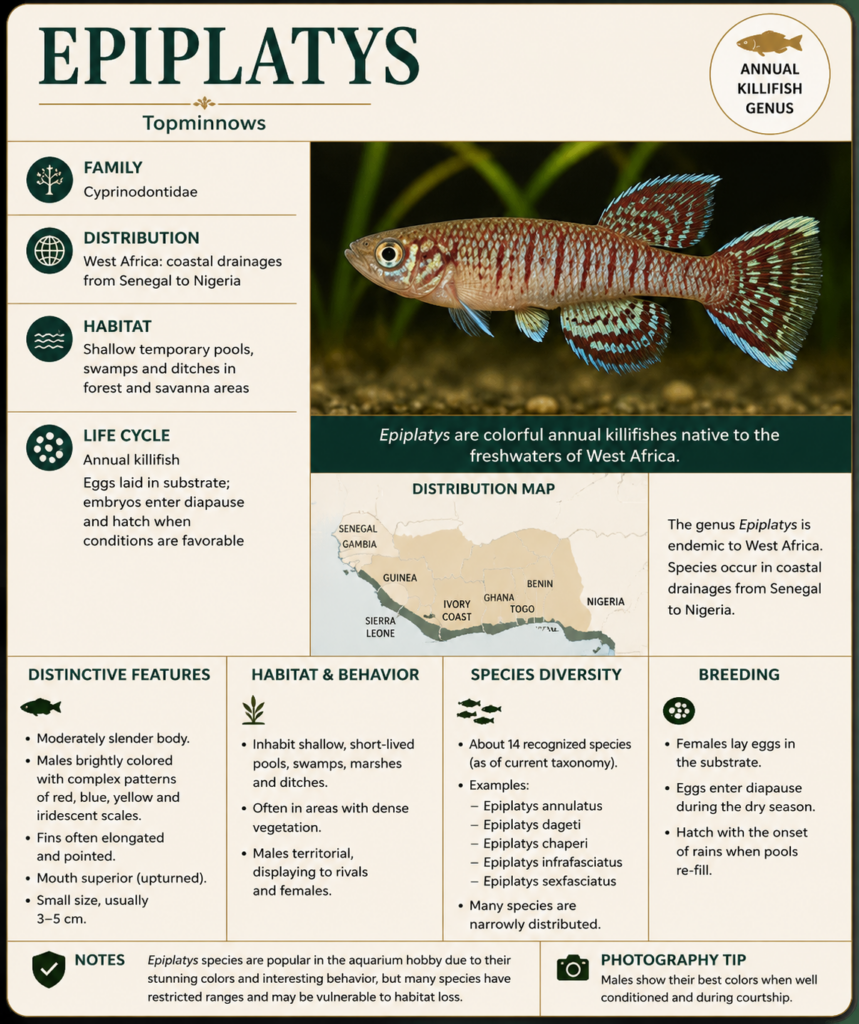
Epiplatys

Epiplatys is a genus of freshwater fish known as killifish, primarily native to the tropical and subtropical regions of West Africa. These fish are beloved by aquarium enthusiasts and aquarists worldwide for their striking colors, unique behaviors, and adaptability to various aquatic environments. In this comprehensive essay, we will explore the taxonomy, habitat, behavior, reproduction, care, and conservation of Epiplatys, shedding light on their significance in the world of ornamental fishkeeping and aquatic biology.

Taxonomy and Classification

Epiplatys belongs to the family Nothobranchiidae within the order Cyprinodontiformes. Taxonomically, its classification can be summarized as follows:

  • Kingdom: Animalia
  • Phylum: Chordata
  • Class: Actinopterygii
  • Order: Cyprinodontiformes
  • Family: Nothobranchiidae
  • Genus: Epiplatys

Within the genus Epiplatys, there are numerous recognized species, each with its unique characteristics and distribution. Some of the most well-known species in this genus include Epiplatys annulatus, Epiplatys dageti, and Epiplatys sexfasciatus.

Habitat and Distribution

Epiplatys species are primarily found in the freshwater habitats of West and Central Africa. Their natural range includes countries such as Nigeria, Cameroon, Ghana, Sierra Leone, Liberia, and Ivory Coast. These fish inhabit a variety of aquatic environments, including slow-moving streams, small rivers, swamps, and seasonal puddles or ponds.

In the wild, Epiplatys often occupy the marginal areas of water bodies, where they can find shelter among aquatic plants, submerged roots, and leaf litter. Their adaptability to different water conditions and habitats has contributed to their success as aquarium fish.

Physical Characteristics

Epiplatys are known for their vibrant colors and unique physical features. While there can be variations among species and individual fish, some common characteristics include:

  • Size: Epiplatys species are typically small, with adult lengths ranging from 3 to 7 centimeters (approximately 1 to 3 inches), depending on the species.
  • Coloration: These fish exhibit a wide range of colors and patterns. Some species feature striking combinations of red, blue, yellow, and green, while others may have more subdued colors.
  • Body Shape: They have an elongated, slightly flattened body shape, which is typical of killifish species. Their dorsal and anal fins may be elongated, adorned with intricate patterns, and in some cases, equipped with extensions.
  • Facial Features: Epiplatys have relatively small mouths, adapted for their carnivorous feeding habits. Their eyes are well-developed, allowing them to detect prey and navigate their complex habitats.
  • Fins: These fish have well-developed dorsal, anal, and caudal fins, which contribute to their agility and swimming abilities. Their pelvic and pectoral fins are also prominent.
  • Markings: Many Epiplatys species display distinctive markings on their bodies and fins, which can include spots, stripes, and even ocelli (eye-like spots). These markings serve various purposes, including camouflage and species recognition.
Behavior and Feeding

Epiplatys exhibit intriguing behaviors and feeding habits, reflecting their adaptations to their natural habitats. Here are some key aspects of their behavior:

Territorial Behavior: Like many other killifish species, Epiplatys is territorial, especially during the breeding season. Males often establish and defend territories, which they use to attract females and engage in courtship displays.

Aggression: While they can be kept in community aquariums, these fish are known for their territorial and sometimes aggressive behavior, especially when breeding or defending their territory. Care should be taken when selecting tank mates to avoid excessive aggression.

Feeding Habits: Epiplatys are carnivorous and primarily feed on small invertebrates, insects, and other aquatic organisms in their natural habitats. In captivity, they readily accept a diet of high-quality pellet or flake foods supplemented with live or frozen prey such as brine shrimp, daphnia, and bloodworms.

Social Structure: In the wild, they may form loose social groups or schools, particularly when foraging for food. In captivity, their social dynamics can vary based on the tank setup and the presence of other fish.

Reproductive Strategies

Epiplatys are known for their fascinating reproductive behaviors and unique adaptations to their dynamic habitats. Here are some common aspects of their reproductive strategies:

Courtship Displays: During the breeding season, males perform elaborate courtship displays to attract females. These displays often involve fin extensions, vibrant colors, and intricate body movements.

Egg Deposition: After successful courtship, the female lays her eggs among the vegetation or substrate, often in shallow waters. The eggs are adhesive and can stick to plants or other surfaces.

Incubation: Unlike many other fish species, Epiplatys does not provide parental care. Instead, the eggs are left to develop and hatch on their own, relying on the surrounding environment.

Adaptations to Seasonal Habitats: One of the most remarkable aspects of their reproductive strategy is their adaptation to seasonal habitats. In the wild, some populations of Epiplatys lay their eggs in areas that become temporarily flooded during the rainy season. The eggs remain dormant until the habitat floods again, triggering hatching.

Care and Maintenance in Aquariums

Keeping Epiplatys in aquariums can be a rewarding experience, but it requires careful consideration of their specific needs. Here are some key points to keep in mind:

Tank Size: Depending on the species and the number of fish, a tank size of 10 to 20 gallons is typically suitable for a small group of Epiplatys.

Decor: Provide plenty of hiding places, such as caves, plants, driftwood, and leaf litter, to create territories and reduce aggression. Dense vegetation can mimic their natural habitat.

Water Parameters: Epiplatys prefer slightly acidic to neutral water conditions with a pH range of 6.0 to 7.5. The temperature should be maintained between 72°F to 78°F (22°C to 26°C).

Diet: Offer a varied diet that includes high-quality pellets or flakes, as well as live or frozen foods like brine shrimp, daphnia, and bloodworms. Supplement their diet with vegetable matter, such as spirulina flakes or blanched vegetables.

Compatibility: Carefully select tank mates to avoid excessive aggression. Peaceful, non-territorial fish species are often the best companions.

Breeding: Breeding Epiplatys in captivity can be challenging due to their specific habitat requirements and the need to mimic seasonal changes. A separate breeding tank with controlled conditions may be necessary for successful reproduction.

Water Quality: Maintain excellent water quality by performing regular water changes and monitoring parameters such as ammonia, nitrites, and nitrates.

Conservation Status and Threats

The conservation status of Epiplatys species varies among populations and is influenced by habitat degradation and collection for the aquarium trade. Some of the main threats to wild populations include:

Habitat Destruction: Deforestation, urbanization, and agricultural practices have led to the destruction and alteration of the natural habitats of Epiplatys.

Water Pollution: Pollution from runoff and industrial discharges can degrade water quality in their habitats, potentially harming the fish and their prey.

Collection for the Aquarium Trade: Some Epiplatys species are popular in the aquarium trade, leading to overcollection in some areas. Sustainable collection practices are essential to protect wild populations.

Conservation Efforts

Efforts to conserve Epiplatys and its habitats include:

  • Habitat Preservation: Identifying and preserving critical habitats is crucial for the long-term survival of these fish.
  • Sustainable Collection: Encouraging sustainable collection practices in the aquarium trade to prevent overharvesting of wild populations.
  • Community Education: Raising awareness about the importance of conserving Epiplatys species and their habitats among local communities and aquarists.
  • Research: Conducting research to better understand the ecology and behavior of Epiplatys, which can inform conservation efforts.
Conclusion

Epiplatys, the West African killifish, represents a captivating and colorful genus of fish that has captured the hearts of aquarium enthusiasts and aquatic biologists alike. With their vibrant colors, unique behaviors, and intriguing adaptations, these fish serve as a testament to the diversity and resilience of life in freshwater ecosystems.

Conservation efforts are essential to protect both wild populations and the ecosystems they inhabit. By preserving their habitats, promoting sustainable collection practices, and raising awareness about these remarkable fish, we can ensure that Epiplatys continues to thrive and inspire aquarists and aquatic biologists for generations to come.
Here is a list of the most common Epiplatys:

  1. E. annulatus
  2. E. annulatus monroviae
  3. E. barmoiensis
  4. E. biafranus
  5. E. bifasciatus
  6. E. berkenkampi
  7. E. Boulengeri
  8. E. chaperi
  9. E. chaperi chaperi
  10. E. chaperi soillmanni
  11. E. chevalieri
  12. E. coccinatus
  13. E. dageti
  14. E. dageti dageti
  15. E. duboisi
  16. E. esekanus
  17. E. etzeli
  18. E. fasciolatus fasciolatus
  19. E. fasciolatus puetzi
  20. E. fasciolatus tototaensis
  21. E. fasciolatus zimiensis
  22. E. grahami
  23. E. hildegardae
  24. E. huberi
  25. E. lamottei
  26. E. longiventralis
  27. E. mesogramma
  28. E. multifasciatus
  29. E. nigricans
  30. E. njalaensis
  31. E. olbrechtsi olbrechtsi
  32. E. olbrechtsi azureus
  33. E. olbrechtsi kassiapleuensis
  34. E. phoeniceps
  35. E. roloffi
  36. E. ruhkopfi
  37. E. sangmelinensis
  38. E. sexfasciatus
  39. E. sexfasciatus baroi
  40. E. sexfasciatus rathkei
  41. E. sexfasciatus togolensis
  42. Epiplatys Sheljuzhkoi
  43. E. singa
  44. E. sp. Lac Fwa
  45. Epiplatys spilargyreus
  46. E. stictopleuron

Nothobranchius


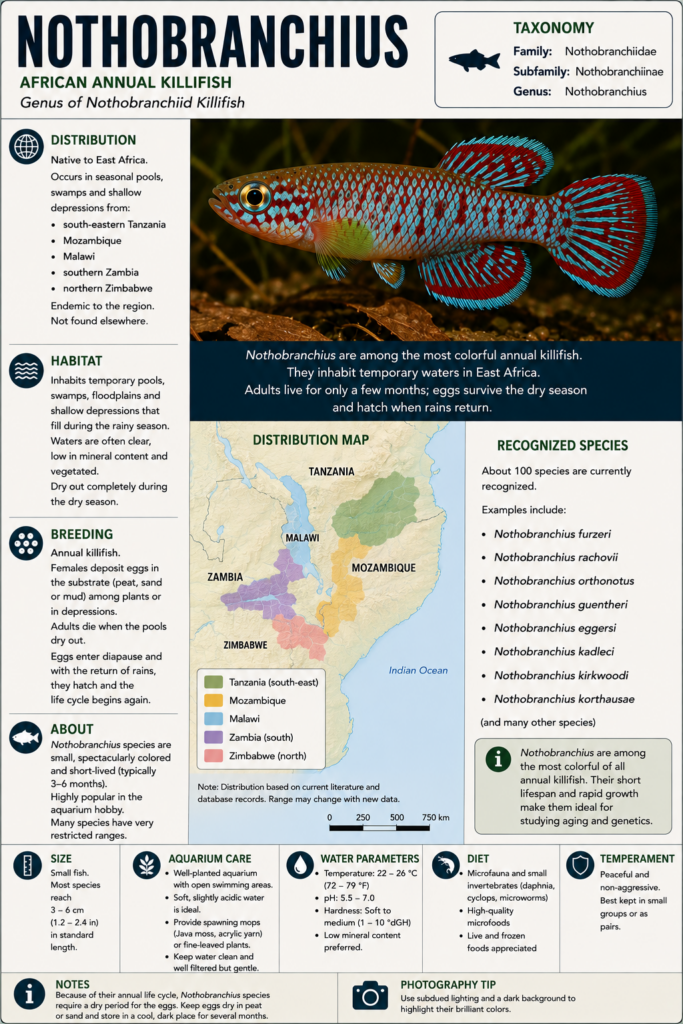
Nothobranchius is a genus of freshwater fish commonly known as killifish, known for their vibrant colors, unique behaviors, and fascinating biology. These fish are distributed across various regions of Africa and are particularly prevalent in East Africa. In this comprehensive guide, we will delve into the origins of Nothobranchius species and explore their native habitats, geographical distribution, habitat preferences, and adaptations.

Geographical Distribution

Nothobranchius species are primarily native to the tropical and subtropical regions of Africa, with a strong presence in East Africa. Their distribution spans several countries in this region, including:

  1. Tanzania: Tanzania is a hotspot for Nothobranchius diversity, with numerous species found throughout the country. These fish inhabit various aquatic environments, including seasonal pools, swamps, and small rivers.
  2. Kenya: Nothobranchius species are also found in Kenya, particularly in the eastern and coastal regions of the country. Kenya is home to several endemic species with unique coloration.
  3. Uganda: Some Nothobranchius species are found in Uganda, primarily in the eastern and central parts of the country. These fish inhabit seasonal wetlands and temporary pools.
  4. Mozambique: In southeastern Africa, Mozambique hosts a few Nothobranchius species, primarily in the southern part of the country. These fish are associated with freshwater habitats in this region.
  5. Somalia: Nothobranchius species are found in Somalia, particularly in the southern and coastal areas of the country. They inhabit various aquatic environments, including seasonal pools and swamps.
  6. Malawi: A few Nothobranchius species are also found in Malawi, a country known for its diverse aquatic biodiversity. These fish inhabit specific regions within Malawi.
  7. Zimbabwe: In southern Africa, Zimbabwe hosts certain Nothobranchius species, primarily in the eastern and southeastern parts of the country. They are associated with seasonal and temporary water bodies.
Habitat Preferences

Nothobranchius species exhibit a fascinating range of habitat preferences, and their distribution is closely linked to specific types of aquatic environments. Some key habitat preferences include:

  • Seasonal Pools: Many Nothobranchius species are adapted to ephemeral or seasonal pools that only exist for a portion of the year. These pools can be found in savannahs, woodlands, and other terrestrial environments. Nothobranchius fish have evolved to complete their entire life cycle, including hatching, growth, reproduction, and death, within these pools before they dry up.
  • Temporary Wetlands: Nothobranchius species also inhabit temporary wetlands, swamps, and small rivers that experience seasonal fluctuations in water levels. They are often associated with areas where water availability varies throughout the year.
  • Forest Pools: Some Nothobranchius species are found in pools and swamps within forested regions. These environments provide ample cover and shade, which is reflected in the fish’s behavior and coloration.
  • Marginal Habitats: Nothobranchius species may inhabit the marginal areas of larger water bodies, such as the edges of rivers, lakes, or streams. They can tolerate a range of water conditions, including slow-flowing waters.
Adaptations to Seasonal Environments

Nothobranchius species have developed remarkable adaptations to thrive in seasonal and ephemeral aquatic environments. These adaptations are crucial for their survival in habitats where water availability is limited to specific periods of the year:

  1. Rapid Growth and Reproduction: Nothobranchius fish exhibit accelerated growth rates and have a short lifespan compared to many other fish species. They reach maturity quickly and reproduce within a short period, ensuring the survival of their offspring before the habitat dries up.
  2. Drought-Resistant Eggs: One of the most remarkable adaptations is their ability to produce drought-resistant eggs. Nothobranchius females deposit their eggs in the substrate of the drying pools or wetlands. These eggs enter a state of diapause, a type of dormancy, which allows them to withstand desiccation and extreme environmental conditions. When the rains return and the habitat refills with water, the eggs hatch, initiating a new generation of fish.
  3. Coloration and Courtship Displays: Nothobranchius males often exhibit vibrant colors and elaborate courtship displays to attract females during the brief breeding period. This colorful display helps in species recognition and mate selection.
  4. Euryhaline Tolerance: Some Nothobranchius species possess a degree of euryhaline tolerance, allowing them to tolerate a range of water chemistry and salinity levels, which can fluctuate as habitats dry and fill with rainwater.
  5. High Tolerance for Environmental Stress: They are adapted to cope with the challenges of variable water quality, including fluctuations in temperature, pH, and oxygen levels. They can endure periods of extreme environmental stress.

In aquarium settings, aquarists interested in keeping Nothobranchius species often replicate their natural habitat conditions, including the use of seasonal pools, specialized substrate, and carefully controlled water parameters to mimic the conditions of their native environments. This approach allows aquarists to observe the unique behaviors and life history strategies of these remarkable fish while contributing to their conservation through captive breeding programs.

List of most common Nothobranchius:

Poropanchax


Poropanchax is a genus of small freshwater fish commonly known as killifish, renowned among aquarium enthusiasts for their vibrant colors, unique behaviors, and intriguing biology. These fish are distributed across various regions of Africa, primarily in West and Central Africa. In this comprehensive guide, we will delve into the origins of Poropanchax species, exploring their native habitats, geographical distribution, habitat preferences, and adaptations.

Geographical Distribution

Poropanchax species are primarily native to the tropical and subtropical regions of Africa, with a strong presence in West and Central Africa. Their distribution spans several countries in these regions, including:

  1. Nigeria: Nigeria is a hotspot for Poropanchax diversity, with numerous species found throughout the country. These fish inhabit various aquatic environments, including small streams, creeks, swamps, and seasonal pools.
  2. Cameroon: Cameroon, located in Central Africa, is another country with a diverse range of Poropanchax species. These fish can be found in different regions of the country, particularly in the southern and central areas.
  3. Gabon: Gabon, situated along the west coast of Central Africa, is known to host several Poropanchax species. The country’s lush rainforests and water bodies provide suitable habitats for these fish.
  4. Equatorial Guinea: Equatorial Guinea, comprising a mainland region and islands, is home to some Poropanchax species. These fish are associated with freshwater habitats in both the mainland and island regions.
  5. Republic of the Congo: In Central Africa, the Republic of the Congo is another country with a presence of Poropanchax species. They can be found in various aquatic environments, including rivers and swamps.
  6. Democratic Republic of the Congo (DRC): Poropanchax species are also found in the DRC, particularly in the western and central parts of the country. The DRC is known for its rich biodiversity, and Poropanchax species are a part of this diversity.
  7. Central African Republic: Poropanchax species are present in the Central African Republic, particularly in the southern and central areas of the country. They inhabit various freshwater habitats.
Habitat Preferences

Poropanchax species exhibit a fascinating range of habitat preferences, and their distribution is closely linked to specific types of aquatic environments. Some key habitat preferences include:

  • Small Streams and Creeks: Many Poropanchax species are associated with small streams and creeks that flow through forested or wooded areas. These environments provide suitable cover and foraging opportunities.
  • Swamps and Seasonal Pools: Poropanchax fish can often be found in swamps, marshes, and seasonal pools that experience fluctuations in water levels throughout the year. They are adapted to breeding and survival in such dynamic habitats.
  • Forest Streams: Some species are specifically found in streams within rainforests or wooded regions. These environments often have dense vegetation and canopy cover.
  • Marginal Areas: Poropanchax species may inhabit the marginal areas of larger water bodies, such as the edges of rivers, lakes, or streams. They are typically found in areas with relatively slow-flowing waters.
Adaptations to Seasonal Environments

Poropanchax species have developed remarkable adaptations to thrive in seasonal and dynamic aquatic environments. These adaptations are crucial for their survival in habitats where water availability can vary significantly:

  1. Rapid Growth and Reproduction: Poropanchax fish exhibit accelerated growth rates and have a relatively short lifespan compared to many other fish species. They reach maturity quickly and reproduce within a short period, ensuring the survival of their offspring before the habitat undergoes changes.
  2. Drought-Resistant Eggs: Some Poropanchax species have evolved to produce drought-resistant eggs. These eggs can withstand desiccation and extreme environmental conditions, ensuring the species’ survival when their temporary habitats dry up.
  3. Coloration and Courtship Displays: Male Poropanchax often exhibit vibrant colors and elaborate courtship displays to attract females during the brief breeding period. This colorful display helps in species recognition and mate selection.
  4. Behavioral Adaptations: Poropanchax species display specific behaviors that allow them to adapt to changing water levels and conditions. They may seek refuge in mud or leaf litter during dry periods and become active when water returns.
  5. Tolerance for Variable Water Quality: These fish are adapted to cope with fluctuating water quality, including variations in temperature, pH, and oxygen levels. They can endure periods of environmental stress.

In aquarium settings, aquarists interested in keeping Poropanchax species often replicate their natural habitat conditions, including the use of specialized substrate, controlled water parameters, and appropriate tank decorations that mimic the conditions of their native environments. This approach allows aquarists to observe the unique behaviors and life history strategies of these remarkable fish while contributing to their conservation through captive breeding programs.

Fundulopanchax


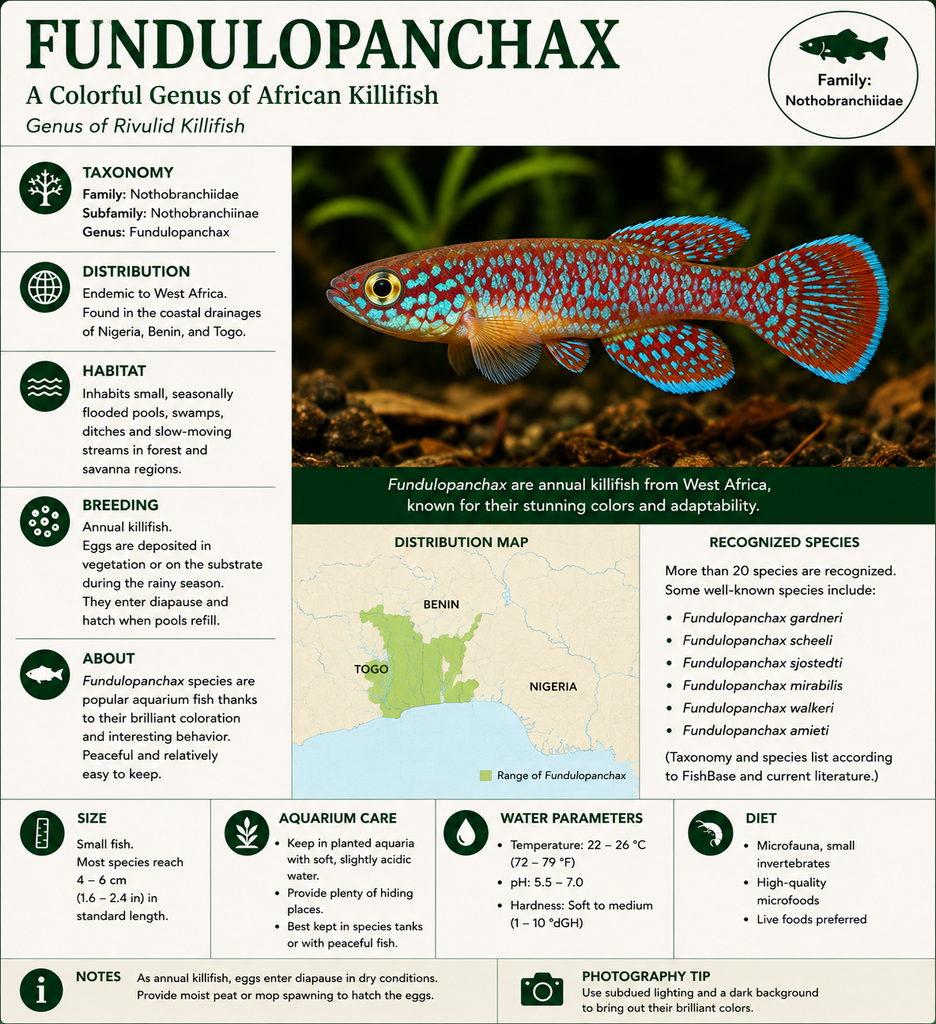
Fundulopanchax is a diverse and captivating genus of freshwater fish commonly known as killifish. These fish are renowned among aquarium enthusiasts for their vibrant colors, unique behaviors, and fascinating biology. The genus Fundulopanchax comprises numerous species, each with its own set of characteristics and requirements. In this comprehensive guide, we will explore the world of Fundulopanchax, covering their physical characteristics, natural habitats, care in aquariums, social behaviors, breeding strategies, and conservation efforts.

Physical Characteristics and Coloration

Fundulopanchax species exhibit a wide range of colors and patterns, especially in males. These fish can display vibrant reds, blues, yellows, greens, and intricate markings that vary among species. Males often feature elongated dorsal fins, which may resemble a lyre or lyretail shape, enhancing their visual appeal. In contrast, females generally have more subdued colors and shorter fins, a common feature of sexual dimorphism in killifish.

Natural Habitat and Geographic Distribution

Fundulopanchax species are native to various regions of Africa, particularly in West and Central Africa. These fish inhabit a range of aquatic environments, including small streams, creeks, swamps, seasonal pools, and floodplains. The specific geographic distribution varies by species, and each has adapted to the unique conditions of its habitat.

Fundulopanchax species have evolved to thrive in environments with fluctuating water levels, water temperatures, and water chemistry due to seasonal changes. Replicating these habitat conditions is essential for their well-being in captivity.

Aquarium Care and Water Parameters

Creating a suitable aquarium habitat for Fundulopanchax requires careful attention to water quality and tank parameters. Here are key considerations:

  • Water Temperature: Fundulopanchax fish thrive in slightly warmer water, with an ideal temperature range of 22-27 degrees Celsius (72-81 degrees Fahrenheit). Maintaining stable water temperatures within this range is essential for their health and well-being.
  • Water Quality: High water quality is crucial. Regular water changes and efficient filtration are necessary to keep ammonia, nitrites, and nitrates at minimal levels. Fundulopanchax fish prefer slightly acidic to neutral water with a pH level between 6.0 and 7.0.
  • Aquarium Decor: To replicate their natural habitat, provide plenty of live or artificial plants, floating vegetation, and driftwood. Fundulopanchax fish enjoy exploring these structures and may use them for shelter and spawning.
  • Substrate: A fine-grained substrate, such as sand or small gravel, is suitable for Fundulopanchax fish. This allows them to sift through the substrate in search of microorganisms and small invertebrates.
  • Lighting: Mimic their natural habitat by providing subdued lighting with dappled shading, as they originate from dimly lit environments.

Dietary Preferences and Nutrition

Fundulopanchax species are primarily carnivorous fish with specific dietary preferences. To maintain their health and vibrant colors, it is essential to replicate their natural diet:

  • Live Foods: Offer a variety of live foods such as brine shrimp, daphnia, mosquito larvae, and small aquatic insects. These foods stimulate their natural hunting instincts and provide essential nutrients.
  • Frozen Foods: Supplement their diet with frozen foods like bloodworms, white worms, and other suitable options available at most aquarium stores.
  • Dry Foods: High-quality, species-specific dry pellets or flakes can also be included in their diet. However, live and frozen foods should remain the primary source of nutrition.

Social Behavior and Compatibility

Fundulopanchax species are known for their intriguing social behaviors and interactions, making them an exciting addition to community aquariums. While they are generally peaceful, it’s important to consider their territorial tendencies, especially among males. Male Fundulopanchax may establish small territories within the aquarium and engage in displays of dominance.

These territorial displays typically involve posturing, fin displays, and color changes and rarely escalate into physical confrontations or harm to other fish, including females. Nevertheless, providing ample hiding spots and dense vegetation helps minimize potential conflicts and offers retreat options for all tank inhabitants.

Breeding Fundulopanchax Species

Breeding Fundulopanchax species can be a rewarding experience for aquarists interested in their unique reproductive behavior. Many Fundulopanchax species exhibit annual killifish characteristics, meaning they have a relatively short lifespan and a distinct breeding strategy.

Here is an overview of their breeding process:

  1. Conditioning: Prior to breeding, condition both male and female Fundulopanchax with a high-protein diet that includes live and frozen foods. This prepares their bodies for the upcoming breeding cycle.
  2. Breeding Tank Setup: Create a separate breeding tank or section within the main aquarium. The breeding tank should have appropriate water parameters and ample hiding places, such as plants and spawning mops.
  3. Courtship and Spawning: Male Fundulopanchax perform elaborate courtship displays to attract females. These displays involve vibrant coloration, fin displays, and intricate movements. Once a female is receptive, the male initiates spawning, leading her to a chosen site, often near plants or spawning mops.
  4. Egg Collection: After spawning, the female lays eggs on various surfaces. To protect the eggs from predation, carefully collect them and place them in a separate container with water from the breeding tank.
  5. Incubation: Fundulopanchax eggs have a characteristic embryonic resting phase, during which they can be stored until conditions are favorable for hatching. This resting phase can last several weeks or even months, depending on environmental conditions.
  6. Hatching and Fry Care: When conditions are suitable, typically with an increase in temperature and the introduction of water, the eggs hatch into tiny fry. Provide suitable live foods, such as infusoria and small brine shrimp, to nourish the fry as they grow.

Conservation and Protection

Many Fundulopanchax species are facing threats in the wild due to habitat destruction, pollution, and other environmental changes. Consequently, there are ongoing conservation efforts to protect and preserve these unique fish. Some organizations and hobbyists participate in captive breeding programs to ensure the survival of vulnerable Fundulopanchax species.

In conclusion, Fundulopanchax is a captivating and diverse genus of killifish that offers a fascinating glimpse into the world of freshwater aquariums. Their vibrant colors, intriguing behaviors, and unique reproductive strategies make them an excellent choice for both dedicated killifish breeding setups and community aquariums. By understanding their specific care requirements, aquarists can enjoy the beauty and complexity of Fundulopanchax species while contributing to the conservation of these remarkable fish in their natural habitats.

(Pseudo) Epiplatys

Epiplatys is a genus of killifish found in freshwater habitats across various regions of Africa. These fish are known for their vibrant colors, unique behaviors, and fascinating biology. The genus Epiplatys comprises numerous species, each with its own specific geographic distribution. Here, we’ll explore the origins of Epiplatys species and their native habitats.

Geographic Distribution

Epiplatys species are primarily native to the tropical and subtropical regions of West and Central Africa. Their distribution covers a wide range of countries in these regions. Some of the countries where Epiplatys species are found include:

  1. Nigeria: Epiplatys species can be found in various regions of Nigeria, particularly in the southern parts of the country. Nigeria is home to several Epiplatys species, and they inhabit various aquatic environments, including small streams, creeks, swamps, and seasonal pools.
  2. Cameroon: Cameroon, located in Central Africa, is another country with a diverse range of Epiplatys species. These fish can be found in different regions of the country, particularly in the southern and central areas.
  3. Gabon: Gabon, situated along the west coast of Central Africa, is known to host several Epiplatys species. The country’s lush rainforests and water bodies provide suitable habitats for these fish.
  4. Democratic Republic of the Congo (DRC): Epiplatys species are also found in the DRC, particularly in the western and central parts of the country. The DRC is known for its rich biodiversity, and Epiplatys species are a part of this diversity.
  5. Ghana: In West Africa, Ghana is another country where Epiplatys species can be found. They inhabit various freshwater environments, including streams and small rivers.
  6. Ivory Coast (Côte d’Ivoire): Epiplatys species are present in Ivory Coast, particularly in the southern and western regions of the country. These fish are often associated with forested and wooded areas.
  7. Togo: Togo, a West African nation, is home to some Epiplatys species. They can be found in various aquatic habitats within the country.
  8. Benin: Epiplatys species are also found in Benin, another West African country with diverse freshwater ecosystems.
Habitat Preferences

Epiplatys species are typically associated with freshwater habitats characterized by a variety of environments. They are often found in:

  • Small streams and creeks: Epiplatys species are commonly associated with small, slow-flowing or stagnant water bodies, including small streams and creeks within forested or wooded areas.
  • Seasonal pools and swamps: Many Epiplatys species are adapted to habitats that experience seasonal changes, including the drying of pools during certain times of the year. They have developed unique survival strategies to cope with these conditions, such as producing drought-resistant eggs.
  • Forested and wooded areas: These fish are often found in areas with dense vegetation, such as rainforests and wooded regions. The presence of abundant vegetation provides hiding places and suitable conditions for their survival.
  • Marginal areas: Epiplatys species may also inhabit the marginal areas of larger water bodies, such as the edges of rivers or lakes.

It’s important to note that the specific habitat preferences and distribution of Epiplatys species can vary among individual species within the genus. Some species may have a more limited range, while others may be more widespread.

In aquarium settings, aquarists interested in keeping Epiplatys species should replicate their natural habitat conditions to ensure their well-being and encourage natural behaviors. This includes providing suitable water parameters, decorations, and hiding places that mimic the environments where these fish are found in the wild.

List of Epiplatys:

  1. E. annulatus
  2. E. bifasciatus
    • E. bifasciatus bifasciatus
    • E. bifasciatus grahami
    • E. bifasciatus schioetzi
  3. E. chaperi
  4. Epiplatys chaperi soillmanni
  5. E. dageti
  6. E. huberi
  7. E. lamottei
  8. E. macrophthalmus
  9. E multifasciatus
  10. E. togolensis
  11. E. ubanguiensis
  12. E. werneri
  13. E. viviparus
  14. E. senegalus
  15. E. spilargyreius
  16. E. singa
  17. E. chevalieri
  18. E. arnoldi
  19. E. sexfasciatus
  20. E. roloffi
  21. E. zenkeri
  22. E. huberi
  23. Epiplatys barmoiensis
  24. Epiplatys berkenkampi
  25. Epiplatys bifasciatus
  26. Epiplatys etzeli
  27. Epiplatys grahami
  28. Epiplatys mesogramma
  29. Epiplatys ruhkopfi
  30. Epiplatys sangmelinensis
  31. Epiplatys stictopleuron

Aphyosemion


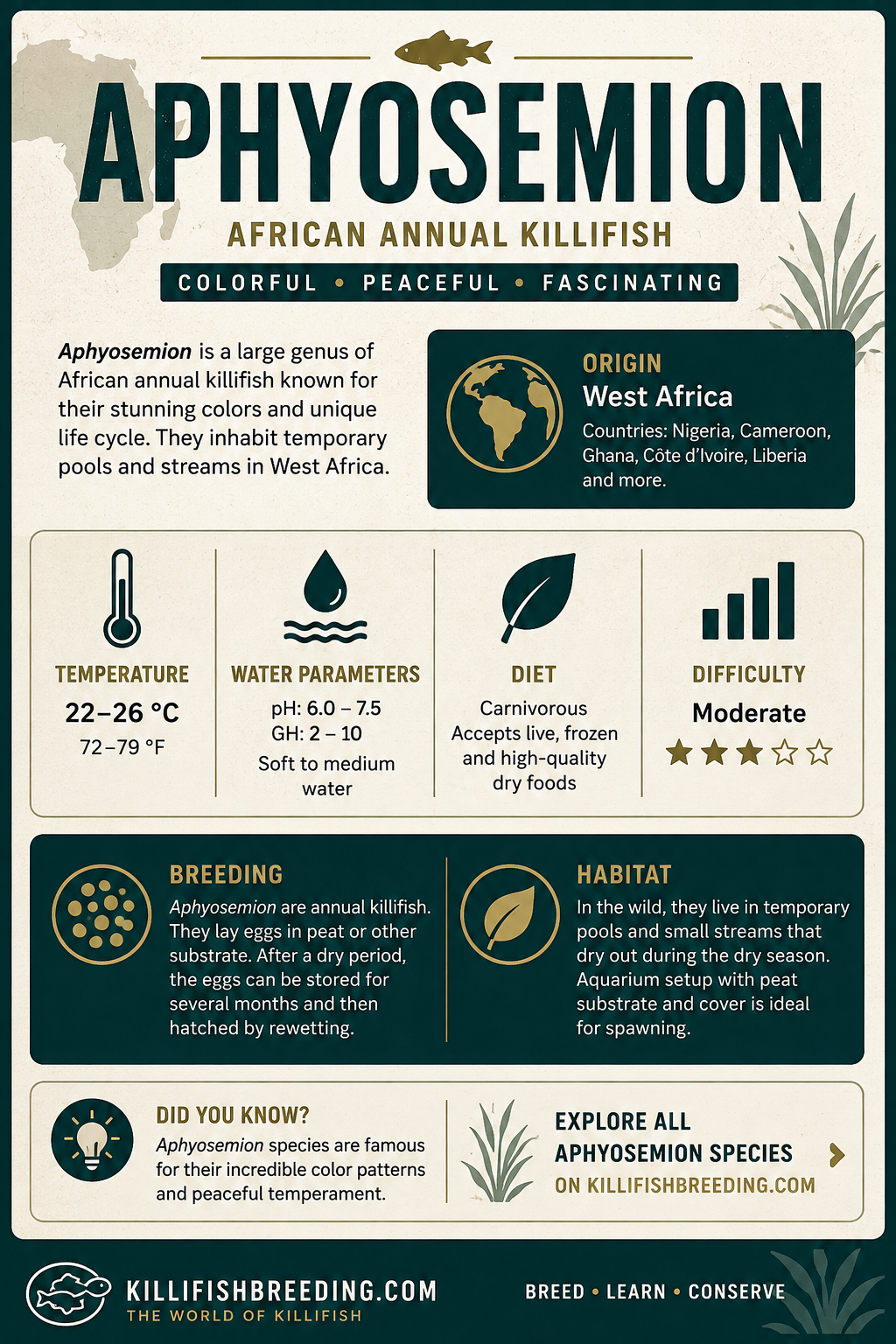
Aphyosemion is a diverse and intriguing genus of small freshwater fish belonging to the family Nothobranchiidae. These fish, commonly known as killifish, are renowned among aquarium enthusiasts for their vibrant colors, unique behaviors, and captivating biology. The genus Aphyosemion is particularly diverse, with numerous species found throughout the tropical and subtropical regions of Africa. In this guide, we will explore the fascinating world of Aphyosemion, covering their physical characteristics, natural habitats, care in aquariums, social behaviors, breeding strategies, and conservation efforts.

Look which killifish eggs are available for sale!

Physical Characteristics and Coloration

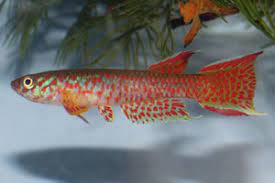
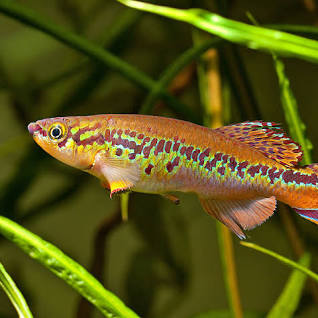
Aphyosemion species exhibit a remarkable range of colors and patterns, especially in males. These fish can display vibrant reds, blues, yellows, greens, and intricate markings that vary among species. Males often feature elongated dorsal fins, which may resemble a lyre or lyretail shape, enhancing their visual appeal. In contrast, females typically have more subdued colors and shorter fins, a common feature of sexual dimorphism in killifish.

Natural Habitat and Geographic Distribution

The natural habitats of Aphyosemion species are diverse and span across various regions of Africa, with a focus on West and Central Africa. These fish inhabit a range of aquatic environments, including small streams, creeks, swamps, temporary pools, and seasonal wetlands. The specific geographic distribution varies by species, and each has adapted to the unique conditions of its habitat.

Aphyosemion species have evolved to thrive in environments with fluctuating water levels, water temperatures, and water chemistry due to seasonal changes. Replicating these habitat conditions is essential for their well-being in captivity.

Aquarium Care and Water Parameters

Creating a suitable aquarium habitat for Aphyosemion requires careful attention to water quality and tank parameters. Here are key considerations:

  • Water Temperature: Aphyosemion fish thrive in slightly warmer water, with an ideal temperature range of 22-27 degrees Celsius (72-81 degrees Fahrenheit). Maintaining stable water temperatures within this range is essential for their health and well-being.
  • Water Quality: High water quality is crucial. Regular water changes and efficient filtration are necessary to keep ammonia, nitrites, and nitrates at minimal levels. Aphyosemion fish prefer slightly acidic to neutral water with a pH level between 6.0 and 7.0.
  • Aquarium Decor: To replicate their natural habitat, provide plenty of live or artificial plants, floating vegetation, and driftwood. Aphyosemion fish enjoy exploring these structures and may use them for shelter and spawning.
  • Substrate: A fine-grained substrate, such as sand or small gravel, is suitable for Aphyosemion fish. This allows them to sift through the substrate in search of microorganisms and small invertebrates.
  • Lighting: Mimic their natural habitat by providing subdued lighting with dappled shading, as they originate from dimly lit environments.

Dietary Preferences and Nutrition

Aphyosemion species are primarily carnivorous fish with specific dietary preferences. To maintain their health and vibrant colors, it is essential to replicate their natural diet:

  • Live Foods: Offer a variety of live foods such as brine shrimp, daphnia, mosquito larvae, and small aquatic insects. These foods stimulate their natural hunting instincts and provide essential nutrients.
  • Frozen Foods: Supplement their diet with frozen foods like bloodworms, white worms, and other suitable options available at most aquarium stores.
  • Dry Foods: High-quality, species-specific dry pellets or flakes can also be included in their diet. However, live and frozen foods should remain the primary source of nutrition.

Social Behavior and Compatibility

Aphyosemion species are known for their intriguing social behaviors and interactions, making them an exciting addition to community aquariums. While they are generally peaceful, it’s important to consider their territorial tendencies, especially among males. Male Aphyosemion may establish small territories within the aquarium and engage in displays of dominance.

These territorial displays typically involve posturing, fin displays, and color changes and rarely escalate into physical confrontations or harm to other fish, including females. Nevertheless, providing ample hiding spots and dense vegetation helps minimize potential conflicts and offers retreat options for all tank inhabitants.

Breeding Aphyosemion Species

Breeding Aphyosemion species can be a rewarding experience for aquarists interested in their unique reproductive behavior. Many Aphyosemion species exhibit annual killifish characteristics, meaning they have a relatively short lifespan and a distinct breeding strategy.

Here is an overview of their breeding process:

  1. Conditioning: Prior to breeding, condition both male and female Aphyosemion with a high-protein diet that includes live and frozen foods. This prepares their bodies for the upcoming breeding cycle.
  2. Breeding Tank Setup: Create a separate breeding tank or section within the main aquarium. The breeding tank should have appropriate water parameters and ample hiding places, such as plants and spawning mops.
  3. Courtship and Spawning: Male Aphyosemion perform elaborate courtship displays to attract females. These displays involve vibrant coloration, fin displays, and intricate movements. Once a female is receptive, the male initiates spawning, leading her to a chosen site, often near plants or spawning mops.
  4. Egg Collection: After spawning, the female lays eggs on various surfaces. To protect the eggs from predation, carefully collect them and place them in a separate container with water from the breeding tank.
  5. Incubation: Aphyosemion eggs have a characteristic embryonic resting phase, during which they can be stored until conditions are favorable for hatching. This resting phase can last several weeks or even months, depending on environmental conditions.
  6. Hatching and Fry Care: When conditions are suitable, typically with an increase in temperature and the introduction of water, the eggs hatch into tiny fry. Provide suitable live foods, such as infusoria and small brine shrimp, to nourish the fry as they grow.

Conservation and Protection

Many Aphyosemion species are facing threats in the wild due to habitat destruction, pollution, and other environmental changes. Consequently, there are ongoing conservation efforts to protect and preserve these unique fish. Some organizations and hobbyists participate in captive breeding programs to ensure the survival of vulnerable Aphyosemion species.

In conclusion, Aphyosemion is a captivating and diverse genus of killifish that offers a fascinating glimpse into the world of freshwater aquariums. Their vibrant colors, intriguing behaviors, and unique reproductive strategies make them an excellent choice for both dedicated killifish breeding setups and community aquariums. By understanding their specific care requirements, aquarists can enjoy the beauty and complexity of Aphyosemion species while contributing to the conservation of these remarkable fish in their natural habitats.

Species of Aphyosemion: