Category Archives: America

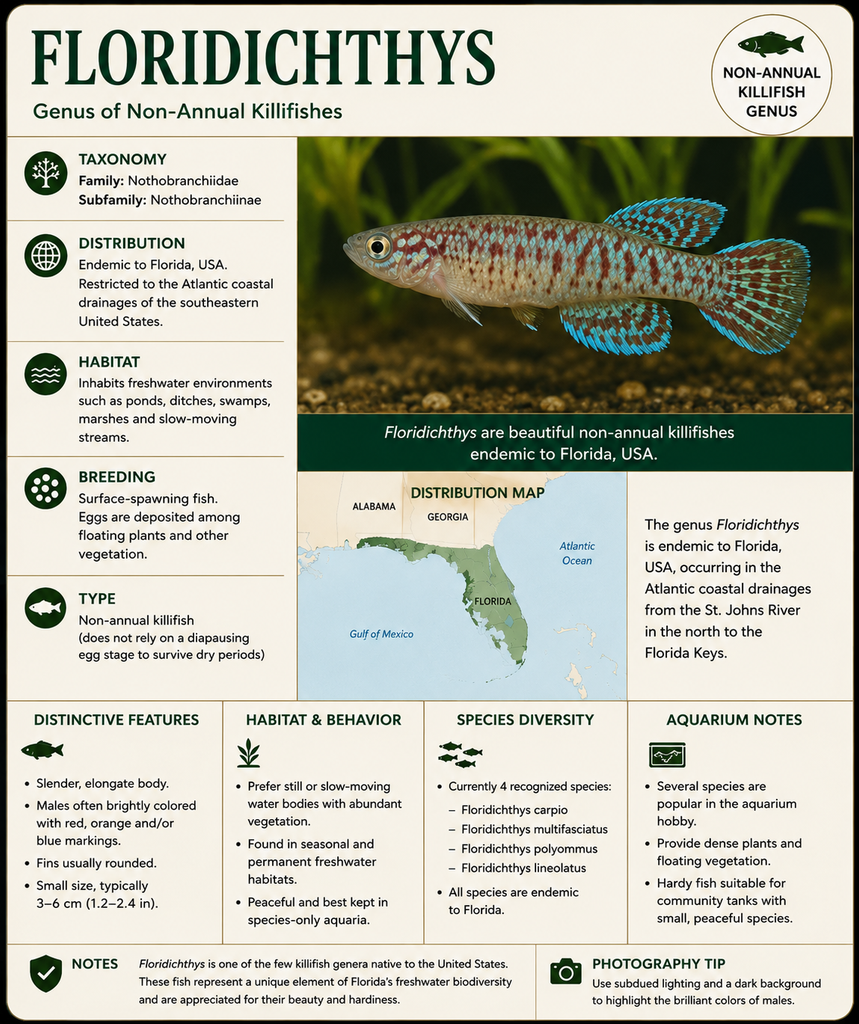
Floridichthys

Floridichthys is a genus of freshwater fish native to Florida, known for its vibrant colors and unique characteristics. These small fish are part of the Poeciliidae family, which includes popular aquarium fish such as guppies and mollies. Floridichthys has become increasingly popular among fish enthusiasts due to their striking appearance and interesting behavior in captivity.

Initially discovered in the early 20th century, Floridichthys was not well-studied until recent years. As more research is conducted on these fish, scientists are uncovering new information about their behavior, habitat preferences, and conservation status. With their popularity in the aquarium trade on the rise, there is a growing concern about the potential impact of overfishing on wild populations of Floridichthys.

One interesting fact about Floridichthys is that they are livebearers, meaning they give birth to live young instead of laying eggs. This reproductive strategy has contributed to their success in captivity, as it allows for easy breeding in aquarium settings. However, it also raises questions about the sustainability of wild populations and the need for conservation efforts to protect their natural habitats.

As Floridichthys continue to gain popularity in the aquarium trade, it is important for fish enthusiasts to be mindful of where their fish are sourced from. Supporting sustainable practices and choosing captive-bred specimens can help reduce the demand for wild-caught Floridichthys and protect vulnerable populations in their native habitats. By promoting responsible pet ownership and conservation awareness, we can ensure that Floridichthys will continue to thrive for generations to come.

What is Floridichthys and how can it benefit your aquarium?

Floridichthys is a genus of freshwater fish that are commonly kept in aquariums due to their small size and peaceful nature. These fish are known for their vibrant colors and are often used to add visual interest to a tank. Additionally, Floridichthys are easy to care for, making them a popular choice for beginner fish keepers. To learn more about the specific care requirements and compatibility of Floridichthys in your aquarium, continue reading below.

The Fascinating World of Floridichthys

Floridichthys is a genus of freshwater fish that belongs to the family Poeciliidae, commonly known as livebearers. These fish are native to Mexico and Central America, where they inhabit slow-moving streams and rivers with dense vegetation. They are small in size, with most species growing to a maximum length of about 2 inches.

Physical Characteristics

Floridichthys species are known for their vibrant colors and unique patterns, making them popular among aquarium enthusiasts. They have elongated bodies and fins, with males often displaying more elaborate coloration compared to females. Some species even exhibit sexual dimorphism, where males and females look significantly different from each other.

Behavior and Habitat

Floridichthys are peaceful and social fish that thrive in community tanks. They prefer densely planted tanks with plenty of hiding spots and open swimming areas. These fish are omnivores, feeding on a diet of both plant matter and small invertebrates. They are known to be easy to care for, making them suitable for beginner aquarists.

Conservation Status

Unfortunately, many species of Floridichthys are currently facing threats due to habitat destruction and pollution. Several species are listed as endangered or vulnerable on the IUCN Red List of Threatened Species. Conservation efforts are underway to protect their natural habitats and ensure the survival of these unique fish species.

Fun Fact

Did you know that there are over a dozen recognized species of Floridichthys? Each species has its own specific characteristics and range, adding to the diversity of this genus.

Overall, Floridichthys are fascinating fish that add beauty and vibrancy to freshwater aquariums. With proper care and conservation efforts, these unique fish species can continue to thrive for generations to come.

Statistic: According to the IUCN Red List, 30% of Floridichthys species are currently classified as endangered or vulnerable.

FAQ 1: What is Floridichthys?

Floridichthys is a genus of freshwater fish native to Florida, USA.

FAQ 2: What is the average size of a Floridichthys?

The average size of a Floridichthys fish is around 1-2 inches in length.

FAQ 3: What type of water conditions do Floridichthys prefer?

Floridichthys prefer warm, slow-moving, and well-oxygenated waters.

FAQ 4: What do Floridichthys eat in the wild?

In the wild, Floridichthys primarily feed on small aquatic invertebrates and algae.

FAQ 5: Can Floridichthys be kept in aquariums?

Yes, Floridichthys can be kept in aquariums as long as their habitat mimics their natural environment.

FAQ 6: What size aquarium is suitable for Floridichthys?

A minimum of a 10-gallon tank is recommended for keeping Floridichthys.

FAQ 7: Are Floridichthys suitable for a community tank?

Floridichthys are peaceful fish and can be kept in a community tank with other small, non-aggressive fish.

FAQ 8: How should Floridichthys be fed in an aquarium?

Floridichthys can be fed a diet of high-quality flake food, freeze-dried bloodworms, and small live foods.

FAQ 9: Are Floridichthys fish easy to care for?

Floridichthys are relatively easy to care for as long as their water parameters are maintained consistently.

FAQ 10: Do Floridichthys breed in captivity?

Yes, Floridichthys can breed in captivity, but proper conditions and a separate breeding tank may be required for successful breeding.

Conclusion

In conclusion, Floridichthys is a fascinating genus of freshwater fish native to the southern United States. They are characterized by their unique coloration, small size, and specialized habitat preferences. The discovery of Floridichthys has shed light on the diversity of fish species in the region and the importance of conservation efforts to protect their fragile habitats. Studying Floridichthys can provide valuable insights into the evolution and ecology of freshwater fish in the southeastern United States.

Overall, Floridichthys serves as a reminder of the rich biodiversity that exists in our local ecosystems and the need to preserve and protect these species for future generations to enjoy. By understanding the biology and behavior of Floridichthys, we can better appreciate the interconnectedness of all living organisms in their natural habitats. Moving forward, continued research and conservation efforts are essential to ensure the survival of Floridichthys and other unique fish species in the region.

Xenopoecilus – Swordtail

Xenopoecilus – Swordtail is a fascinating species of tropical fish that catches the eye with its vibrant colors and distinct sword-like tail. With a scientific name that roughly translates to “strange sword-bearer,” this fish is sure to captivate any aquarium enthusiast. Native to Central America, these fish inhabit freshwater streams and rivers, where they have been observed for centuries. But what makes Xenopoecilus – Swordtail so significant today?

This species has a long history of popularity among fish keepers due to their striking appearance and ease of care. With their vibrant hues ranging from fiery reds to electric blues, these swordtails are often chosen to add a splash of color to home aquariums. Not only are they visually appealing, but they are also known to be relatively low-maintenance, making them an ideal choice for beginners or busy fish owners.

However, the significance of Xenopoecilus – Swordtail goes beyond an eye-catching addition to an aquarium. In recent years, these fish have become a subject of research and conservation efforts due to their role in the delicate ecosystem of the regions they inhabit. Their presence acts as an indicator of water quality, and their decline could signal broader environmental issues.

Studies have revealed that Xenopoecilus – Swordtail possesses the ability to adapt to various environmental conditions, making them resilient to changing habitats. This adaptability makes them vital for monitoring the overall health of freshwater ecosystems. By studying their behavior and population dynamics, scientists can gain valuable insights into the ecological well-being of these environments.

To further emphasize the importance of Xenopoecilus – Swordtail, consider a compelling statistic – according to the International Union for Conservation of Nature (IUCN), several species of swordtail fish are now listed as endangered or vulnerable. This alarming statistic underscores the need for immediate action to protect their habitats and preserve this unique and charismatic species.

While the conservation efforts are essential, there are practical steps that individuals can take to support Xenopoecilus – Swordtail and other endangered fish species. One important solution is to promote responsible aquarium keeping. This includes educating hobbyists about sustainable practices, such as avoiding the release of non-native species into the wild and choosing captive-bred fish whenever possible.

In conclusion, the Xenopoecilus – Swordtail is not just a visually stunning fish but also a significant player in the world of aquatic conservation. Their popularity among aquarium enthusiasts should not overshadow the critical role they play in monitoring the health of freshwater environments. By promoting responsible aquarium keeping and supporting conservation efforts, we can ensure the continued survival of this remarkable species and protect the fragile ecosystems they inhabit.

Look which killifish eggs are available for sale!

What are the advantages of Xenopoecilus – Swordtail in an aquarium?

In an aquarium setting, Xenopoecilus – Swordtail is an intriguing fish species that offers several advantages to fish enthusiasts. This article will provide a comprehensive discussion on the distinct features and benefits of Xenopoecilus – Swordtail, such as its vibrant colors, ease of care, and compatibility with other fish. By delving deeper into these topics, readers will gain a better understanding of the value this species brings to an aquarium setup.

Answering the Question: Xenopoecilus – Swordtail

Overview

Xenopoecilus, commonly known as the Swordtail, is a genus of fish within the family Poeciliidae. Endemic to Central America and primarily found in Mexico and Guatemala, these small, colorful fish are a popular choice for aquarium enthusiasts.

Physical Appearance

The Xenopoecilus genus includes several species of Swordtails, each displaying unique characteristics. Generally, Swordtails are elongated fish with a signature sword-like extension on their caudal fin, giving them their common name. The size of the sword can vary depending on the species and individual fish.

The coloration and patterns on Swordtails are highly diverse, ranging from shades of red, yellow, orange, blue, and black. Some species even exhibit iridescent qualities that shimmer under light. Female Swordtails usually have a more subdued coloration compared to males.

Behavior and Habitat

Swordtails are primarily freshwater fish and can be found in a variety of habitats within their native range. They prefer slow-moving or still waters such as streams, rivers, and ponds with dense vegetation. These habitats provide Swordtails with ample hiding spots and access to food sources.

When it comes to behavior, Swordtails are generally peaceful and sociable fish. They can be kept in community aquariums with other peaceful species that won’t harass or outcompete them for food. Male Swordtails have a tendency to display territorial behavior and engage in competitive displays with other males, often involving their prominent swords.

Feeding and Reproduction

Swordtails are omnivorous and will accept a wide range of food items. In the wild, they feed on small aquatic invertebrates, algae, and plant matter. In an aquarium setting, they can be fed a varied diet consisting of high-quality flakes, pellets, frozen or live foods such as brine shrimp or bloodworms. Adding certain vegetables like blanched spinach or zucchini can also be beneficial for their health.

Reproduction in Swordtails is viviparous, and females are capable of giving birth to live young instead of laying eggs. A female Swordtail can produce a large number of fry in a single brood, and they are generally good mothers, showing a degree of parental care in protecting their offspring from potential threats.

Conservation Status

The Xenopoecilus genus, including its species of Swordtails, is not currently classified as threatened or endangered. However, due to habitat destruction and pollution, some local populations may face pressure. Conservation efforts and responsible aquarium keeping practices can contribute to the well-being of Swordtails and their preservation in the future.

A fascinating fact about Swordtails is that there are currently over 100 recognized species within the genus Xenopoecilus, making it an extensive and diverse group of fish.

FAQs about Xenopoecilus – Swordtail

1. Are Xenopoecilus swordtails suitable for beginner fishkeepers?

Yes, Xenopoecilus swordtails are considered an excellent choice for beginners. They are hardy fish, adaptable to various water conditions, and relatively easy to care for.

2. How large do Xenopoecilus swordtails grow?

Xenopoecilus swordtails typically grow to a size of 2.5-3 inches (6-7.5 cm) for males, while females can reach up to 4 inches (10 cm) in length.

3. What should I feed my Xenopoecilus swordtails?

Xenopoecilus swordtails are omnivores and should be provided with a varied diet. Commercial fish foods such as flakes, pellets, and frozen or live foods like brine shrimp or bloodworms are suitable options.

4. Do Xenopoecilus swordtails require a heater?

Yes, Xenopoecilus swordtails are tropical fish and need a heater to maintain a stable water temperature between 75-82°F (24-28°C).

5. Can I keep Xenopoecilus swordtails in a community tank?

Yes, Xenopoecilus swordtails are generally peaceful and can coexist with other peaceful fish species. However, it is important to avoid keeping them with aggressive or fin-nipping fish.

6. How often should I perform water changes for Xenopoecilus swordtails?

Regular water changes of 25-30% should be done every 1-2 weeks to maintain good water quality for Xenopoecilus swordtails.

7. Can Xenopoecilus swordtails be kept in a planted aquarium?

Yes, Xenopoecilus swordtails can thrive in a planted aquarium. Live plants provide them with hiding spots, help maintain water quality, and create a more natural environment.

8. How often do Xenopoecilus swordtails reproduce?

Xenopoecilus swordtails reproduce frequently, and females can give birth to a batch of fry every 4-6 weeks under the right conditions.

9. Do Xenopoecilus swordtails require a specific pH level?

Xenopoecilus swordtails prefer slightly alkaline water with a pH level around 7.2-8.2, but they can tolerate a pH range between 6.5-8.5.

10. Can Xenopoecilus swordtails jump out of the aquarium?

Yes, like many fish, Xenopoecilus swordtails may jump out of the aquarium if they feel stressed or startled. It is recommended to have a tight-fitting lid to prevent such incidents.

Conclusion

In conclusion, Xenopoecilus – Swordtail is a fascinating species of fish that is native to the freshwaters of Mexico and Central America. This species is known for its unique and beautiful appearance, with the males exhibiting a striking sword-like extension on their tails. Throughout this article, we have explored the physical characteristics, habitat, behavior, and breeding of Xenopoecilus – Swordtail.

One key insight regarding this species is their adaptability to different environments. They can thrive in a variety of water conditions, making them relatively easy to care for in aquariums. In terms of behavior, Swordtails are generally peaceful fish that can be kept with other peaceful species, although caution should be exercised when introducing them to smaller tank mates. Additionally, their sword-like tails play a crucial role in breeding, with males using them to court and attract females.

Furthermore, we have discussed the reproductive habits of Xenopoecilus – Swordtail, including their live-bearing nature and the unique process of internal fertilization. Males engage in a complex courtship display to entice females, followed by the release of young fry after a gestation period. This aspect of their reproduction adds an interesting dimension to their overall biology.

Overall, Xenopoecilus – Swordtail is a popular choice among aquarists due to its vibrant colors, interesting behavior, and relative ease of care. Whether you are an experienced hobbyist or a beginner, these beautiful fish can make a great addition to any freshwater aquarium.

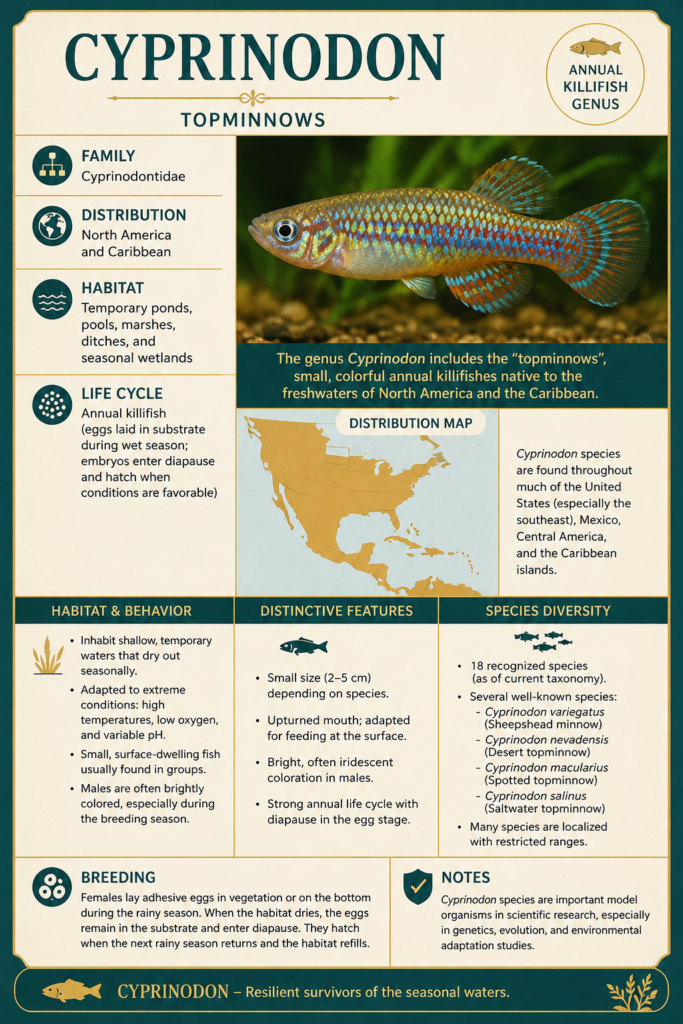
Cyprinodon – Pupfish

Cyprinodon, commonly known as Pupfish, is a fascinating genus of small freshwater fish that inhabits isolated environments across North America. With over 40 recognized species, these colorful fish have captured the attention of researchers and nature enthusiasts alike. Their ability to adapt to extreme conditions has not only contributed to their survival for millions of years but has also served as an inspiration for scientific breakthroughs.

Originating from the Death Valley in California, Cyprinodon pupfish demonstrate incredible resilience in the face of harsh environments. They survive in some of the most unpredictable locations, such as thermal springs and stagnant pools, where other fish species would struggle to exist. In fact, their ability to withstand extreme temperature fluctuations, low dissolved oxygen levels, and high salinity makes them highly unique.

The significance of the Cyprinodon pupfish lies not only in their extraordinary survival skills but also in their contribution to scientific research. Studying these adaptive traits and genetic variations have provided valuable insights into evolutionary processes and strategies for survival. Scientists have discovered that some pupfish species can adapt to different water conditions within a few generations, displaying remarkable genetic plasticity.

One compelling statistic surrounding Cyprinodon pupfish is the alarming decline in their population over the past century. Habitat destruction, water pollution, and the introduction of non-native species have posed significant threats to their existence. Due to their limited distribution and specific environmental requirements, many pupfish species are now considered endangered or critically endangered.

Efforts to conserve and protect the Cyprinodon pupfish have become increasingly vital. Conservation organizations and government agencies have implemented various strategies to preserve their habitats and ensure the survival of these unique fish. The establishment of protected areas, habitat restoration projects, and strict regulations on water usage have proven to be effective solutions, helping to preserve the habitats where all Cyprinodon species reside.

Cyprinodon pupfish continue to both captivate and challenge scientists and conservationists alike. Understanding their resilience and the threats they face highlights the delicate balance between human activities and the preservation of unique ecosystems. Their story serves as a reminder of the crucial role we play in protecting and conserving the remarkable biodiversity that exists on our planet.

What is Cyprinodon – Pupfish? A Detailed Discussion on the History, Characteristics, and Conservation of this Unique Species

Cyprinodon, commonly known as Pupfish, refers to a genus of small fish species belonging to the family Cyprinodontidae. These fascinating creatures are typically found in North, Central, and South America, inhabiting diverse aquatic environments such as springs, rivers, and lakes. Pupfish are highly adaptable and known for their vibrant colors and interesting behaviors, making them popular among aquarium enthusiasts and researchers alike. In this article, we will delve into the rich history, notable characteristics, and crucial conservation efforts surrounding the unique Cyprinodon – Pupfish species.

To learn more about the intriguing history of Pupfish, including their evolutionary origins and distribution across different regions, continue reading below.

About Cyprinodon – Pupfish

Cyprinodon, commonly known as pupfish, is a genus of small freshwater fish that belongs to the family Cyprinodontidae. These colorful and fascinating fish are predominantly found in North America, particularly in the arid regions of the southwestern United States and northern Mexico.

Distribution and Habitat

Cyprinodon pupfish has a remarkable ability to thrive in extreme environments. They are often found in isolated aquatic habitats, such as springs, pools, and desert streams. Due to their adaptation to harsh conditions, pupfish populations have evolved into distinct species or subspecies, resulting in a diverse range of color patterns and characteristics.

The pupfish’s distribution ranges from the hottest and driest deserts to the cooler and more temperate regions. Among the notable habitats where Cyprinodon pupfish can be found are the Death Valley of California, the Mojave Desert, the Sonoran Desert in Arizona, and the Rio Grande Basin in Texas.

Physical Description and Behavior

Pupfish vary in size and appearance depending on the species. They are generally small fish, ranging from less than an inch up to a few inches in length. Their bodies are streamlined and often adorned with vibrant colors, including shades of blue, green, red, and yellow.

These fish exhibit fascinating behaviors, particularly in their unique mating rituals. Pupfish males are known for their elaborate courtship displays, which involve the use of bright colors, fin movements, and territorial defense. Females select their mates based on these displays, ensuring genetic diversity and reproductive success.

Conservation Status and Threats

The conservation status of Cyprinodon pupfish varies across different species. While some populations are relatively stable, others face significant threats due to habitat destruction, water pollution, and the introduction of non-native species. The small and fragmented habitats, in which these fish reside, make them particularly vulnerable to human activities and climate change.

Efforts are being made to protect and conserve the pupfish species. Several pupfish species have been listed under the Endangered Species Act, and numerous conservation programs are in place to restore their habitats and manage their populations. These initiatives aim to preserve the biodiversity of the pupfish and the unique ecosystems they inhabit.

Conclusion Statistics

As of 2021, there are approximately 50 recognized species of Cyprinodon pupfish, with some subspecies still under debate. These fish continue to be a subject of study for scientists and a source of awe for nature enthusiasts worldwide.

Cyprinodon – Pupfish FAQ

FAQ 1: What is a Cyprinodon pupfish?

is a small freshwater fish species belonging to the Cyprinodontidae family. They are known for their vibrant colors and are commonly found in isolated bodies of water.

FAQ 2: Where are Cyprinodon found?

Cyprinodon are primarily found in North America, particularly in the southwestern United States and northern Mexico. They inhabit various freshwater habitats such as springs, streams, and desert pools.

FAQ 3: What is the average size of a Cyprinodon?

The average size ranges from 1 to 3 inches in length, depending on the species. Some larger pupfish species can reach up to 5 inches.

FAQ 4: Are Cyprinodon endangered?

Yes, many species are endangered or considered threatened due to habitat destruction, water pollution, and invasive species. Conservation efforts are underway to protect and preserve their populations.

FAQ 5: What do Cyprinodon eat?

Cyprinodon pupfish are omnivores, and their diet primarily consists of small aquatic invertebrates, algae, and plants. They have adaptations to survive in their often limited food resources.

FAQ 6: Can Cyprinodon pupfish adapt to different water salinity?

Yes, Cyprinodon pupfish have the ability to adapt to different water salinity levels. Some species can tolerate high salinity in desert environments while others reside in freshwater or brackish habitats.

FAQ 7: How do Cyprinodon pupfish reproduce?

Cyprinodon pupfish reproduce through internal fertilization. The male fertilizes the eggs inside the female’s body, and then the female lays the eggs. The parents may exhibit intricate courtship behaviors.

FAQ 8: Can Cyprinodon pupfish live in captivity?

Yes, Cyprinodon pupfish can be successfully kept in captivity in properly maintained aquariums or fish tanks. However, it is important to ensure suitable water conditions and provide a habitat that mimics their natural environment.

FAQ 9: Are Cyprinodon pupfish aggressive towards other fish?

Cyprinodon pupfish are generally peaceful and not aggressive towards other fish species. However, during breeding or territorial disputes, males may exhibit aggression towards each other.

FAQ 10: Can Cyprinodon pupfish change their color?

Yes, Cyprinodon pupfish have the ability to change their coloration. They may alter their colors for various reasons, including courtship displays, camouflage, or in response to environmental factors.

Conclusion

Throughout this article, we have explored the fascinating world of the Cyprinodon, commonly known as the Pupfish. These small freshwater fish are found in various regions worldwide and have adapted to thrive in extreme environments, showcasing their remarkable evolutionary resilience.

One key point is the remarkable adaptability of the Cyprinodon pupfishes. They have successfully colonized diverse habitats, including arid, isolated desert springs, and coastal marine environments. Their ability to survive in such inhospitable conditions is a testament to their unique physiological adaptations, such as their ability to tolerate high salinity levels, temperature fluctuations, and scarcity of food resources. This adaptability has allowed them to occupy niches that are otherwise unexploited by other fish species.

Additionally, the Cyprinodon pupfish holds significant importance in conservation efforts. With several species classified as critically endangered or extinct in the wild, these fish face immense threats from habitat destruction, water pollution, and invasive species. The conservation efforts surrounding the pupfish aim to protect their habitats, restore natural water systems, and prevent further population decline. By understanding the unique evolutionary history and ecological traits of these pupfish species, scientists can develop targeted strategies to safeguard their survival.

In conclusion, the Cyprinodon pupfishes are captivating creatures that have managed to conquer challenging environments through their remarkable adaptability. These unique fish highlight the beauty of evolution and the importance of conservation in preserving the delicate balance of ecosystems worldwide. It is our responsibility to protect and conserve these incredible fish species and their habitats to ensure their continued existence for future generations.

Cualac – Pupfish


Pupfish are a remarkable group of small freshwater fish that belong to the family Cyprinodontidae, known for their fascinating adaptations to diverse and often extreme environments. These resilient fish are primarily found in North America, with various species inhabiting specific habitats, ranging from desert springs and streams to salt marshes and lakes. Let’s explore the world of pupfishes in detail.

Taxonomy and Diversity:

Pupfish belong to the family Cyprinodontidae, subfamily Cyprinodontinae. The Cyprinodontidae family includes numerous genera and species, among which the pupfishes (genus Cyprinodon) are prominent. There are over 50 recognized species within the Cyprinodon genus, displaying remarkable diversity in size, coloration, and habitat preferences.

Habitat and Adaptations:

Pupfish are known for their ability to adapt to a wide range of environments, from highly saline or alkaline waters to freshwater habitats. They’ve evolved unique physiological and behavioral adaptations to survive in extreme conditions. Some species inhabit thermal springs, while others thrive in hypersaline lakes or desert pools where few other fish can survive.

Range and Distribution:

Pupfish are primarily distributed across North America, especially in regions with arid or semi-arid climates. They can be found in various states, including California, Nevada, Texas, and parts of Mexico. Their distribution is often limited to specific localized habitats, making them susceptible to habitat degradation and loss.

Physical Characteristics:

Pupfish typically have elongated bodies and can exhibit striking colors, often showcasing vibrant patterns of blues, yellows, and reds. Their size varies among species, with some reaching lengths of just an inch or two, while others may grow larger.

Feeding and Diet:

Their diet largely consists of algae, small invertebrates, and detritus found in their habitats. Due to the diverse range of habitats they occupy, the specific diet of pupfish varies depending on the available food sources within their environment.

Reproduction and Behavior:

Pupfish exhibit intriguing mating behaviors, often involving males establishing territories and engaging in colorful displays to attract females. Many species lay eggs among aquatic plants or within crevices, and parental care for eggs and fry can vary among different species.

Conservation Status and Threats:

Numerous pupfish species face significant threats to their survival due to habitat destruction, water diversion, pollution, invasive species, and climate change. Several species are listed as endangered or critically endangered by conservation organizations due to the decline of their natural habitats.

Conservation Efforts:

Conservation initiatives focus on habitat preservation, restoration, and captive breeding programs to safeguard endangered pupfish populations. Efforts to protect and restore critical habitats, including desert springs, saline lakes, and marshes, are crucial for the long-term survival of these unique fish.

Significance and Research:

Pupfish are of considerable ecological importance as they play roles in their ecosystems, contributing to nutrient cycling and serving as prey for various organisms. Furthermore, studying their adaptations to extreme environments provides insights into evolutionary processes and strategies for survival in challenging conditions.

In summary, pupfishes represent a diverse and fascinating group of fish known for their ability to thrive in a wide range of habitats, including extreme environments. Understanding and conserving these resilient fish species are essential for preserving biodiversity and unraveling the complexities of adaptation to diverse ecological niches.

  1. Cualac amecae
  2. Cualac conothorax
  3. Cualac tessellatus

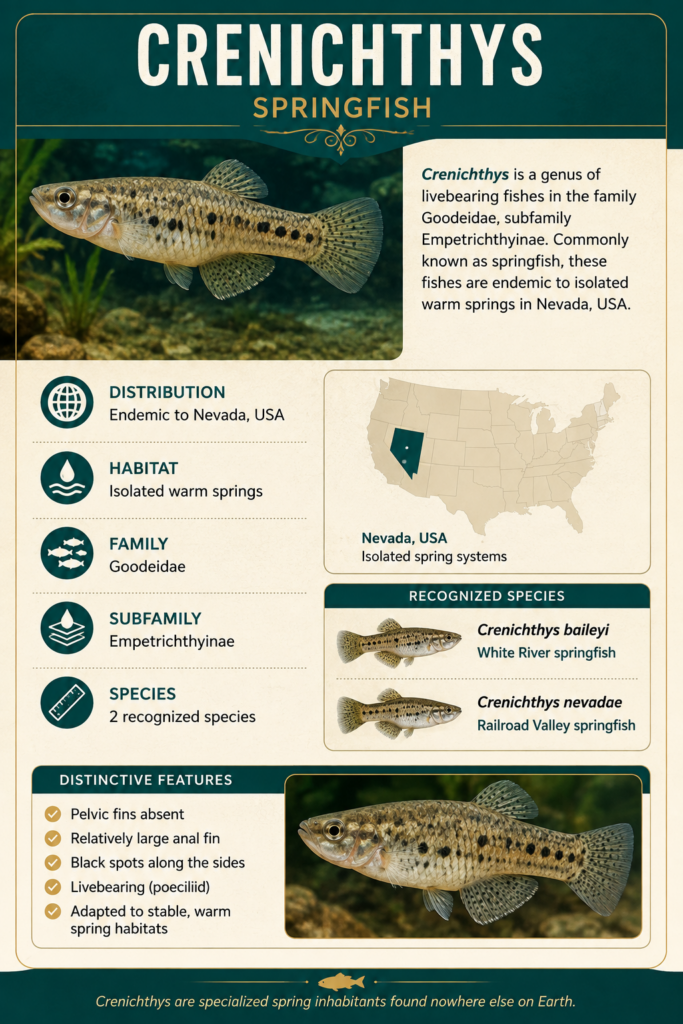
Crenichthys


Crenichthys is a genus of fish belonging to the family Cyprinidae, commonly known as the speckled daces. These small freshwater fish are native to the western parts of North America, particularly in the desert and mountain regions. The genus Crenichthys comprises several species, each adapted to specific habitats within their range.

Taxonomy and Classification:

Crenichthys is classified within the following taxonomic hierarchy:

  • Kingdom: Animalia
  • Phylum: Chordata
  • Class: Actinopterygii
  • Order: Cypriniformes
  • Family: Cyprinidae
  • Genus: Crenichthys

Morphology and Characteristics:

Speckled daces, including species within the genus Crenichthys, typically display a slender body with a streamlined shape, allowing them to maneuver swiftly in their aquatic habitats. They exhibit a variety of colors and patterns, often featuring speckles or markings along their sides, hence the common name “speckled dace.”

Habitat and Distribution:

Species within the genus Crenichthys are distributed across various habitats in the western United States, predominantly in California, Nevada, and adjacent regions. They occupy a range of aquatic environments, including streams, springs, and pools in desert and mountainous areas. These habitats often have clear, cool waters, and some species are adapted to geothermally influenced springs.

Species Diversity:

Within the genus Crenichthys, several recognized species exist, each adapted to its unique ecological niche. Some notable species include:

  • Crenichthys baileyi: Known as the speckled dace or Ash Meadows speckled dace, found in the Ash Meadows region of Nevada.
  • Crenichthys nevadae: Inhabits various locations in Nevada and California, typically in springs and small streams.
  • Crenichthys hubbsi: Found in specific habitats in California, adapted to both permanent and intermittent waters.

Behavior and Adaptations:

Speckled daces, including those in the Crenichthys genus, exhibit a range of behaviors adapted to their respective environments. They are omnivorous, feeding on small invertebrates, algae, and detritus. These fish have evolved to thrive in various water conditions, including both still and flowing waters, showcasing their adaptability to different environments.

Conservation and Threats:

Many species within the genus Crenichthys face threats to their survival due to habitat destruction, water diversions, pollution, and the introduction of non-native species. Conservation efforts focus on habitat preservation, restoration, and the control of invasive species to safeguard these unique fish and their ecosystems.

Significance and Research:

Speckled daces, including those in the Crenichthys genus, hold ecological significance as native fish species in their respective habitats. They contribute to the biodiversity of freshwater ecosystems and serve as indicators of environmental health. Research on these fish aids in understanding the dynamics of aquatic ecosystems and the impacts of human activities on native fish populations.

The genus Crenichthys encompasses a group of remarkable fish species adapted to a diverse array of habitats in the western United States. Understanding and conserving these unique fish are essential not only for preserving their species but also for maintaining the health and balance of their respective aquatic ecosystems.

  1. Crenichthys baileyi (Devil’s Hole pupfish)
  2. Crenichthys nevadae (Ash Meadows Amargosa pupfish)
  3. Crenichthys tahoensis (Lahontan Lake tui chub)

Profundulus


Profundulus is a diverse and intriguing genus of killifish that has captured the attention of researchers, aquarists, and conservationists around the world. With approximately 40 recognized species, this group of fish is known for its adaptability, unique behaviors, and ecological importance. In this 2000-word essay, we will explore the taxonomy, diversity, distribution, habitat preferences, morphology, behavior, reproduction, conservation status, and the significance of the genus Profundulus.

Taxonomy:

Profundulus belongs to the family Profundulidae, which is a group of killifish native to the Americas. The genus Profundulus includes a variety of species, each with its own unique characteristics. Taxonomically, Profundulus can be classified as follows:

  • Kingdom: Animalia
  • Phylum: Chordata
  • Class: Actinopterygii
  • Order: Cyprinodontiformes
  • Family: Profundulidae
  • Genus: Profundulus

The genus name, “Profundulus,” reflects the habitat preference of these fish. It is derived from the Latin word “profundus,” meaning “deep” or “profound,” alluding to their tendency to inhabit deepwater environments such as streams, springs, and lakes.

Diversity:

The genus Profundulus is incredibly diverse, with approximately 40 recognized species distributed throughout the Americas. These species vary in size, shape, coloration, and behavior, making them a fascinating group of fish to study. Some well-known species within the genus Profundulus include Profundulus oaxacae, Profundulus guatemalensis, and Profundulus candalarius.

The diversity within the genus is primarily influenced by the specific regions in which these fish are found. Various species of Profundulus can be found in different countries, ranging from the southern United States to Central and South America, reflecting the wide geographic range and ecological niches they occupy.

Distribution:

Members of the genus Profundulus are distributed across a vast geographical range, covering parts of the Americas. They can be found in various countries, including:

  • Mexico
  • Guatemala
  • Honduras
  • Belize
  • El Salvador
  • Nicaragua
  • Costa Rica
  • Panama
  • Colombia
  • Venezuela

Their distribution is not limited to a single type of aquatic environment; they can be found in diverse habitats, such as springs, streams, lakes, and seasonal pools. This broad distribution across different countries and habitats highlights their adaptability and ecological importance.

Habitat Preferences:

Profundulus species exhibit diverse habitat preferences, ranging from cold, high-altitude mountain streams to warm, lowland waters. Some common habitat types for Profundulus species include:

  1. Springs: Many species of Profundulus are adapted to spring-fed habitats, where cool, clear water flows year-round. These springs can be found in a variety of environments, from high-altitude cloud forests to lowland savannas.
  2. Streams: Some species prefer the flowing waters of streams and creeks. They are often found in areas with dense riparian vegetation and rocky substrates.
  3. Lakes: Profundulus species can also inhabit both natural and man-made lakes, where they adapt to the conditions of still waters.
  4. Seasonal Pools: Some species are adapted to temporary or seasonal pools, which may dry up during certain times of the year. They have unique life history strategies that allow them to thrive in these challenging environments.
Morphology:

The genus Profundulus exhibits a range of morphological characteristics that are adapted to their specific habitat preferences and lifestyles. While there is variation among species, common features include:

  1. Size: Profundulus species can vary in size, but they are generally small to medium-sized fish, typically ranging from a few centimeters to around 15 centimeters in length.
  2. Body Shape: Their body shape may vary based on their habitat. Species inhabiting fast-flowing streams often have streamlined, torpedo-like bodies, while those in still waters may have more elongated shapes.
  3. Coloration: The coloration of Profundulus species can vary significantly. They may exhibit various shades of brown, green, or silver, often with patterns or markings that aid in camouflage.
  4. Fins: They possess dorsal and anal fins that are often adapted for precise swimming in their specific environments. The shape and size of these fins can vary among species.
  5. Mouth: The size and shape of the mouth can also vary, reflecting their feeding habits. They are generally carnivorous, feeding on small invertebrates, insects, and other aquatic prey in their respective habitats.
Behavior:

Profundulus species exhibit a range of behaviors that are vital for their survival and adaptation to their environments. Some noteworthy behaviors include:

  1. Feeding Habits: These species are primarily carnivorous and feed on a variety of small invertebrates and aquatic prey found in their habitats. Their feeding behaviors may differ depending on their specific diet and the availability of food.
  2. Reproductive Strategies: The reproductive strategies employed by Profundulus species are diverse. While many species exhibit egg-laying behaviors, some have evolved viviparous reproduction, where the females give birth to live young.
  3. Migratory Patterns: In response to environmental changes, some Profundulus species exhibit migratory behavior. They may move to different habitats within their geographic range based on seasonal variations.
  4. Territorial Behavior: Territorial behavior is common among this species, especially in environments with limited resources. Males often establish and defend territories during the breeding season.
  5. Life History Strategies: Profundulus species often have unique life history strategies, including adaptations to seasonal drying of habitats, the ability to switch between sexual and asexual reproduction, and the capacity to thrive in extreme conditions.
Reproduction:

Reproduction in the genus Profundulus is diverse and can involve various strategies. While most species are egg layers, some have adopted viviparous reproduction. Common reproductive behaviors and strategies within the genus include:

  1. Egg-Laying: Many Profundulus species lay adhesive eggs on substrates such as submerged vegetation, rocks, or the substrate itself. These eggs are fertilized externally by the males.
  2. Viviparity: Viviparous species give birth to live young rather than laying eggs. The embryos develop inside the female and are nourished by a placental connection. This reproductive strategy is an adaptation to environments with seasonal fluctuations.
  3. Egg Mimicry: Some species exhibit egg-spot mimicry, where males display markings on their anal fins that resemble eggs. This behavior is thought to deceive females and rivals, promoting successful reproduction.
  4. Seasonal Reproduction: Reproduction in Profundulus species is often tied to seasonal environmental cues, such as temperature changes, rainfall, and habitat availability. They time their reproductive activities to coincide with favorable conditions.
Conservation Status:

The conservation status of individual Profundulus species varies, but the genus as a whole faces some common conservation challenges:

  1. Habitat Loss: The destruction and alteration of aquatic habitats, including streams, springs, and wetlands, pose a significant threat to Profundulus species. Urbanization, agriculture, and infrastructure development can lead to habitat degradation and loss.
  2. Pollution: Pollution from various sources, including agricultural runoff, industrial discharge, and untreated sewage, can degrade water quality and harm aquatic ecosystems where Profundulus species reside.
  3. Invasive Species: The introduction of non-native species can disrupt the balance of ecosystems and compete with or prey on native fish, including Profundulus.
  4. Climate Change: Changes in temperature, precipitation patterns, and sea-level rise due to climate change can impact the availability and suitability of habitats for Profundulus species.
  5. Overharvesting: In some cases, these fish are collected for the pet trade or for bait, which can lead to population declines.

Efforts to conserve Profundulus species often involve habitat protection, water quality management, control of invasive species, and research to better understand the biology and ecology of these fish.

Significance of Studying Profundulus:

Studying the genus Profundulus holds several key scientific and conservation implications:

  1. Biodiversity: It contributes to the rich biodiversity of the Americas, and studying their diversity enhances our understanding of aquatic ecosystems and the unique adaptations of these fish.
  2. Conservation: Understanding the habitat requirements, reproductive strategies, and ecological roles of Profundulus species is essential for developing effective conservation strategies to protect not only these fish but also the ecosystems they inhabit.
  3. Climate Adaptations: Profundulus species often thrive in challenging environmental conditions, making them valuable subjects for studying how fish can adapt to climate change and extreme habitats.
  4. Aquaculture and the Pet Trade: Some species within the genus are of interest to the pet trade and aquarists, and a deeper understanding of their biology and care requirements is essential for responsible and sustainable husbandry.
  5. Biomedical Research: Research on the unique reproductive strategies of some species has implications for biomedical and evolutionary studies. These fish provide insights into mechanisms of asexual reproduction and adaptation.

In conclusion, the genus Profundulus is a diverse and remarkable group of fish found throughout the Americas. Their adaptability, diverse behaviors, and unique reproductive strategies make them an intriguing subject of study. However, they face various conservation challenges, primarily habitat loss and pollution. Studying and conserving Profundulus species is essential to preserving their biodiversity and the health of aquatic ecosystems. These fish serve as indicators of environmental quality and provide valuable insights into the adaptation and survival of species in dynamic and changing environments.

  1. Profund. candalarius – Yucatan pupfish
  2. Profund. guatemalensis – Guatemalan pupfish
  3. Profund. hildebrandi – Hildebrand’s pupfish
  4. Profund. kreiseri – Kreiser’s pupfish
  5. Profund. oaxacae – Oaxaca pupfish
  6. Profundulus punctatus – Starhead topminnow
  7. Profund. pseudomartyi – False Marty’s pupfish
  8. Profund. quagga – Quagga pupfish
  9. Profund. yucatanensis – Yucatan pupfish
  10. Profundulus labialis – Big-lip pupfish
  11. Profund. notatus – Blackspotted topminnow

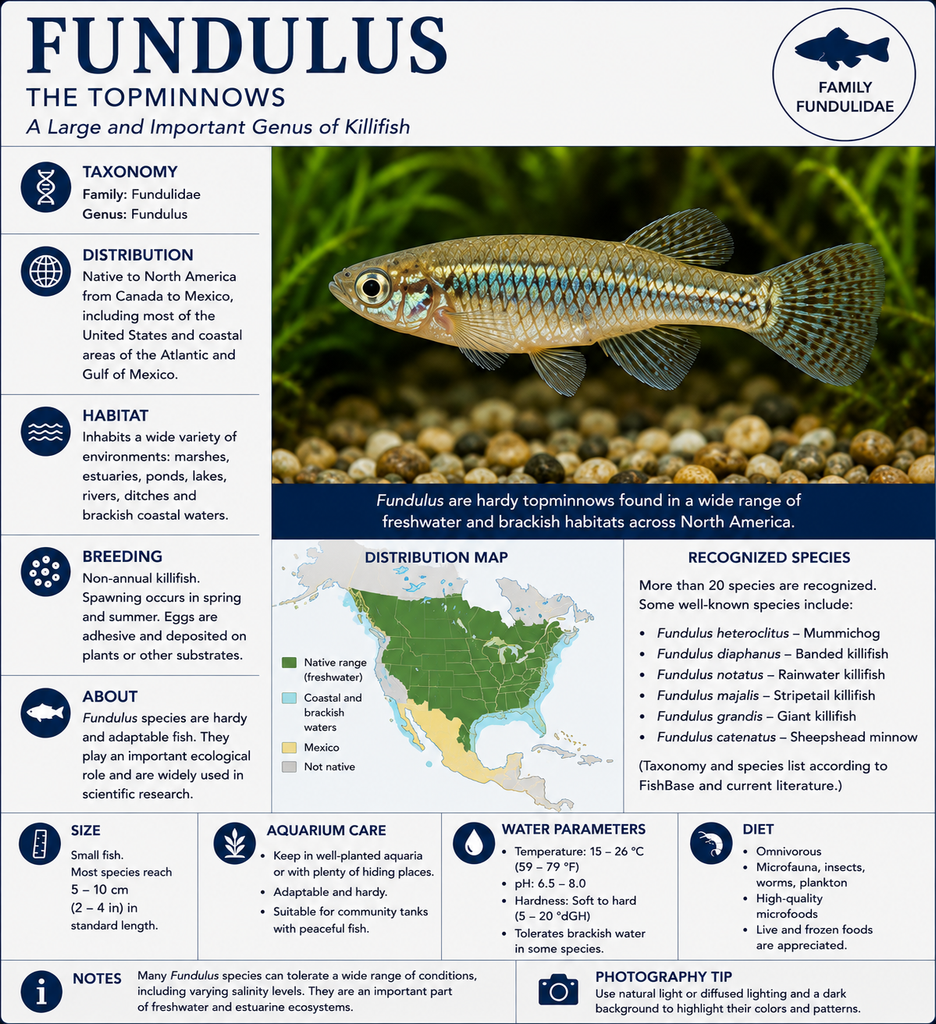
Fundulus


Fundulus is a genus of small fish commonly known as killifish, which is part of the family Fundulidae. These fish are distributed throughout North and Central America, with some species also found in parts of South America. Killifish are known for their vibrant colors, adaptability to various environments, and their popularity among aquarists. In this 2000-word essay, we will explore the genus Fundulus, its biology, ecology, behavior, and significance in the scientific and aquarium communities.

Fundulus Taxonomy and Classification

Fundulus belongs to the order Cyprinodontiformes, which comprises a diverse group of freshwater and saltwater fish. The family Fundulidae includes around 40 recognized species, with more likely awaiting discovery. These species are distributed across various ecosystems, from freshwater streams and ponds to saltwater marshes and estuaries. While Fundulus is the most well-known genus in this family, other genera like Lucania and Cyprinodon are also part of the Fundulidae family.

Killifish have been widely studied due to their adaptability and genetic diversity. This has led to various subspecies and populations being identified within the genus Fundulus. Some well-known species within this genus include the mummichog (Fundulus heteroclitus), the sheepshead minnow (Fundulus majalis), and the striped killifish (Fundulus majalis). Each of these species has unique characteristics, but they share common traits, which make them a fascinating subject of study.

Distribution and Habitat

Fundulus species are highly adaptable, and their distribution ranges from the eastern coast of the United States to parts of Central and South America. They can be found in a wide variety of habitats, including freshwater streams, rivers, ponds, salt marshes, and estuaries. Their remarkable adaptability has allowed them to thrive in environments with significant salinity fluctuations, temperature changes, and water quality variations.

One of the most studied Fundulus species, Fundulus heteroclitus, is known for its ability to live in waters with varying salinity levels. They can tolerate salinities from freshwater to full seawater. This adaptability is especially evident in their preference for brackish and saltwater marshes. Fundulus majalis, on the other hand, is primarily found in freshwater environments.

Biology and Morphology

Killifish exhibit a wide range of body shapes, sizes, and colors. Their physical characteristics are closely related to their specific habitats. In general, Fundulus species have elongated bodies with rounded fins and a slightly forked tail. They are typically small fish, with adults ranging from 2 to 6 inches in length, depending on the species.

Their coloration is highly variable, and some Fundulus species display vibrant patterns and colors, which is one of the reasons they are popular in the aquarium trade. The mummichog, for instance, displays striking coloration, with males often sporting bright blue, green, or orange hues, especially during the breeding season. The striped killifish, as its name suggests, has bold, vertical black stripes along its body.

Reproduction and Life Cycle

Fundulus species are known for their unique reproductive strategies. They are oviparous, which means they lay eggs, and their reproductive behaviors are influenced by environmental factors such as temperature and photoperiod.

During the breeding season, male killifish develop vibrant colors to attract females. The courtship involves elaborate displays, where males perform zigzagging and quivering movements to entice potential mates. Once a female selects a suitable partner, they engage in a brief courtship dance before the female lays her eggs in a protected substrate, often within aquatic vegetation.

After fertilization, the male may provide some parental care by guarding the eggs and ensuring they receive adequate oxygen and protection. The time it takes for the eggs to hatch varies based on temperature and other environmental factors. Once the fry (young fish) hatch, they are left to fend for themselves.

Feeding Habits

Killifish are opportunistic feeders and have a varied diet. Their feeding habits largely depend on the availability of prey in their respective habitats. In the wild, they consume a wide range of small aquatic invertebrates, including insects, crustaceans, and worms. In captivity, they are commonly fed live or frozen foods such as brine shrimp, daphnia, and small aquatic insects.

Their ability to consume a variety of food sources makes them an intriguing subject for research into their ecological roles in different ecosystems.

Behavior and Social Structure

Fundulus species are generally social fish and tend to form loose groups. They are known for their territorial behavior, especially during the breeding season when males establish and defend small territories. While they may compete for territory, their interactions are typically non-aggressive, involving posturing and displays rather than physical confrontation.

Their schooling behavior is more pronounced in the presence of potential predators, as the safety of numbers helps deter attacks. This behavior can also be observed in captive killifish, making them an interesting addition to aquariums.

Significance in Scientific Research

Killifish, particularly species within the genus Fundulus, have been instrumental in various areas of scientific research. Their adaptability, reproductive behaviors, and genetic diversity make them valuable subjects for research in fields such as ecology, toxicology, and evolutionary biology. Here are some of the key areas where killifish have made significant contributions:

Ecotoxicology

Fundulus species have been extensively used in ecotoxicological studies to assess the effects of environmental contaminants. Their ability to thrive in diverse habitats has made them suitable test organisms to study the impact of pollutants, including heavy metals, pesticides, and oil spills. The mummichog, Fundulus heteroclitus, is particularly well-known for its role in studying the effects of contaminants in salt marsh ecosystems.

Evolutionary Biology

Killifish’s unique adaptations to different environments have made them a valuable model for studying evolutionary processes. Researchers have used them to investigate how populations evolve in response to changing environmental conditions, including shifts in temperature and salinity. This research provides insights into the mechanisms of adaptation and speciation.

Developmental Biology

The embryonic development of killifish is well-documented, making them valuable in developmental biology studies. Their transparent eggs and relatively short time to hatching provide a convenient model for studying various developmental processes, including organogenesis and embryogenesis.

Genetics and Genomics

Killifish are increasingly being used in genetics and genomics research due to their genetic diversity and adaptability. They have become a valuable model for understanding the genetics of adaptation, regeneration, and other biological processes. Researchers are mapping their genomes to gain insights into the genes responsible for their remarkable adaptability.

Aquarium Keeping

Beyond their significance in scientific research, killifish, particularly those within the genus Fundulus, have gained popularity among aquarium enthusiasts. Their vibrant colors, unique behaviors, and manageable size make them attractive additions to home aquariums. The ease of keeping and breeding many Fundulus species has contributed to their popularity in the hobby.

When setting up an aquarium for Fundulus, it’s essential to consider their natural habitat and water quality preferences. Many Fundulus species prefer brackish water conditions, while others thrive in freshwater. Maintaining appropriate salinity levels and water parameters is crucial for their well-being.

Challenges in Conservation

While killifish are resilient and adaptable, they are not immune to the challenges posed by habitat destruction, pollution, and other environmental stressors. Human activities have led to the degradation of wetlands, estuaries, and freshwater habitats where Fundulus species are found. Pollution, particularly in urban areas and agricultural regions, has also negatively impacted their populations.

Conservation efforts are critical to preserving the genetic diversity of Fundulus species and their unique adaptations. Protecting and restoring their natural habitats is essential to ensure their long-term survival. Additionally, regulations on the use of pesticides and other contaminants in areas inhabited by killifish are necessary to safeguard their populations.

Conclusion

Fundulus, the genus of small fish commonly known as killifish, is a remarkable group of species known for their adaptability, unique reproductive behaviors, and significance in both scientific research and the aquarium trade. These fish are found in diverse habitats, from freshwater ponds and streams to brackish and saltwater marshes, demonstrating their ability to thrive in challenging conditions.

Their adaptability has made them a valuable subject in scientific research, particularly in the fields of ecotoxicology, evolutionary biology, developmental biology, genetics, and genomics. Their transparent eggs and quick development have made them ideal models for studying various biological processes.

In the world of aquarium keeping, Fundulus species, with their vibrant colors and interesting behaviors, have become a favorite among enthusiasts. Understanding their natural habitat and water quality preferences is crucial for their successful care in home aquariums.

However, as with many species in today’s world, Fundulus face challenges due to habitat destruction, pollution, and other environmental stressors. Conservation efforts are vital to protect and preserve these unique fish and their important role in various ecosystems.

Fundulus exemplifies the fascinating interplay between the scientific community’s desire to understand the natural world and the human interest in bringing the beauty and wonder of nature into our homes through the captivating world of aquariums. Their adaptability, vibrant colors, and rich history in scientific research make them a species of fish that will continue to intrigue and inspire us for years to come.

Lucania

Lucania is a genus of small freshwater fish belonging to the family Cyprinodontidae, commonly known as the pupfishes. This genus is primarily found in North and Central America and is known for its diverse species, unique ecological adaptations, and importance in the study of evolution and ecology. In this comprehensive article, we will explore the taxonomy, physical characteristics, distribution, behavior, reproduction, conservation status, and significance of the Lucania genus.

Taxonomy and Classification:

The genus Lucania falls within the family Cyprinodontidae, which is commonly referred to as the pupfish family. Cyprinodontidae is a diverse family of small, often colorful, and ecologically specialized fishes. Within the genus Lucania, there are several recognized species, each with its own unique characteristics and distribution.

Physical Characteristics:

Lucania species exhibit a range of physical characteristics, but they share some commonalities:

  1. Size: Lucania species are typically small, with most individuals measuring between 3 to 7 centimeters (1.2 to 2.8 inches) in length. Their size may vary depending on the species and environmental conditions.
  2. Coloration: Pupfishes are known for their vibrant colors, and Lucania species are no exception. Males often display more vibrant colors than females, and these colors can vary from bright blue and green to red and yellow. The coloration serves various purposes, including attracting mates and establishing territory.
  3. Fin Characteristics: They typically have well-developed fins, including dorsal, anal, pectoral, and caudal fins. These fins may have color patterns and are used for swimming, courtship displays, and navigation.
Distribution:

Lucania species are primarily found in North and Central America, with their distribution varying depending on the specific species. Some of the regions where Lucania species are known to inhabit include:

  1. Eastern United States: Several Lucania species are native to the eastern United States, particularly in the southeastern states. They are often found in freshwater habitats such as streams, ponds, and swamps.
  2. Central America: Some Lucania species have distributions that extend into Central America, including countries like Mexico, Guatemala, and Honduras.
  3. Isolated Habitats: Lucania pupfishes are known for their ability to adapt to isolated and specialized habitats, including desert springs, cave pools, and thermal springs.
Behavior:

Pupfishes, including Lucania species, exhibit a range of interesting behaviors:

  1. Feeding: They are omnivorous and feed on a variety of small aquatic organisms, including algae, small invertebrates, and detritus. Their diet may vary depending on the availability of food in their habitat.
  2. Social Behavior: Many pupfishes are known for their complex social behaviors, including territoriality and courtship displays. Males often establish and defend territories, using their bright colors and displays to attract females and deter rival males.
  3. Reproductive Behavior: Pupfishes typically have elaborate courtship rituals, during which males display their colorful fins and engage in behaviors to court females. Once a female is receptive, the male fertilizes the eggs externally, and the female may deposit them in a suitable substrate.
  4. Habitat Adaptations: Some Lucania species are adapted to extreme environmental conditions, such as high temperatures and salinity levels. They have developed physiological and behavioral adaptations to thrive in these challenging environments.
Reproductive Strategy:

The reproductive strategy of Lucania species aligns with that of other members of the pupfish family:

  1. Courtship: During the breeding season, males undergo significant changes in coloration and behavior. They display vibrant colors and engage in courtship displays to attract females.
  2. Egg Deposition: Once a female is receptive, she may lay her eggs on a suitable substrate, such as aquatic plants or gravel. In some species, males may assist in guarding the eggs.
  3. External Fertilization: Pupfishes practice external fertilization, where males release sperm to fertilize the eggs externally. The fertilized eggs develop outside the female’s body.
  4. Parental Care: The extent of parental care varies among species. Some may exhibit minimal parental care, while others, especially males, may actively guard the eggs and provide protection to the developing fry.

This reproductive strategy allows pupfishes to adapt to a wide range of aquatic environments and to take advantage of various ecological niches.

Conservation Status:

The conservation status of Lucania species varies depending on the specific species and their respective habitats. While some pupfish species are abundant and face no immediate threats, others are considered endangered or critically endangered due to habitat loss, pollution, introduced species, and changes in water quality.

Conservation efforts for pupfishes often focus on habitat restoration and protection, as well as the establishment of captive breeding programs to safeguard endangered populations. Some pupfish species have made a remarkable recovery thanks to these conservation efforts.

Significance in Evolutionary and Ecological Studies:

Pupfishes, including those in the Lucania genus, hold significant importance in evolutionary and ecological studies for several reasons:

  1. Adaptation to Extreme Environments: Many pupfish species are known for their ability to thrive in extreme and isolated environments, such as desert springs and caves. Their adaptations provide valuable insights into the mechanisms of evolution and speciation.
  2. Hybridization Studies: In certain regions where different pupfish species overlap in distribution, hybridization can occur. Studying these hybrid zones offers insights into the processes of hybridization, introgression, and speciation.
  3. Behavioral Ecology: Pupfishes exhibit complex social and reproductive behaviors, making them excellent subjects for studying mating systems, mate choice, and territoriality.
  4. Conservation Biology: Pupfishes serve as focal species in conservation biology efforts, as they are often indicators of habitat health and ecosystem integrity. The conservation efforts aimed at protecting pupfishes have broader implications for the conservation of aquatic ecosystems.

In conclusion, the Lucania genus of pupfishes is a diverse and fascinating group of small freshwater fish found in North and Central America. Their vibrant colors, intricate behaviors, and adaptations to various environments make them important subjects of study in the fields of evolutionary biology, ecology, and conservation. As we continue to learn more about these unique fish, we gain valuable insights into the processes of adaptation, speciation, and the conservation of biodiversity in aquatic ecosystems.

Jordanella – Flagfish

Jordanella is a fascinating genus of freshwater fish within the family Fundulidae, known for their vibrant colors, unique behaviors, and adaptability to various aquatic environments. This genus includes several species of flagfish, each with its distinct characteristics and distribution. Native to North America, these fish have become popular choices for aquarium enthusiasts and aquarists worldwide. In this comprehensive essay, we will delve into the taxonomy, habitat, behavior, reproduction, care, and conservation of Jordanella flagfish, shedding light on their significance in the realm of ornamental fishkeeping and aquatic biology.

Taxonomy and Classification

Jordanella species belong to the family Fundulidae within the order Cyprinodontiformes. Taxonomically, their classification can be summarized as follows:

  • Kingdom: Animalia
  • Phylum: Chordata
  • Class: Actinopterygii
  • Order: Cyprinodontiformes
  • Family: Fundulidae
  • Genus: Jordanella

Within the genus Jordanella, there are several recognized species, each with its unique traits and characteristics. These species have intrigued aquarists and researchers alike, offering valuable insights into the diverse world of flagfish.

Habitat and Distribution

Jordanella species are primarily found in freshwater habitats across North America, with distribution extending from the southeastern United States to parts of Mexico. Their natural habitats encompass a range of aquatic environments, including slow-moving streams, small rivers, swamps, marshes, and the shallow edges of lakes and ponds.

In the wild, Jordanella species often inhabit areas with dense aquatic vegetation, submerged roots, and leaf litter, which provide shelter and foraging opportunities. Their adaptability to different water conditions and habitats has contributed to their survival and their popularity in the aquarium trade.

Physical Characteristics

Jordanella flagfish are known for their vibrant colors and unique physical features. While individual variations can occur, some common characteristics include:

  • Size: Jordanella species are relatively small, with adult lengths typically ranging from 4 to 6 centimeters (approximately 1.5 to 2.5 inches).
  • Coloration: These fish boast a dazzling array of colors, with males often showcasing bright hues of blue, red, yellow, and green on their fins and bodies. Females, in contrast, tend to display more subdued colors.
  • Body Shape: They possess an elongated, slightly flattened body shape characteristic of flagfish species. Their dorsal and anal fins may feature extensions and intricate patterns.
  • Facial Features: Jordanella species have relatively small mouths adapted for carnivorous feeding habits. Their well-developed eyes facilitate prey detection and navigation in their complex habitats.
  • Fins: These fish possess well-developed dorsal, anal, and caudal fins that contribute to their agility and swimming abilities. Prominent pelvic and pectoral fins further enhance their mobility.
  • Markings: Males often exhibit distinctive markings on their bodies and fins, which are crucial for species recognition and courtship displays.
Behavior and Feeding

Jordanella flagfish display intriguing behaviors and feeding habits that reflect their adaptations to their natural habitats. Here are some key aspects of their behavior:

Territorial Behavior: Like many other flagfish species, Jordanella species can be territorial, especially during the breeding season. Males frequently establish and defend territories, which they use to attract females and engage in courtship displays.

Aggression: While they can coexist in community aquariums, these fish are known for their territorial and occasionally aggressive conduct, particularly when breeding or safeguarding their territory. Consequently, careful consideration is necessary when selecting tank mates to prevent excessive aggression.

Feeding Habits: Jordanella species are carnivorous and primarily feed on small invertebrates, insects, and other aquatic organisms within their natural habitats. In captivity, they eagerly accept a diet comprising high-quality pellet or flake foods, supplemented with live or frozen prey such as brine shrimp, daphnia, and bloodworms.

Social Structure: In the wild, they may form loose social groups or schools, particularly during foraging expeditions. In captivity, their social dynamics vary based on tank configuration and the presence of other fish.

Reproductive Strategies

Jordanella flagfish are renowned for their captivating reproductive behaviors and unique adaptations to their dynamic habitats. Here are some common aspects of their reproductive strategies:

Courtship Displays: During the breeding season, males perform intricate courtship displays to attract females. These displays often involve fin extensions, vibrant colors, and elaborate body movements.

Egg Deposition: Following successful courtship, the female deposits her eggs among vegetation or substrate, often in shallow waters. The eggs possess adhesive properties, allowing them to adhere to plants or other surfaces.

Incubation: Differing from many other fish species, Jordanella flagfish do not provide parental care. Instead, the eggs develop and hatch autonomously, relying on the surrounding environment.

Adaptations to Seasonal Habitats: One of the most fascinating aspects of their reproductive strategy is their adaptation to seasonal habitats. In the wild, certain Jordanella populations lay their eggs in areas that become temporarily inundated during the rainy season. The eggs remain dormant until the habitat floods anew, instigating hatching.

Care and Maintenance in Aquariums

Maintaining Jordanella flagfish in aquariums can be a rewarding experience, but it requires careful attention to their specific requirements. Here are some key considerations:

Tank Size: A small group of Jordanella flagfish can comfortably inhabit a 10 to 20-gallon aquarium.

Decor: Offer ample hiding places such as caves, plants, driftwood, and leaf litter to create territories and mitigate aggression. Dense vegetation and floating plants can simulate their natural habitat.

Water Parameters: Jordanella species thrive in slightly acidic to neutral water conditions, with a pH range of 6.0 to 7.5. Maintain a temperature between 72°F to 78°F (22°C to 26°C).

Diet: Provide a diverse diet comprising high-quality pellets or flakes, supplemented with live or frozen foods like brine shrimp, daphnia, and bloodworms. Introduce some vegetable matter, such as spirulina flakes or blanched vegetables, to their diet.

Compatibility: When selecting tank mates, exercise caution to prevent excessive aggression. Peaceful, non-territorial fish species often make suitable companions for Jordanella flagfish.

Breeding: Breeding Jordanella flagfish in captivity can be achieved with careful attention to their habitat requirements and seasonal variations. Successful reproduction may necessitate a separate breeding tank with controlled conditions.

Water Quality: Ensure excellent water quality by conducting regular water changes and monitoring parameters such as ammonia, nitrites, and nitrates.

Conservation Status and Threats

The conservation status of Jordanella flagfish varies among populations and is influenced by habitat degradation and collection for the aquarium trade. Several main threats to wild populations include:

Habitat Destruction: Urbanization, agricultural practices, and wetland drainage have led to the degradation and loss of natural habitats for Jordanella species.

Water Pollution: Pollution from runoff, industrial discharges, and pesticide use can compromise water quality in their habitats, potentially harming both the fish and their prey.

Collection for the Aquarium Trade: Some Jordanella species are popular choices in the aquarium trade, leading to overcollection in certain regions. Encouraging sustainable collection practices is essential to safeguard wild populations.

Conservation Efforts

Efforts to conserve Jordanella flagfish and their habitats include initiatives such as:

  • Habitat Preservation: Identifying and protecting critical habitats are vital for the long-term survival of these fish.
  • Water Quality Management: Implementing measures to reduce water pollution and maintain high water quality in their habitats.
  • Research and Monitoring: Conducting research to better understand the ecology and behavior of Jordanella species, which informs and strengthens conservation efforts.
Conclusion

Jordanella, the genus of flagfish, encompasses a diverse and captivating array of species that have captured the interest of aquarium enthusiasts and aquatic biologists alike. With their stunning colors, intriguing behaviors, and unique adaptations to dynamic habitats, these fish serve as a testament to the beauty and resilience of life within freshwater ecosystems.

Efforts to ensure the continued well-being of Jordanella flagfish involve preserving their habitats, promoting responsible collection practices, and raising awareness about these extraordinary fish. Through these measures, we can ensure that Jordanella species continue to thrive and inspire aquarium enthusiasts and aquatic biologists for generations to come.