Category Archives: Asia

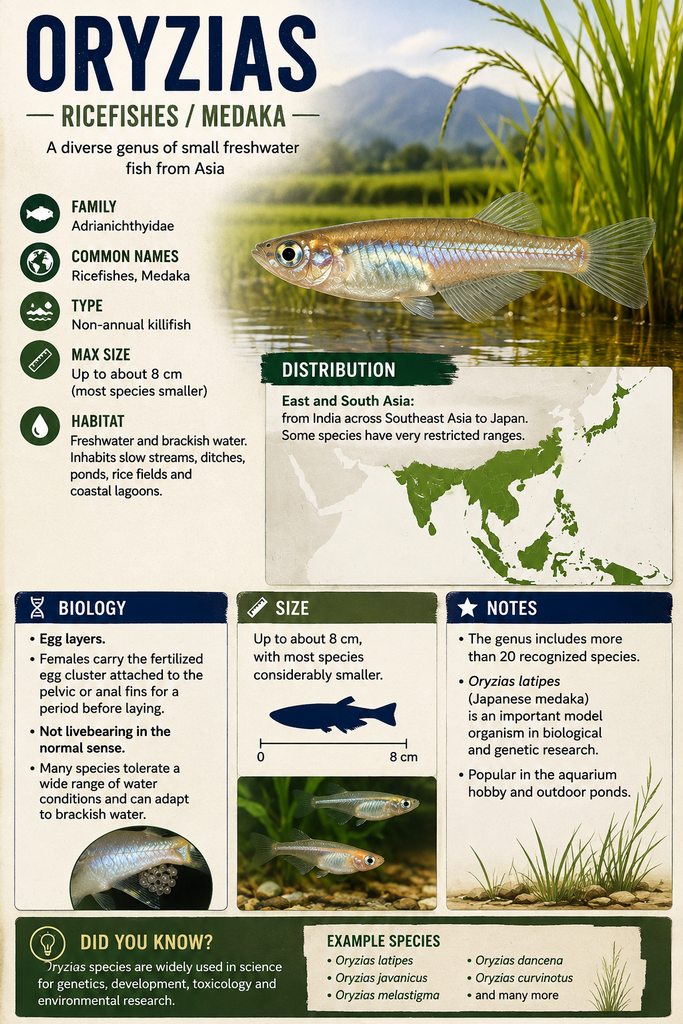
Oryzias – Medaka

Oryzias, commonly known as Medaka, is a fascinating species of fish that captures the attention of both scientists and aquarium enthusiasts alike. With its vibrant colors and peaceful demeanor, Medaka has become increasingly popular as a pet and a research model due to its unique abilities and evolutionary adaptations.

Originally native to East Asia, particularly Japan and Korea, Medaka has a long history dating back thousands of years. Its name, Oryzias, is derived from the Greek words “oryza” meaning rice, and “ias” meaning fish, alluding to its association with rice fields where it was often found. Medaka’s evolutionary journey in these rice fields has led to some remarkable traits that distinguish it from other fish species.

One of the most captivating elements of Medaka is its remarkable reproductive ability. Unlike most fish, Medaka is an ovoviviparous species, meaning it gives birth to live fry instead of laying eggs. This reproductive strategy allows Medaka to have a higher survival rate and adapt more efficiently to changing environments. Because of this unique ability, Medaka has become a crucial model organism for studying embryology and genetics.

Medaka’s significance extends beyond its reproductive capabilities. It has emerged as a valuable tool for biomedical research due to its genetic similarities to humans. In fact, Medaka shares approximately 70% of its genes with humans, providing scientists with a relevant model to study a wide range of human diseases and conditions. With the advances in genetic engineering techniques, Medaka has been extensively utilized in research related to cancer, organ regeneration, and aging, among others.

Additionally, Medaka’s ability to adapt quickly to varying environmental conditions has caught the attention of researchers addressing pressing ecological challenges. With climate change threatening many ecosystems around the world, understanding how species like Medaka can adapt and survive in changing environments is crucial. By studying the genetic and physiological mechanisms behind Medaka’s adaptability, scientists hope to gain insights that can inform conservation efforts and help protect vulnerable species.

As aquarium fish enthusiasts are drawn to Medaka’s vibrant colors and serene nature, they play a significant role in preserving its genetic diversity. Due to selective breeding, several distinct color variations of Medaka have been developed, further enhancing its popularity. Given the increasing demand for Medaka as an ornamental fish, responsible breeding practices are essential to prevent the loss of genetic diversity and safeguard the long-term survival of this extraordinary species.

In conclusion (omit this sentence), Medaka, or Oryzias, is not just a visually captivating fish but also an important model organism for scientific research. Its unique reproductive abilities, genetic similarity to humans, and adaptability to changing environments make it a valuable asset in the fields of genetics, biomedical research, and ecology. As we continue to unravel the mysteries of Medaka, we gain valuable insights into our own biological complexities and the importance of preserving diverse ecosystems.

What is Oryzias – Medaka? Exploring the Fascinating World of this Tropical Fish Species

Oryzias – Medaka, also known as Japanese Rice Fish, is a captivating tropical fish species that has gained immense popularity among aquarium enthusiasts. This article delves into the intriguing characteristics, care requirements, and unique aspects of Oryzias – Medaka, offering a comprehensive understanding of this remarkable fish. Discover the captivating beauty and mesmerizing behavior of Oryzias – Medaka, including its vibrant colors, adaptability to various environments, and fascinating reproductive strategies. Dive into the world of this extraordinary fish species and uncover the secrets behind its widespread appeal.

The Answer to Oryzias – Medaka

Oryzias, commonly known as Medaka, is a small freshwater fish species that belongs to the family Adrianichthyidae, which is native to East Asia. It is also referred to as the Japanese killifish or ricefish. Medaka is a popular model organism for scientific research due to its unique characteristics and relatively simple genetics.

Characteristics and Appearance

The Medaka fish is generally small in size, measuring around 2 to 4 centimeters in length. It has a streamlined body shape with a slightly elongated and laterally compressed form. The coloration of Medaka varies widely, with individuals displaying different patterns including silver, gold, orange, and black. Some specimens may also have characteristic spots or stripes on their bodies.

Habitat and Distribution

Oryzias or Medaka fish are primarily found in freshwater habitats of East Asia, including Japan, Korea, and China. They typically inhabit rice paddies, ditches, ponds, and slow-moving streams. Medaka fish are known for their ability to adapt to various environmental conditions, including low oxygen levels and changing water temperatures.

Life Cycle and Reproduction

Medaka fish have a relatively short life cycle, with an average lifespan of around one to two years. They are known for their rapid growth and early sexual maturity, making them ideal for studying developmental biology and genetics. Medaka reproduce by internal fertilization, with males transferring sperm to females through a specialized fin called the gonopodium. Female Medaka can produce a large number of eggs, with a single spawning event resulting in hundreds of offspring.

Importance in Scientific Research

Medaka fish have become a valuable model organism for various scientific studies due to their unique characteristics and biological features. They have been extensively studied in fields such as genetics, developmental biology, toxicology, and evolution. The small size, transparent embryos, and well-defined genome of Medaka make them ideal for studying gene function, embryogenesis, and disease modeling.

Medaka as a Genetic Model

One of the key advantages of using Medaka as a genetic model is its high genetic similarity to humans. Many genes and molecular pathways found in Medaka have counterparts in humans, allowing researchers to gain insights into human biology and diseases. Medaka also has a relatively small genome size, which facilitates the identification of genes and their functions.

Medaka as a Toxicological Model

Due to their sensitivity to environmental toxins, Medaka fish have been extensively used as a model for toxicological studies. Researchers can expose Medaka embryos or adult fish to various chemicals or pollutants to assess their effects on development, behavior, and physiology. The transparent embryos of Medaka enable direct observation of organ formation and potential abnormalities caused by toxic substances.

Conservation Status

Despite being widely used in scientific research, Medaka fish do not face significant conservation concerns. They are considered a species of least concern by the International Union for Conservation of Nature (IUCN). The adaptability and fast reproductive rate of Medaka contribute to their stable population size and widespread distribution.

Final Thoughts

In conclusion, Oryzias or Medaka fish are a fascinating freshwater fish species that have captured the interest of scientists worldwide. Their unique characteristics, rapid growth, and adaptability make them an ideal model organism for studying various biological processes. As research advances, the knowledge gained from studying Medaka will continue to contribute to our understanding of genetics, developmental biology, toxicology, and more.

Statistic: Medaka fish have a lifespan of approximately one to two years.

Frequently Asked Questions about Oryzias – Medaka

1. What is Oryzias – Medaka?

Oryzias – Medaka is a species of small freshwater fish native to Southeast Asia, specifically Japan. It belongs to the family Adrianichthyidae and is commonly referred to as Medaka or Ricefish.

2. Are Medaka fish suitable for beginners?

Yes, Medaka fish are often recommended for beginners in the aquarium hobby due to their hardiness and ease of care. They have a tolerance for a wide range of water conditions and are generally peaceful, making them a great choice for novice fishkeepers.

3. What is the ideal habitat for Medaka fish?

Medaka fish thrive in a well-maintained freshwater aquarium with a temperature range of 70-82°F (21-28°C) and a pH level between 6.5 and 8.0. They prefer a well-planted tank with plenty of hiding spots, along with peaceful tank mates.

4. How big do Medaka fish grow?

Adult Medaka fish typically reach a size of 1.5 to 2 inches (3.8 to 5 cm) in length, with females being slightly larger than males. However, there are different varieties of Medaka that may differ in size and coloration.

5. What do Medaka fish eat?

Medaka fish are omnivorous and have a varied diet. They primarily consume small aquatic invertebrates, but they also eat algae and plant matter. In home aquariums, a balanced diet of high-quality fish flakes or pellets, supplemented with live or frozen foods such as brine shrimp or bloodworms, is suitable.

6. Can Medaka fish be kept in a community tank?

Yes, Medaka fish can be kept in a community tank as long as their tank mates are compatible. They are generally peaceful but can be fin nippers if housed with long-finned or slow-moving fish. Good tank mates for Medaka include small peaceful fish such as tetras, guppies, or rasboras.

7. Do Medaka fish display any interesting behaviors?

Yes, Medaka fish are known for their interesting behaviors. They are interactive and often display schooling behavior, which makes them enjoyable to watch. Additionally, male Medaka perform courtship displays, where they chase and flare their fins to attract females.

8. Can Medaka fish change their color?

Yes, Medaka fish have the ability to change their color under certain conditions. They possess specialized color cells called chromatophores that allow them to change their hues. Factors such as stress, temperature, and water quality can influence their coloration.

9. How long is the lifespan of Medaka fish?

On average, Medaka fish have a lifespan of 2 to 3 years. However, with proper care and optimal conditions, they can sometimes live up to 4 or 5 years in captivity.

10. Can Medaka fish be bred in home aquariums?

Yes, Medaka fish are known for their prolific breeding habits and can be easily bred in home aquariums. They are livebearers, meaning the females give birth to live fry. Creating a suitable breeding environment with plants and hiding spots can encourage successful breeding in Medaka fish.

Conclusion

In conclusion, Oryzias – Medaka is a small freshwater fish that has gained significant attention in research due to its unique characteristics and adaptability. This article has highlighted several key points and insights about this fish species.

Firstly, Oryzias – Medaka is known for its impressive genetic and genomic resources. Its small genome size, short generation time, and large brood size make it an ideal model organism for genetic studies. Researchers have been able to identify and study various genes related to development, behavior, and disease using Medaka. This has not only provided insights into the biology of this fish but also contributed to understanding fundamental biological processes in other organisms, including humans.

Secondly, Oryzias – Medaka possesses remarkable regenerative abilities. It can regenerate various body parts, including its fins, heart, and spinal cord. This ability makes Medaka a valuable model for studying tissue regeneration and stem cell research. Moreover, Medaka has also been used to investigate the effects of environmental factors on regeneration, such as the impact of pollutants and toxins. Such research has significant implications for understanding human tissue repair and potential applications in regenerative medicine.

Overall, the diverse features of Oryzias – Medaka have made it an invaluable species for scientific research. Its genetic and genomic resources, as well as its regenerative abilities, have provided numerous insights into various biological processes. Continued research on Medaka promises to further expand our understanding of development, regeneration, and disease, leading to potential advancements in medicine and biotechnology.

Medaka

Medaka (Oryzias latipes): Guide to Japanese Rice Fish

Medaka, scientifically known as Oryzias latipes, is a small and colorful freshwater fish species native to East Asia. These charming fish are renowned for their vibrant colors, adaptability, and significance in scientific research. In this comprehensive guide, we will explore the taxonomy, physical characteristics, habitat, behavior, reproduction, role in scientific research, and their presence in the aquarium hobby.

Taxonomy and Classification:

Medaka belongs to the family Adrianichthyidae, which includes a diverse group of small freshwater fish primarily found in Southeast Asia. The scientific name for medaka is Oryzias latipes. This genus comprises various species, each with its unique characteristics and distributions.

Physical Characteristics:

Medaka, Oryzias latipes, possesses distinct physical features:

  1. Size: These fish are relatively small, with adult individuals typically reaching lengths of 2 to 4 centimeters (approximately 0.8 to 1.6 inches). Their small size makes them ideal for keeping in aquariums.
  2. Coloration: Medaka are known for their striking and diverse colors, including silver, gold, blue, red, and green. The exact coloration can vary between individuals and populations.
  3. Body Shape: They have elongated bodies with a streamlined shape, allowing them to swim swiftly in their aquatic habitats.
  4. Sexual Dimorphism: In some cases, males and females may display differences in coloration and fin morphology, especially during the breeding season.
Habitat and Distribution:

Medaka are native to various parts of East Asia, with their natural range encompassing countries such as Japan, China, Korea, and Taiwan. They inhabit a wide range of freshwater habitats, including rice paddies, streams, ponds, and marshes. Their adaptability allows them to thrive in diverse environments and tolerate varying water conditions.

Behavior:

The behavior of medaka is influenced by their habitat and social interactions:

  1. Feeding: Medaka are omnivorous and primarily feed on small aquatic invertebrates, algae, and detritus. They use their keen vision and quick movements to capture prey in their environment.
  2. Schooling: In the wild, medaka often form schools, which provides protection against predators and helps them find food more efficiently.
  3. Territorial Behavior: During the breeding season, males may become territorial and engage in aggressive interactions with other males to establish and defend a breeding territory.
Reproduction:

Medaka employ a unique mode of reproduction known as oviparous reproduction, which involves the following steps:

  1. Courtship: Courtship behaviors vary between species but often involve male displays, such as fin spreading, circling, and zigzag swimming, to attract females.
  2. Egg Deposition: Females release adhesive eggs that attach to aquatic vegetation or substrate. The number of eggs produced can vary among species and individuals.
  3. Fertilization: Males release sperm to fertilize the eggs externally. This external fertilization process typically occurs near the egg deposition site.
  4. Parental Care: In some species, males may provide some level of parental care, such as guarding the eggs and young fry. However, the extent of parental care varies among species.
  5. Rapid Development: Medaka eggs hatch relatively quickly, and the fry are often independent from an early age.
Role in Scientific Research:

Medaka are of great importance in scientific research for several reasons:

  1. Regeneration Studies: Medaka have remarkable regenerative abilities, particularly in their fins and hearts. They are used as model organisms to study tissue regeneration and the potential for regenerative medicine.
  2. Embryonic Development: The transparent eggs of medaka make them ideal for studying embryonic development. Researchers use them to investigate various aspects of embryogenesis, including organ formation and patterning.
  3. Genetic Studies: Medaka have a relatively small genome and are amenable to genetic manipulation, making them valuable for studying gene function and genetic diseases.
  4. Toxicology and Environmental Studies: Their sensitivity to environmental toxins and pollutants makes them useful for assessing the impact of pollutants on aquatic ecosystems.
  5. Space Research: Medaka have been sent into space on several occasions to study the effects of microgravity on development and physiology.
Presence in the Aquarium Hobby:

Many species of medaka are popular among aquarium enthusiasts due to their colorful varieties and adaptability to aquarium conditions. When keeping medaka in an aquarium, here are some key considerations:

  1. Tank Size: A small aquarium with a capacity of at least 10 gallons is suitable for a small group of medaka.
  2. Water Parameters: Medaka are adaptable but generally prefer slightly alkaline to neutral water with a pH range of 6.5 to 7.5. The water temperature should be maintained between 70°F and 75°F (21°C to 24°C).
  3. Habitat Setup: Create a well-planted aquarium with hiding places and suitable substrate. Provide adequate filtration and regular water changes to maintain water quality.
  4. Diet: Offer a varied diet that includes high-quality flakes, pellets, live or frozen foods, and occasional treats like brine shrimp or daphnia.
  5. Compatibility: Medaka are generally peaceful and can be kept with other small, non-aggressive fish species. Avoid keeping them with larger or aggressive tankmates.
Conservation and Conservation Status:

The conservation status of medaka varies depending on the specific species and their habitats. Some populations may face threats such as habitat destruction, pollution, and competition with invasive species. Conservation efforts may include habitat restoration, water quality improvement, and the establishment of protected areas.

In conclusion, medaka, specifically Oryzias latipes, are a captivating and ecologically significant species native to East Asia. Their stunning colors, adaptability, and importance in scientific research make them a fascinating subject of study and a popular choice among aquarium enthusiasts. Understanding their biology, natural behaviors, and care requirements is essential for their well-being in both their natural habitats and captivity.

Aplocheilus


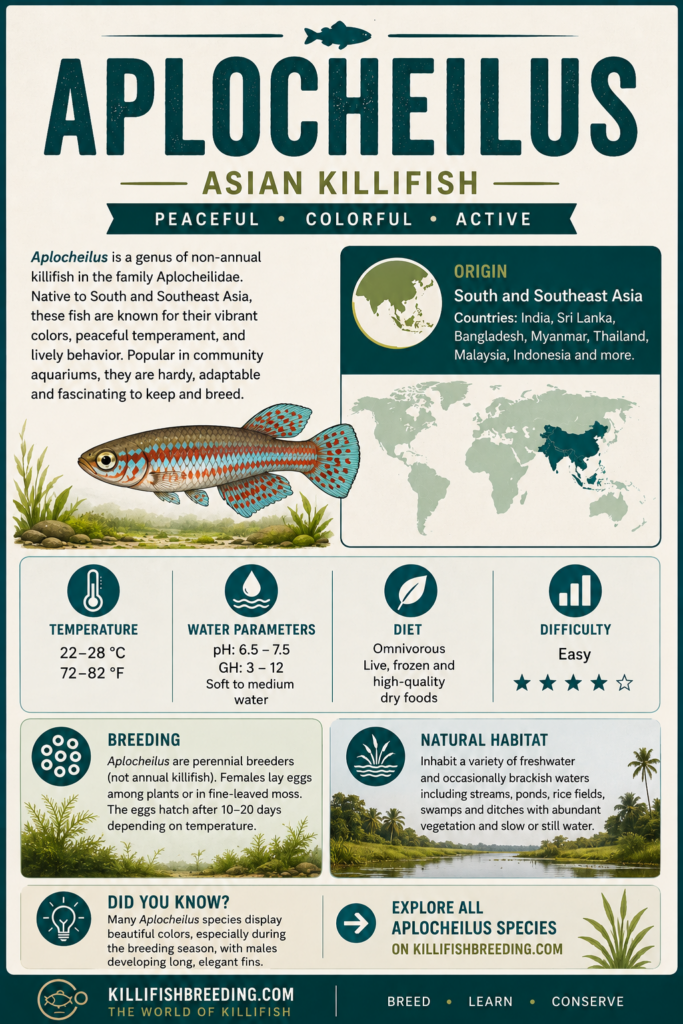
Aplocheilus: A Diverse Genus of Killifish

The genus Aplocheilus encompasses a diverse group of freshwater fish commonly referred to as killifish. These fish are distributed across various regions of Asia and are known for their vibrant colors, intricate patterns, and unique behaviors. In this overview, we will explore the genus Aplocheilus, including its diversity, natural habitat, physical characteristics, dietary habits, and the significance of these fish in the aquarium hobby. Aplocheilus is a genus of freshwater fish in the family Aplocheilidae. They are native to South and Southeast Asia, from India to Vietnam and Malaysia, and from Nepal to Sri Lanka.

Diversity and Distribution

The genus Aplocheilus is part of the larger family Aplocheilidae, which includes several species of killifish. These fish are primarily found in freshwater habitats throughout Asia, with a focus on the Indian subcontinent and Southeast Asia. The genus Aplocheilus includes various species, each with its unique characteristics and distribution.

Physical Characteristics

Aplocheilus species display a wide range of physical characteristics, and their appearances can vary significantly between species and even among individuals within the same species. However, there are some common traits observed in many Aplocheilus species:

  • Size: Aplocheilus species typically range from 2 to 4 inches (5 to 10 cm) in length, although specific sizes can vary.
  • Coloration: These fish often exhibit vibrant colors, including shades of blue, green, red, orange, and yellow. Intricate patterns of spots, stripes, or bands may adorn their bodies and fins. Males of many species tend to be more colorful than females.
  • Body Shape: Aplocheilus species have elongated bodies with dorsal and anal fins that are positioned towards the rear of the body.
  • Eyes: Some species may have relatively large eyes, enhancing their visual appeal.

Habitat and Behavior

Aplocheilus species typically inhabit slow-moving or stagnant freshwater environments, such as ponds, streams, marshes, and rice paddies. Their natural habitats are often rich in aquatic vegetation, submerged roots, and leaf litter, providing hiding places and foraging opportunities.

Behaviorally, Aplocheilus fish can be relatively peaceful, but they can also exhibit territorial behavior, especially during the breeding season when males compete for the attention of females. Males may establish small territories within their aquatic habitat, where they engage in courtship rituals and displays of dominance.

Dietary Habits

In their natural habitat, Aplocheilus species are carnivorous and primarily feed on small invertebrates, insects, and other aquatic organisms. In a captive environment, they can be fed a diet of high-quality flake or pellet food, supplemented with live or frozen foods such as brine shrimp, daphnia, and bloodworms. Providing a varied diet is essential for their overall health and vitality.

Aquarium Care

Keeping Aplocheilus species in an aquarium can be a rewarding experience, but it requires careful attention to their specific requirements. Here are some key considerations for successful aquarium care:

  1. Tank Size: The appropriate tank size varies depending on the specific Aplocheilus species you are keeping. A tank size of at least 10 gallons is suitable for many species.
  2. Water Parameters: Maintain stable water conditions, including temperature, pH, and water hardness, within the species-specific range. Regular water changes help ensure water quality.
  3. Aquascaping: Provide hiding places using live or artificial plants, driftwood, rocks, and leaf litter to mimic their natural habitat.
  4. Filtration: Use an appropriate filter to maintain water quality. Avoid strong currents, as some species prefer slower-moving water.
  5. Tank Mates: Choose tank mates carefully, as some Aplocheilus species can be territorial, especially during the breeding season. Peaceful and similarly sized species are often good companions.

Conservation and Importance

While not all Aplocheilus species are currently considered endangered, many wild populations face threats due to habitat destruction, pollution, and collection for the aquarium trade. Conservation efforts are essential to safeguard their natural habitats and maintain genetic diversity.

Conservation initiatives may include habitat restoration, research on the species’ ecology and behavior, and the establishment of captive breeding programs to reduce the demand for wild-caught specimens.

Conclusion

The genus Aplocheilus offers a diverse and captivating array of killifish species originating from Asia. Their vibrant colors, intricate patterns, and unique behaviors make them popular choices among aquarium enthusiasts. By understanding the specific care requirements of Aplocheilus species and promoting responsible aquarium practices, we can appreciate and conserve these remarkable fish for future generations to enjoy and study.

  1. Aplocheilus blocki
  2. Aplocheilus dayi
  3. Aplocheilus dayi Werneri
  4. Aplocheilus lineatus
  5. Aplocheilus panchax
  6. Aplocheilus parvus

Rice Fish


Rice fish, scientifically known as Oryzias, are a fascinating group of freshwater fish known for their association with rice paddies and rice fields. These small, resilient fish have a rich history and a unique set of adaptations that make them well-suited to their watery habitats. In this comprehensive guide, we will explore the origins of rice fish, their native habitats, geographical distribution, habitat preferences, and their remarkable adaptations.

Geographical Distribution

Rice fish are native to several regions in Asia and parts of the Indo-Pacific. They are particularly prevalent in the following countries:

  1. India: Rice fish are found in various parts of India, including West Bengal, Assam, and other northeastern states. They are often associated with rice cultivation in this region.
  2. Bangladesh: They are also native to Bangladesh, where rice farming is a common agricultural practice. They inhabit rice fields, ditches, and small water bodies.
  3. Southeast Asia: In Southeast Asia, rice fish are found in countries such as Thailand, Cambodia, and Vietnam. They thrive in rice paddies and other shallow aquatic environments.
  4. Indonesia: Indonesia is another country where they are native. They are often associated with the rice fields of Java and other Indonesian islands.
  5. The Philippines: Rice fish are found in the Philippines, particularly in Luzon and other islands. They are often found in rice terraces and associated water bodies.
  6. China: In parts of southern China, they are found in rice fields and small water bodies. They are an integral part of traditional rice farming systems.
  7. Japan: Certain rice fish species are native to Japan, where they are known as “medaka.” These fish have been studied extensively in laboratories due to their relatively simple genome and their importance in genetics research.
Habitat Preferences

Rice fish have evolved to thrive in a specific set of aquatic environments that are closely tied to rice cultivation:

  • Rice Paddies: They are most closely associated with rice paddies, where they coexist with rice plants. These paddies provide a shallow and nutrient-rich habitat that rice fish have adapted to over centuries.
  • Irrigation Canals and Ditches: In addition to rice fields, rice fish can also be found in irrigation canals and ditches that are part of rice farming systems. These water bodies provide additional habitat options.
  • Temporary Pools and Seasonal Wetlands: In regions with distinct wet and dry seasons, they may inhabit temporary pools, seasonal wetlands, and flooded areas during the wet season. These habitats are essential for their breeding.
  • Marginal Areas of Rivers and Streams: Some species are adapted to the marginal areas of larger water bodies, such as the edges of rivers, streams, and lakes. They are often found in regions with slow-moving or stagnant waters.
Adaptations to Rice Farming Environments

Rice fish have evolved a set of unique adaptations that enable them to thrive in rice farming environments:

  1. Tolerance to Fluctuating Water Levels: Rice paddies and associated water bodies undergo dramatic fluctuations in water levels during the rice growing season. They have adapted to these changes, often burrowing into the mud when water levels drop.
  2. Oviparous Reproduction: They reproduce by laying eggs, and their breeding is closely synchronized with the rice growing season. They deposit their eggs on submerged vegetation, where they are safe from predation.
  3. Resistance to Low Oxygen Levels: The flooded conditions of rice fields can lead to low oxygen levels. They have evolved to tolerate these conditions by utilizing accessory air-breathing organs and adapting their metabolism.
  4. Feeding on Algae and Insects: Rice fish are omnivorous and feed on a variety of food sources, including algae, small invertebrates, and aquatic insects. This diet aligns with the available food in rice fields.
  5. Camouflaged Coloration: They often exhibit coloration that provides camouflage among the submerged vegetation, helping them avoid predators.

Rice fish have significant cultural and economic importance in many rice-dependent regions, both as a source of food and as an integral part of traditional agricultural practices. Additionally, they have become popular in the aquarium trade due to their adaptability and vibrant colors. In captivity, they are kept in aquariums that mimic their natural habitat conditions, including the use of live plants, appropriate water parameters, and a balanced diet.