Category Archives: South America

Campellolebias

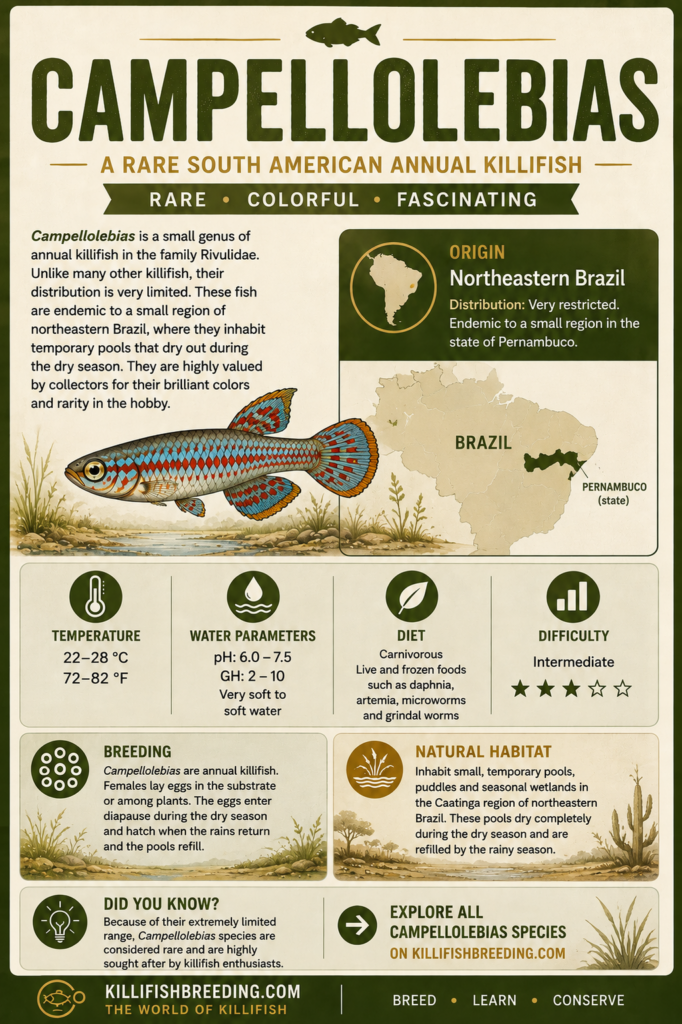
Campellolebias, also known as the “rock dwelling killifish,” is a unique species of fish that inhabits temporary pools and creeks in South America. This glittering little creature is truly a sight to behold, with its vibrant colors and striking patterns. Found mainly in Brazil and Uruguay, Campellolebias has captured the attention of scientists and aquarium enthusiasts around the world.

With a history dating back several decades, Campellolebias was first discovered in 1972 by the Brazilian ichthyologist Wilson José Eduardo Moreira da Costa. Since then, this fascinating fish has been a subject of much research and conservation efforts. Due to its small habitat range and vulnerability to habitat destruction, Campellolebias is classified as “critically endangered” on the IUCN Red List.

One particularly compelling statistic associated with Campellolebias is its incredible adaptability. This species has the unique ability to survive in small, temporary pools and creeks that dry up during the dry season. It does so by entering diapause, a state of suspended animation where its metabolic processes slow down. This adaptation allows Campellolebias to endure months without water, providing it with a remarkable advantage in its harsh environment.

To ensure the survival of Campellolebias, conservationists have been working on establishing captive breeding programs and preserving its natural habitat. Efforts to protect this species have highlighted the importance of maintaining the delicate balance of ecosystems and conserving biodiversity. By focusing on the preservation of Campellolebias, scientists hope to raise awareness about the broader implications of habitat destruction and the importance of species conservation.

Campellolebias serves as a reminder that even seemingly insignificant organisms play crucial roles in maintaining the health and stability of ecosystems. As a “rock dwelling killifish,” it has become an emblematic species for understanding the intricate relationship between aquatic environments and the species they support. By studying Campellolebias, scientists gain valuable insights into the complex web of life, ultimately contributing to our understanding of the natural world and the importance of its conservation.

Without a conclusion, we are left with an open-ended call to action – to continue exploring and protecting the wonders of our natural world, striving towards sustainable practices and fostering an appreciation for the diverse and fragile ecosystems that surround us.

What are the benefits and characteristics of Campellolebias?

Campellolebias is a genus of small freshwater fish commonly found in South America. These unique fish species possess several noteworthy characteristics and advantages that make them intriguing to aquatic enthusiasts and researchers alike. They are known for their vibrant colors, especially during breeding displays, making them visually appealing in aquariums. Additionally, Campellolebias are famous for their unique reproductive strategy called “self-fertilization,” where females are capable of producing offspring without mating with males. To discover more about the fascinating world of Campellolebias and explore their captivating features, continue reading.

Answering the Mystery of Campellolebias

Campellolebias is a genus of killifish that has attracted the attention of scientists and aquarium enthusiasts alike. With their vibrant colors, unique breeding behavior, and limited distribution, these small freshwater fish have become a subject of fascination. Let’s delve into the world of Campellolebias to understand more about their characteristics, habitat, and conservation status.

Characteristics of Campellolebias

Campellolebias are small-sized fish, usually measuring between 2-4 centimeters in length. One distinguishing feature of these killifish is their striking coloration. Males often possess vibrant hues, including shades of red, blue, yellow, and black, making them visually stunning. Females, on the other hand, have less vibrant colors but still exhibit unique patterns.

Another notable characteristic of Campellolebias is their breeding behavior. These fish engage in a fascinating reproductive strategy called “annualism.” This means that they have a short lifespan, typically living for less than a year, and complete their entire life cycle within this limited time frame.

During the breeding season, male Campellolebias flaunt their colorful displays to attract females. Once a male successfully courts a female, she lays adhesive eggs on plants or other substrate. Unlike some fish species, Campellolebias do not guard their eggs. Instead, they rely on the surrounding environment for protection.

Habitat and Distribution

Campellolebias are found in the southeastern region of Brazil, specifically in the Atlantic Forest. This region is known for its high biodiversity and is home to numerous endemic species. They inhabit temporary pools, streams, and swamplands, which are characterized by temporary or seasonal flooding.

The fluctuating water levels in these habitats play a crucial role in the life cycle of Campellolebias. When the rainy season arrives, the temporary pools are filled with water, creating the ideal conditions for breeding. As the water gradually recedes during the dry season, the fish lay their eggs in the drying mud, where they enter a state of diapause, a suspended animation enabling them to survive until the next rainy season.

Conservation Status

Like many other species in the Atlantic Forest, Campellolebias face significant threats due to habitat loss and degradation. The destruction of their native habitats, primarily resulting from deforestation and urbanization, has led to a decline in their populations. Additionally, pollution and introduction of non-native species pose additional challenges to their survival.

Due to their restricted distribution and specialized habitat requirements, Campellolebias are considered vulnerable by the International Union for Conservation of Nature (IUCN). Conservation efforts are crucial to protect these unique killifish and preserve their delicate ecosystems.

It is estimated that less than 150 known species of Campellolebias currently exist in the wild. This alarming number highlights the urgent need for increased awareness, research, and conservation initiatives to ensure the long-term survival of Campellolebias and other endemic species in the Atlantic Forest.

FAQss

1. What is Campellolebias?

is a genus of killifish found in South America. These small freshwater fish are known for their vibrant colors and unique behaviors.

2. How big do Campellolebias fish grow?

The size varies depending on the species. On average, they tend to be between 2 to 3 inches long.

3. What kind of habitat do Campellolebias fish prefer?

typically inhabit small temporary pools or seasonal streams in their natural habitat. They require shallow water with dense vegetation and sandy or muddy substrate.

4. Are they fish suitable for beginners?

While they can be kept in home aquariums, they are not recommended for beginners. They have specific care requirements and can be more challenging to keep compared to other fish species.

5. How should I set up an aquarium for them?

An aquarium should mimic their natural habitat as closely as possible. Provide plenty of vegetation, a sandy or muddy substrate, and adequate hiding places. It is also important to maintain stable water parameters.

6. What do Campellolebias fish eat?

are primarily carnivorous and feed on small invertebrates, such as insects and worms, in the wild. In captivity, they can be fed a varied diet of high-quality flake or pellet food supplemented with live or frozen foods.

7. Can different species of Campellolebias be kept together?

No, it is generally not recommended to keep different species of Campellolebias together. They have distinct behaviors and territorial tendencies, which can result in aggression and stress.

8. How can I breed them?

Breeding Campellolebias fish can be challenging but rewarding. Provide a separate breeding tank with suitable substrate and vegetation. Maintain pristine water conditions and offer small live foods. The male will display courtship behavior, and the female will lay eggs in the substrate. Separate the parents from the fry to prevent predation.

9. Are Campellolebias fish endangered?

Some species of Campellolebias fish are considered endangered due to habitat loss and pollution. It is important to support conservation efforts and avoid purchasing wild-caught specimens.

10. How long do Campellolebias fish typically live?

The lifespan of Campellolebias fish can vary depending on the species and care provided. On average, they can live for around 2 to 3 years in captivity.

Conclusion

In conclusion, this article has provided valuable insights into Campellolebias, a unique and endangered species of fish found in the tropical wetlands of Brazil.

Firstly, it was highlighted that Campellolebias is a seasonal killifish, which means that it inhabits temporary water bodies that dry up during the dry season. This fascinating adaptation allows the fish to lay desiccation-resistant eggs that can survive in the soil until the next rainy season, ensuring their survival in fluctuating environments. Furthermore, the article discussed the specific habitat requirements of Campellolebias, emphasizing the importance of both water parameters and vegetation cover for their growth and reproduction.

Secondly, the threats faced by Campellolebias were explored. It was noted that habitat destruction and water pollution are the primary challenges faced by this species. Deforestation and urbanization pose a significant risk to its natural habitat, leading to the fragmentation and loss of its wetland habitats. Additionally, pollution from agricultural runoff and industrial activities negatively impact the water quality, which hinders the fish’s reproduction and survival.

In conclusion, understanding and conserving the unique characteristics and habitat requirements of Campellolebias is crucial for its long-term survival. Efforts need to be directed towards preserving its wetland habitats, promoting sustainable land use practices, and implementing measures to reduce water pollution. Implementing proactive conservation strategies, such as captive breeding programs and habitat restoration projects, will be key in ensuring the continued existence of this remarkable and endangered species of fish.

  1. Campellolebias brucei
  2. Campellolebias chrysolineatus
  3. Campellolebias dorsimaculatus
  4. Campellolebias flavicaudatus
  5. Campellolebias intermedius
  6. Campellolebias lineatus
  7. Campellolebias nandae
  8. Campellolebias obliquofasciatus
  9. Campellolebias oligolepis
  10. Campellolebias sharmai
  11. Campellolebias venezuelensis

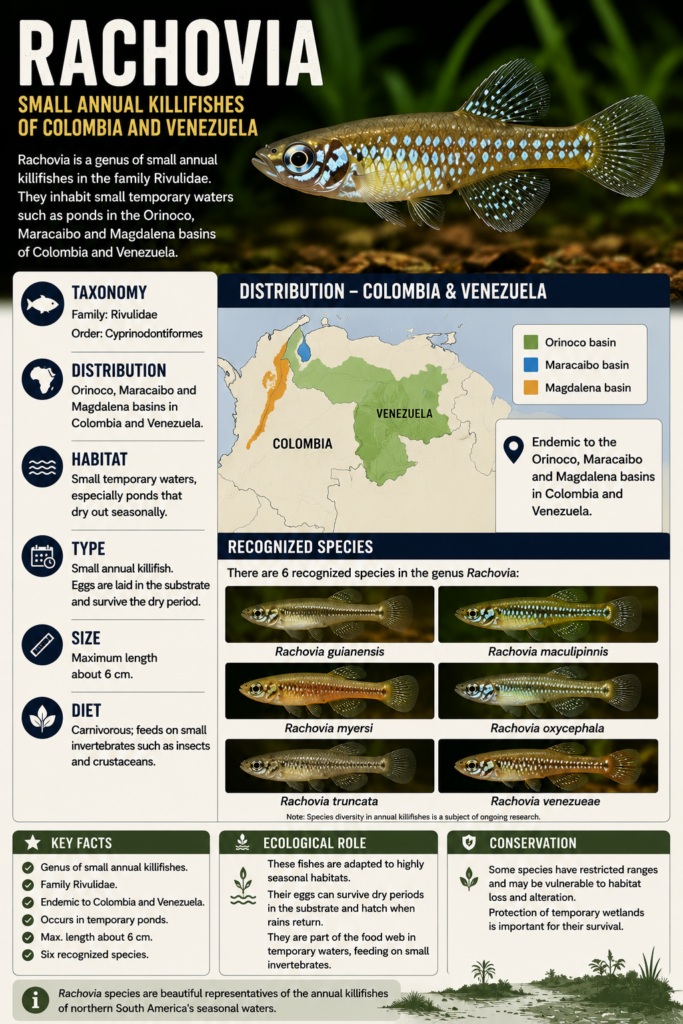
Rachovia


Rachovia is a fascinating genus of freshwater killifish that encompasses a diverse group of species, each with its unique characteristics, habitat preferences, and ecological significance. These small, vibrant fish are known for their stunning colors, intricate behaviors, and adaptations to specific environments. In this comprehensive 2000-word essay, we will explore the taxonomy, diversity, distribution, habitat, morphology, behavior, reproduction, conservation status, and the significance of the genus Rachovia.

Taxonomy:

Rachovia is a genus of fish belonging to the family Rivulidae. Taxonomically, it can be classified as follows:

  • Kingdom: Animalia
  • Phylum: Chordata
  • Class: Actinopterygii
  • Order: Cyprinodontiformes
  • Family: Rivulidae
  • Genus: Rachovia

The genus name, “Rachovia,” is derived from the Greek word “rachos,” meaning “cleft” or “rift,” possibly alluding to the cleft or crevice-like habitats these fish are often found in.

Diversity:

The genus Rachovia encompasses a range of species, each with its unique features and adaptations. While Rachovia species share certain common characteristics, they also exhibit variations in terms of size, coloration, and habitat preferences. Some well-known species within the genus include Rachovia breitkreutzi, Rachovia crassus, and Rachovia pyropunctata.

The diversity within the genus Rachovia is largely influenced by the specific regions in which these fish are found. Different species may inhabit different countries, and their distribution is often associated with particular ecosystems.

Distribution:

Rachovia species are primarily found in tropical and subtropical regions of the Americas. Their distribution extends from Central America to South America, encompassing countries such as Mexico, Guatemala, Belize, Honduras, Nicaragua, Costa Rica, Panama, Colombia, Venezuela, and Brazil. The specific distribution of Rachovia species can vary depending on factors like habitat availability and local environmental conditions.

Habitat Preferences:

Rachovia species exhibit diverse habitat preferences, and they can be found in various types of aquatic environments, including:

  1. Streams: Many Rachovia species inhabit streams with clear, flowing water. These habitats often feature a mix of aquatic vegetation, rocky substrates, and small pools.
  2. Seasonal Pools: Some Rachovia species have adapted to temporary or seasonal pools that may dry up during certain times of the year. They have developed unique life history strategies to thrive in these challenging environments.
  3. Swamps: In regions with swampy or marshy areas, they can be found in shallow waters with abundant vegetation.
  4. Lakes: Some species have adapted to both natural and man-made lakes, which may offer still or slow-moving waters.
Morphology:

Rachovia species display several distinctive morphological characteristics that reflect their adaptation to their specific habitats and lifestyles. Common morphological features include:

  1. Size: Rachovia species are typically small to medium-sized fish, with an average length ranging from a few centimeters to around 10 centimeters. While they may vary in size, their compact bodies make them well-suited for their diverse environments.
  2. Body Shape: The body shape varies based on their habitat. Those inhabiting fast-flowing streams often have streamlined, torpedo-like bodies, while those in still waters may have more elongated shapes.
  3. Coloration: Rachovia species are known for their striking colors. Males, in particular, often display vibrant hues such as shades of red, blue, and yellow. Their colors may vary based on factors like sex, age, and environmental conditions.
  4. Fins: They possess dorsal and anal fins that may be adapted for precise swimming in their specific environments. The shape and size of these fins can vary among species.
  5. Mouth: The size and shape of the mouth can vary based on their feeding habits. They are generally carnivorous, feeding on small invertebrates, insects, and other aquatic prey in their respective habitats.
Behavior:

They exhibit a range of behaviors that are essential for their survival and adaptation to their environments. Notable behaviors include:

  1. Feeding Habits: Rachovia species are primarily carnivorous, feeding on a variety of small invertebrates and aquatic prey found in their habitats. Their feeding behaviors may differ depending on their specific diet and the availability of food.
  2. Reproductive Strategies: Rachovia species employ a variety of reproductive strategies, including egg-laying, egg-spot mimicry, and courtship behaviors. Their reproductive behaviors are often tied to specific environmental cues.
  3. Migratory Patterns: Some Rachovia species display migratory behavior in response to environmental changes. They may move to different habitats within their geographic range based on seasonal variations.
  4. Territorial Behavior: Territorial behavior is common among Rachovia species, especially in environments with limited resources. Males often establish and defend territories during the breeding season.
  5. Life History Strategies: They often have unique life history strategies, including adaptations to seasonal drying of habitats, the ability to switch between sexual and asexual reproduction, and the capacity to thrive in extreme conditions.
Reproduction:

Reproduction in the genus Rachovia is diverse and can involve various strategies. While most species are egg-layers, some have adopted viviparous reproduction. Common reproductive behaviors and strategies within the genus include:

  1. Egg-Laying: Many species lay adhesive eggs on substrates such as submerged vegetation, rocks, or the substrate itself. These eggs are fertilized externally by the males.
  2. Viviparity: Viviparous species give birth to live young rather than laying eggs. The embryos develop inside the female and are nourished by a placental connection. This reproductive strategy is an adaptation to environments with seasonal fluctuations.
  3. Egg Mimicry: Some species exhibit egg-spot mimicry, where males display markings on their anal fins that resemble eggs. This behavior is thought to deceive females and rivals, promoting successful reproduction.
  4. Seasonal Reproduction: Reproduction is often tied to seasonal environmental cues, such as temperature changes, rainfall, and habitat availability. They time their reproductive activities to coincide with favorable conditions.
Conservation Status:

The conservation status of individual Rachovia species varies, but the genus as a whole faces common conservation challenges:

  1. Habitat Loss: The destruction and alteration of aquatic habitats, including streams, seasonal pools, and wetlands, pose a significant threat to Rachovia species. Urbanization, agriculture, and infrastructure development can lead to habitat degradation and loss.
  2. Pollution: Pollution from various sources, including agricultural runoff, industrial discharge, and untreated sewage, can degrade water quality and harm aquatic ecosystems where Rachovia species reside.
  3. Invasive Species: The introduction of non-native species can disrupt the balance of ecosystems and compete with or prey on native fish, including Rachovia.
  4. Climate Change: Changes in temperature, precipitation patterns, and sea-level rise due to climate change can impact the availability and suitability of habitats for Rachovia species.
  5. Overharvesting: In some cases, these fish are collected for the pet trade, which can lead to population declines if not managed sustainably.

Efforts to conserve Rachovia species often involve habitat protection, water quality management, control of invasive species, and research to better understand the biology and ecology of these fish.

Significance of Studying Rachovia:

Studying the genus Rachovia holds several key scientific and conservation implications:

  1. Biodiversity: Rachovia species contribute to the rich biodiversity of the Americas, and studying their diversity enhances our understanding of aquatic ecosystems and the unique adaptations of these fish.
  2. Conservation: Understanding the habitat requirements, reproductive strategies, and ecological roles of Rachovia species is essential for developing effective conservation strategies to protect not only these fish but also the ecosystems they inhabit.
  3. Climate Adaptations: Rachovia species often thrive in challenging environmental conditions, making them valuable subjects for studying how fish can adapt to climate change and extreme habitats.
  4. Aquaculture and the Pet Trade: Some species within the genus are of interest to the pet trade and aquarists, and a deeper understanding of their biology and care requirements is essential for responsible and sustainable husbandry.
  5. Biomedical Research: Research on the unique reproductive strategies of some Rachovia species has implications for biomedical and evolutionary studies. These fish provide insights into mechanisms of asexual reproduction and adaptation.

In conclusion, the genus Rachovia is a diverse and remarkable group of fish found throughout the Americas. Their adaptability, diverse behaviors, and unique reproductive strategies make them an intriguing subject of study. However, they face various conservation challenges, primarily habitat loss and pollution. Studying and conserving Rachovia species is essential to preserving their biodiversity and the health of aquatic ecosystems. These fish serve as indicators of environmental quality and provide valuable insights into the adaptation and survival of species in dynamic and changing environments.

Cubanichthys

Introduction:

Cubanichthys is a genus of freshwater fish native to Cuba, known for its unique and colorful species. These fish belong to the family Poeciliidae, which includes other well-known livebearer fish such as guppies and mollies. The genus Cubanichthys is celebrated for its vibrant coloration, interesting behavior, and its significance in scientific research, the aquarium hobby, and conservation efforts. In this comprehensive overview, we will delve into various aspects of the Cubanichthys genus, including its taxonomy, habitat, physical characteristics, behavior, reproduction, and its role in both the scientific community and the aquarium trade.

Taxonomy:

The Cubanichthys genus belongs to the following taxonomic hierarchy:

  • Kingdom: Animalia
  • Phylum: Chordata
  • Class: Actinopterygii (ray-finned fishes)
  • Order: Cyprinodontiformes (toothcarps)
  • Family: Poeciliidae (livebearers)
  • Genus: Cubanichthys

The genus Cubanichthys includes several recognized species, each with its unique characteristics and distribution within the freshwater ecosystems of Cuba.

Habitat and Distribution:

Cubanichthys species are endemic to Cuba, meaning they are found exclusively on this Caribbean island. These fish inhabit a variety of freshwater environments, including rivers, streams, ponds, marshes, and other slow-moving or still waters. They often prefer habitats with abundant aquatic vegetation, which provides both shelter and a source of food.

The distribution of Cubanichthys species within Cuba can vary based on local environmental conditions and habitat availability, with some species being more widespread than others.

Physical Characteristics:
  1. Size: Cubanichthys species vary in size, but most individuals typically reach a length of 2.5 to 5 centimeters (approximately 1 to 2 inches) when fully grown. Some species may be slightly larger or smaller.
  2. Coloration: The genus Cubanichthys is known for its vibrant and striking coloration, especially in males. These fish often display shades of blue, green, red, orange, and yellow, with intricate patterns and markings on their bodies and fins. Females, while still colorful, tend to have more subdued hues.
  3. Fins: Cubanichthys fish possess well-defined dorsal, anal, pectoral, and pelvic fins, each of which may exhibit coloration and patterning, particularly in males.
  4. Body Shape: The body of Cubanichthys species is typically elongated and streamlined, allowing them to navigate through aquatic vegetation and slow-moving waters with ease.
Behavior:

Cubanichthys species exhibit a range of interesting behaviors, both in their natural habitats and in aquarium settings:

  1. Feeding: These fish are omnivorous and consume a varied diet that includes small aquatic invertebrates, algae, detritus, and occasionally plant matter. They are opportunistic feeders and actively forage for food among the aquatic vegetation and substrate.
  2. Social Behavior: Cubanichthys fish are generally social and can be kept in groups in aquarium settings. However, males can sometimes exhibit territorial and aggressive behavior towards one another, particularly when competing for the attention of females.
  3. Reproductive Behavior: Like other livebearing fish, Cubanichthys species engage in courtship displays, with males showcasing vibrant colors and performing courtship rituals to attract females.
Reproduction:

The reproductive biology of Cubanichthys species is characterized by livebearing, where females give birth to live fry rather than laying eggs:

  1. Courtship: Mating behavior begins with courtship displays by males, which can include fin displays, vibrant coloration, and specific movements to attract females.
  2. Fertilization: After successful courtship, fertilization occurs internally, where the male transfers sperm to the female’s reproductive tract.
  3. Gestation: Female Cubanichthys undergo a period of gestation during which they carry developing embryos. The gestation period can vary depending on environmental conditions and water temperature.
  4. Live Birth: Following the gestation period, female Cubanichthys give birth to live fry. The number of fry in a single brood can vary but often ranges from a few to several dozen, depending on the size and age of the female.
  5. Parental Care: Cubanichthys species do not provide any significant parental care after birth. The fry are fully independent and will begin feeding and growing on their own.
Aquarium Care:

Cubanichthys species can be an attractive addition to a home aquarium, but they require specific care to thrive. Here are some essential care tips:

  1. Tank Size: Provide a tank with a capacity of at least 10 gallons for a small group of Cubanichthys fish. A larger tank is ideal, especially if you plan to maintain multiple individuals.
  2. Water Parameters: Maintain stable water conditions with a temperature range of 72-78°F (22-26°C), a pH level around 6.5-7.5, and moderate hardness. Regular water changes are essential to maintain water quality.
  3. Filtration: Use a gentle filtration system with a sponge filter or a low-flow power filter to prevent strong currents that might stress these fish.
  4. Substrate: Use a substrate that mimics their natural habitat, such as fine gravel or sand. Adding live or artificial aquatic plants and providing hiding spots with driftwood or rocks will create a suitable environment.
  5. Tankmates: Cubanichthys species are generally peaceful and can be kept with other small, non-aggressive fish species. Avoid housing them with larger or aggressive fish that may pose a threat.
  6. Diet: Provide a varied diet that includes high-quality flake food, live or frozen foods like daphnia, brine shrimp, and small aquatic invertebrates. Supplement their diet with vegetable matter, such as spirulina flakes.
Significance in the Aquarium Hobby:

Cubanichthys species are valued in the aquarium hobby for several reasons:

  1. Coloration: The vibrant and striking colors of these fish, particularly in males, make them visually appealing additions to community aquariums.
  2. Behavior: Their social behavior and interesting courtship displays add to the aquarium’s dynamics and provide enthusiasts with an opportunity to observe natural behaviors.
  3. Size: Their small size makes them suitable for smaller aquariums, nano tanks, and planted aquarium setups.
  4. Breeding: Cubanichthys species are known for their relatively straightforward breeding in captivity, which makes them popular choices for hobbyists interested in livebearing fish.
Conservation Significance:

Cubanichthys species, like many other Cuban freshwater species, are of conservation concern due to habitat destruction, pollution, and the introduction of non-native species. Some key points regarding their conservation significance include:

  1. Habitat Loss: The natural habitats of Cubanichthys species in Cuba are under threat from habitat destruction and alteration due to urbanization, agriculture, and infrastructure development.
  2. Endemic Species: Cubanichthys fish are endemic to Cuba, meaning they are found nowhere else in the world. Protecting their natural habitats is crucial to preserving these unique species.
  3. Conservation Initiatives: Various organizations and researchers in Cuba are working on conservation initiatives to protect the freshwater ecosystems and the species that inhabit them, including Cubanichthys.
  4. Aquarium Trade: The aquarium trade can play a role in conservation efforts by supporting captive breeding programs, reducing the demand for wild-caught individuals, and promoting responsible ownership and breeding.
Conclusion:

Cubanichthys, the genus of colorful and fascinating freshwater fish, is native to Cuba and offers a captivating addition to the aquarium hobby. Their striking appearance, interesting behavior, and significance in both the scientific community and conservation initiatives make them a species of interest to many. By providing suitable aquarium care and supporting conservation efforts, enthusiasts can contribute to the preservation of these remarkable species and their natural habitat. Responsible ownership and conservation awareness are essential to ensuring the long-term survival of Cubanichthys species in the wild and in captivity.

  1. Cubanichthys cubensis
  2. Cubanichthys cookei
  3. Cubanichthys domesticus
  4. Cubanichthys monikae
  5. Cubanichthys pengelleyi

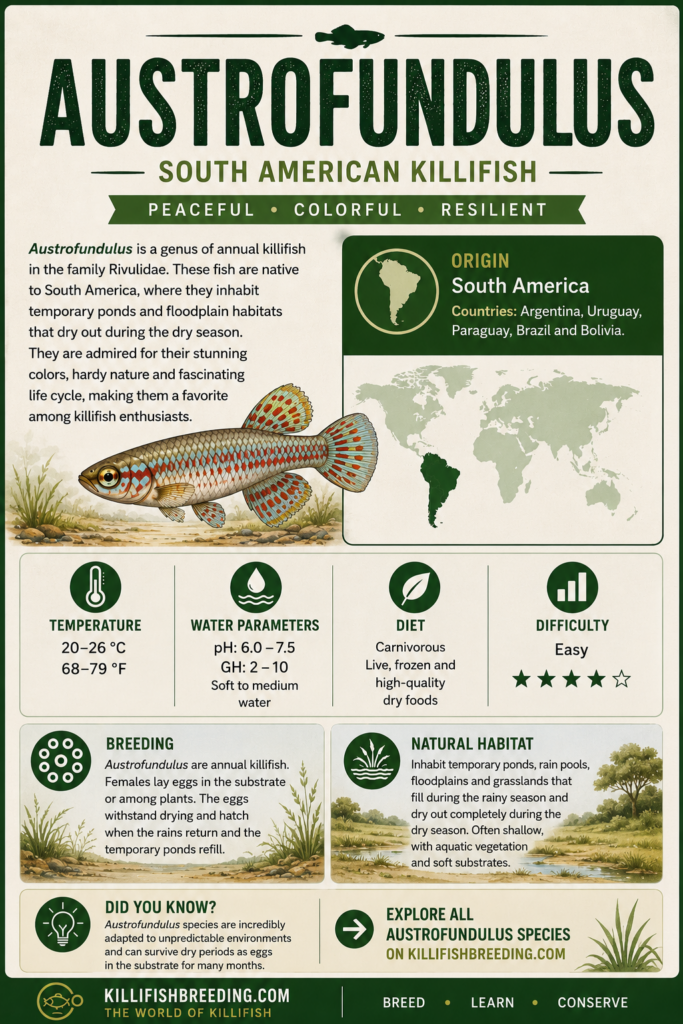
Austrofundulus

Introduction:

Austrofundulus is a fascinating genus of freshwater fish belonging to the family Rivulidae. This group of fish is collectively known as annual killifish due to their unique life history strategy. Austrofundulus species are predominantly found in South America, primarily in Venezuela and Colombia. These fish are celebrated for their remarkable adaptations to seasonal habitats, stunning coloration, and their significance in scientific research and the aquarium hobby. In this comprehensive overview, we will delve into various aspects of the Austrofundulus genus, including its taxonomy, habitat, physical characteristics, behavior, reproduction, and its relevance in scientific studies and the aquarium trade.

Taxonomy:

The Austrofundulus genus belongs to the following taxonomic hierarchy:

  • Kingdom: Animalia
  • Phylum: Chordata
  • Class: Actinopterygii (ray-finned fishes)
  • Order: Cyprinodontiformes (toothcarps)
  • Family: Rivulidae
  • Genus: Austrofundulus
Habitat and Distribution:

Austrofundulus species are primarily found in South America, with a focus on Venezuela and Colombia. Their natural habitats include seasonal floodplains, temporary pools, flooded savannas, and other shallow aquatic environments. These regions experience a tropical climate with distinct wet and dry seasons, and the cyclical changes in water availability significantly influence the life history and behavior of Austrofundulus fish.

During the wet season, these fish inhabit temporary pools that form due to heavy rainfall and flooding. These pools serve as their primary breeding grounds. When the dry season arrives, the pools often dry up completely, prompting Austrofundulus to employ various strategies to survive the challenging conditions, including entering a state of diapause, a form of suspended animation.

Physical Characteristics:

Austrofundulus species exhibit several physical characteristics that make them distinctive and captivating:

  1. Size: These annual killifish are generally small, with mature individuals typically reaching sizes ranging from 3 to 7 centimeters (approximately 1 to 2.7 inches) in length, depending on the species.
  2. Coloration: Males of many Austrofundulus species are known for their striking and vibrant coloration, which includes shades of blue, green, red, and yellow. Their bodies and fins often feature intricate patterns and markings, adding to their visual appeal. In contrast, females typically display more subdued colors and markings.
  3. Fins: Austrofundulus fish possess well-developed dorsal and anal fins, which may exhibit elaborate coloration and patterning, further enhancing their aesthetic appeal.
  4. Body Shape: The body of these fish is elongated and somewhat flattened from side to side. This body shape allows them to navigate through shallow waters, dense aquatic vegetation, and temporary pools with ease.
Behavior:

The behavior of Austrofundulus species is shaped by the cyclical changes in their habitat and their unique adaptations:

  1. Opportunistic Feeding: In their natural environments, Austrofundulus fish are opportunistic feeders. They primarily consume small aquatic invertebrates, insects, and other microorganisms. During the wet season, they actively forage for food in the temporary pools and flooded areas.
  2. Territorial Behavior: Male Austrofundulus individuals can exhibit territorial behavior, especially during the breeding season. They establish and defend small territories within their habitat and may engage in territorial disputes with other males.
  3. Adaptation to Seasonal Changes: One of the most remarkable aspects of their behavior is their adaptation to the seasonal drying and filling of their breeding pools. They lay their eggs in the substrate, often in mud or leaf litter at the pool’s edge. When the breeding pools dry up during the dry season, the eggs enter a state of diapause, a form of suspended animation, allowing them to survive until the return of the rains.
  4. Breeding Displays: During the breeding season, males intensify their coloration and perform elaborate fin displays to attract females. Courtship behaviors are a spectacle to observe and are crucial for reproductive success.
Reproduction:

The reproductive biology of Austrofundulus species is one of their most remarkable features, as it is adapted to the cyclical changes in their habitat:

  1. Egg Deposition: As the rainy season approaches, male Austrofundulus fish become more active and engage in courtship displays to attract females. Once a male successfully courts a female, she lays her eggs in the substrate, often in mud or leaf litter at the water’s edge. The eggs are adhesive and attach to the substrate.
  2. Egg Survival: The eggs of Austrofundulus fish have evolved unique adaptations to survive harsh environmental conditions. When the breeding pool dries up during the dry season, the eggs enter a state of diapause, allowing them to survive desiccation and extreme temperatures until the return of the rains.
  3. Hatching and Growth: When the rains return, the breeding pools fill with water, triggering the hatching of the eggs. The fry emerge and begin feeding on microorganisms and small aquatic invertebrates present in the water. They grow rapidly and reach maturity within a few months, at which point they are ready to reproduce in the next breeding season.
Aquarium Care:

Keeping Austrofundulus species in an aquarium can be a rewarding experience, but it requires a proper setup to accommodate their unique life cycle and behavior. Here are some essential care tips:

  1. Tank Size: Provide a tank with a capacity of at least 10 gallons for a small group of these fish. A larger tank is ideal, especially if you plan to maintain multiple individuals or multiple species.
  2. Water Parameters: Maintain stable water conditions with a temperature range of 72-78°F (22-26°C), a pH level around 6.0-7.5, and soft to moderately hard water. Regular water changes are essential to maintain water quality.
  3. Substrate: Use a substrate that mimics their natural habitat, such as fine gravel or sand. Adding dried leaves or Indian almond leaves can provide hiding spots and create a natural look.
  4. Filtration: Use a gentle filtration system with a sponge filter or a low-flow power filter to prevent strong currents that might stress these fish.
  5. Tankmates: Austrofundulus species are generally peaceful but can become territorial during the breeding season. Keep them with other small, non-aggressive species, such as small tetras, rasboras, or peaceful bottom-dwellers.
  6. Breeding Setup: To encourage breeding, provide suitable spawning substrates like spawning mops, fine-leaved plants, or a layer of fine mesh on the tank bottom. Maintain stable water conditions and a photoperiod that mimics the seasonal changes in their natural habitat.
Significance in Scientific Research:

Austrofundulus species, collectively referred to as annual killifish, hold significant importance in scientific research for several reasons:

  1. Diapause Studies: The ability of Austrofundulus embryos to enter diapause and survive harsh environmental conditions has made them a model organism for studying diapause in fish and other vertebrates. Research on diapause can have implications for understanding embryonic development, aging, and stress resistance.
  2. Evolutionary Biology: The annual life cycle and adaptations of Austrofundulus species provide insights into evolutionary strategies for surviving in dynamic and unpredictable environments. Research on these fish can shed light on the evolution of life history traits and reproductive strategies.
  3. Conservation Efforts: Due to their reliance on temporary pools, Austrofundulus species are vulnerable to habitat destruction. Studying their natural history and adaptations can inform conservation efforts in the regions where they are found.
Conclusion:

Austrofundulus, the genus of annual killifish, comprises a group of captivating and scientifically significant freshwater fish species with unique life histories and stunning beauty. Their adaptation to seasonal habitats, striking coloration, and diapause abilities make them valuable subjects for scientific research, conservation initiatives, and the aquarium hobby. By providing a suitable environment and understanding their natural behavior, hobbyists can appreciate the beauty and wonder of these fascinating fish in their own homes. Responsible ownership and care are essential to ensuring the health and well-being of Austrofundulus species in captivity, as with all aquarium species.

  1. Austrofundulus akropongense
  2. Austrofundulus arnoldorum
  3. Austrofundulus avicennia
  4. Austrofundulus breuensis
  5. Austrofundulus bifasciatus
  6. Austrofundulus guajira
  7. Austrofundulus limnaeus
  8. Austrofundulus marianae
  9. Austrofundulus myersi
  10. Austrofundulus oropharynx
  11. Austrofundulus reicherti
  12. Austrofundulus robustus
  13. Austrofundulus transilis

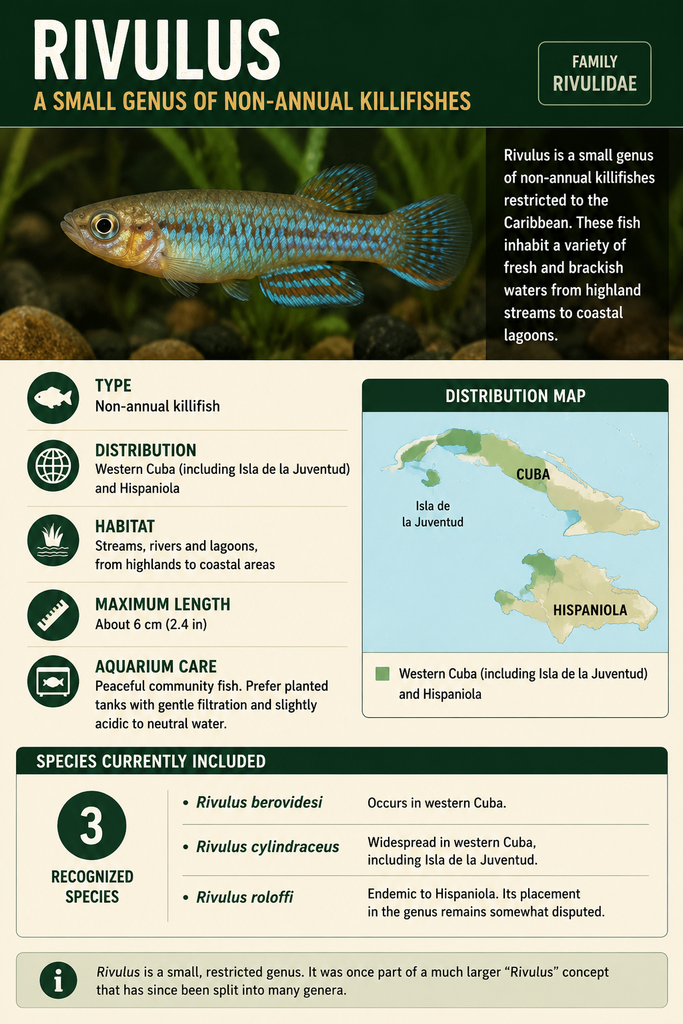
Rivulus

Rivulus is a diverse genus of small freshwater fish known as killifish. These colorful and intriguing fish are found in various regions of the Americas, and they are appreciated by aquarium enthusiasts for their vibrant colors, unique behaviors, and adaptability. In this comprehensive guide, we will explore the taxonomy, physical characteristics, habitat, behavior, reproduction, role in the aquarium hobby, conservation status, and more about the Rivulus genus.

Taxonomy and Classification:

Rivulus is a genus of fish classified within the family Rivulidae. This family belongs to the order Cyprinodontiformes, which includes a wide range of fish species known as killifish. The genus Rivulus comprises numerous species, each with its unique characteristics, geographic distribution, and often vibrant coloration.

Physical Characteristics:

Rivulus species exhibit a range of physical features, although there can be variations among different species:

  1. Size: These fish are relatively small, with adult individuals typically ranging from about 3 to 7 centimeters (approximately 1.2 to 2.8 inches) in length. Their small size makes them suitable for keeping in aquariums.
  2. Coloration: Rivulus are renowned for their diverse and striking colors, which can include shades of blue, green, red, yellow, orange, and black. The exact coloration varies significantly between species and even among individuals.
  3. Body Shape: They generally have elongated bodies with a streamlined shape, allowing them to navigate through their aquatic habitats with ease.
  4. Sexual Dimorphism: In some species, males and females may exhibit differences in coloration and fin morphology, especially during the breeding season.
Habitat and Distribution:

Rivulus species are native to various regions in the Americas, including South America, Central America, and the Caribbean. These fish inhabit a wide range of freshwater habitats, including slow-moving streams, small rivers, creeks, seasonal pools, ponds, and marshes. They are often found in areas with dense aquatic vegetation, submerged leaf litter, and muddy substrates.

One of the remarkable adaptations of Rivulus is their ability to thrive in temporary and fluctuating water bodies, including areas that experience seasonal droughts and flooding.

Behavior:

The behavior of Rivulus species is influenced by their habitat and social interactions:

  1. Feeding: Rivulus are opportunistic feeders and primarily consume small aquatic invertebrates, insects, algae, detritus, and other small prey in their environment. They use their keen vision and quick movements to capture prey effectively.
  2. Schooling: In the wild, these fish may form loose schools, which provide protection from predators and enhance their foraging efficiency.
  3. Territorial Behavior: During the breeding season, males may become territorial and engage in competitive displays to establish and defend breeding territories. They use their vibrant colors and fin displays to attract females and deter rival males.
Reproduction:

Rivulus species, like many killifish, follow a typical reproductive strategy:

  1. Courtship and Mating: During the breeding season, males engage in courtship behaviors, including fin displays, circling, and zigzag swimming, to attract females.
  2. Egg Deposition: After mating, females lay adhesive eggs on submerged vegetation, substrate, or other suitable surfaces. The adhesive nature of the eggs helps keep them in place, even in areas with fluctuating water levels.
  3. External Fertilization: Fertilization occurs externally, with males releasing sperm to fertilize the eggs once they are laid. This strategy increases the likelihood of successful fertilization.
  4. Parental Care: In some cases, males may provide limited parental care by guarding the nest site to protect the eggs. However, the extent of parental care varies among species and individuals.
  5. Rapid Development: The eggs of Rivulus species develop rapidly, and the fry hatch as miniature versions of the adults. This rapid development allows them to complete their life cycle before their temporary habitat dries up.
Role in the Aquarium Hobby:

Several Rivulus species are popular among aquarium enthusiasts due to their vibrant colors and adaptability to aquarium conditions. When keeping Rivulus species in an aquarium, here are some key considerations:

  1. Tank Size: A small aquarium with a capacity of at least 10 gallons is suitable for a small group of Rivulus fish.
  2. Water Parameters: Rivulus species are adaptable but generally prefer slightly acidic to neutral water with a pH range of 6.0 to 7.5. The water temperature should be maintained between 72°F and 78°F (22°C to 26°C).
  3. Habitat Setup: Create a well-planted aquarium with hiding places and suitable substrate. Provide moderate filtration and regular water changes to maintain water quality.
  4. Diet: They are omnivorous and will accept a variety of foods, including high-quality flakes, pellets, live or frozen foods like daphnia and brine shrimp, and occasional vegetable matter.
  5. Compatibility: Rivulus species are generally peaceful and can be kept with other small, non-aggressive fish species. Avoid keeping them with larger or aggressive tankmates.
Conservation Status:

The conservation status of Rivulus species varies depending on their specific populations and habitats. While some populations may be stable and not considered threatened, others may face challenges due to habitat destruction, pollution, and the introduction of non-native species.

Conservation efforts for these fish often involve habitat preservation, water quality improvement, and the establishment of protected areas. Additionally, monitoring and research are essential for understanding the status of different species and implementing effective conservation measures.

In conclusion, Rivulus is a diverse and captivating genus of killifish known for their vibrant colors and unique adaptations. Their presence in the aquarium hobby and their ecological significance in their natural habitats make them fascinating and valuable species. Understanding their biology, natural behaviors, and care requirements is crucial for their well-being and for conservation efforts aimed at protecting their native environments.

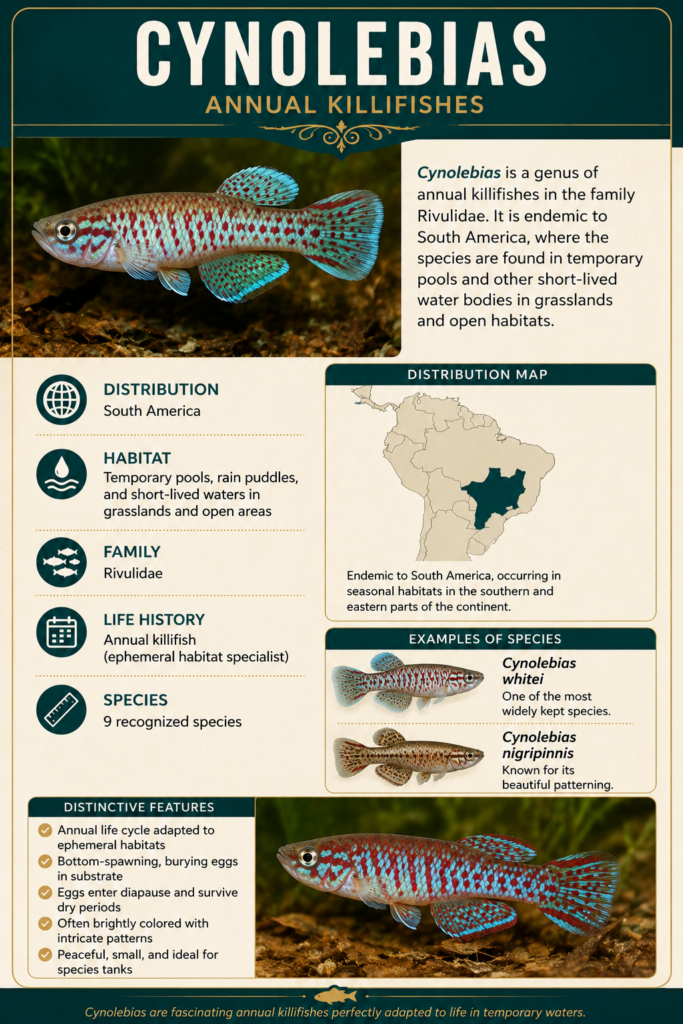
Cynolebias

Cynolebias: A Fascinating Genus of Killifish

The world of freshwater fish is home to a multitude of species, each with its unique adaptations and ecological significance. Among these, the genus Cynolebias, commonly referred to as cyno killifish, stands out as a group of fascinating and diverse killifish species. These fish are known for their vivid colors, complex behaviors, and remarkable life history strategies. In this comprehensive essay, we will delve into the taxonomy, habitat, behavior, reproductive strategies, and conservation status of Cynolebias, shedding light on their ecological importance and the challenges they face in the wild.

Taxonomy and Classification

Cynolebias belongs to the family Rivulidae within the order Cyprinodontiformes, a taxonomic group that includes numerous small freshwater fish species known as killifish. Killifish are characterized by their vibrant colors, unique reproductive strategies, and adaptability to a wide range of aquatic habitats. Cynolebias is one of the prominent genera within the family Rivulidae, known for its colorful and diverse species.

The scientific classification of Cynolebias can be outlined as follows:

  • Kingdom: Animalia
  • Phylum: Chordata
  • Class: Actinopterygii
  • Order: Cyprinodontiformes
  • Family: Rivulidae
  • Genus: Cynolebias
Habitat and Distribution

Cynolebias species are primarily found in the tropical and subtropical regions of South America. Their distribution spans across several countries, including Brazil, Argentina, Uruguay, and Paraguay. Within these regions, Cynolebias inhabit a variety of freshwater environments, with a preference for temporary or ephemeral bodies of water, such as rain-fed pools, seasonal ponds, and even roadside ditches.

These habitats are characterized by fluctuating water levels and periodic desiccation (drying out), making them challenging environments for many aquatic species. However, Cynolebias have evolved unique adaptations to thrive in such conditions.

Physical Characteristics

Cynolebias species exhibit a wide range of physical characteristics, and their appearance can vary significantly among different species and populations. However, there are some common features that are typical of cyno killifish.

  • Coloration: One of the most striking features of Cynolebias is their vibrant and diverse coloration. Many species display a rich palette of colors, including various shades of red, orange, blue, green, and yellow. These colors often extend to their fins and bodies, making them visually captivating.
  • Body Shape: The body shape of Cynolebias can vary from elongated and streamlined to more compact and robust, depending on the species. Some species have distinct patterns, spots, or stripes on their bodies and fins.
  • Size: The size of Cynolebias species can also vary considerably, with adult fish typically ranging from 4 to 8 centimeters (1.5 to 3 inches) in length, although there are variations among species.
  • Sexual Dimorphism: Sexual dimorphism, where males and females have different physical characteristics, is common in Cynolebias. In many species, males tend to be more colorful and larger than females. They may also develop elongated fins, particularly the dorsal and anal fins.
Behavior and Feeding

Cynolebias species exhibit intriguing behaviors and feeding habits that reflect their adaptations to their dynamic aquatic environments.

Feeding Habits: Cynolebias are carnivorous and primarily feed on small aquatic invertebrates, such as insect larvae, crustaceans, and tiny aquatic worms. Their diet may also include zooplankton and other small organisms found in their temporary aquatic habitats.

Behavior: In their natural habitats, Cynolebias are known to be highly territorial. Males, in particular, establish and defend territories, which they use for courtship and breeding. These territories often include areas with favorable nesting sites and hiding spots among aquatic vegetation or submerged structures.

Cynolebias are also known for their rapid growth rates, which is an adaptation to their temporary habitats. By growing quickly and reaching reproductive maturity in a short period, they can take advantage of the limited time their breeding sites remain wet.

Reproductive Strategies

One of the most remarkable aspects of Cynolebias biology is their complex and diverse reproductive strategies, which have evolved as adaptations to the ephemeral nature of their aquatic habitats.

Annual Killifish: Cynolebias are often classified as annual killifish. This means that they complete their entire life cycle, from hatching to reproduction and death, within a year. Their life cycle is closely tied to the seasonal rains that fill their temporary breeding habitats.

Egg Deposition and Dormancy: When conditions are favorable, typically triggered by the onset of the rainy season, Cynolebias engage in courtship and breeding. Females lay their eggs in the substrate, often burying them in the mud or sand at the bottom of temporary pools. These eggs are equipped with a remarkable adaptation called diapause, which allows them to survive desiccation and endure harsh environmental conditions.

During periods of drought, when their breeding habitats dry up, the eggs remain dormant in the dry substrate. They can withstand extended periods of desiccation, sometimes for several months or even years. When the rains return and the pools refill, the eggs hatch, and the fry emerge to continue the life cycle.

Conservation Status and Threats

Understanding the conservation status of Cynolebias species is essential for assessing their vulnerability and the need for conservation efforts. However, comprehensive assessments and data on the conservation status of individual species within the genus are often limited.

Cynolebias species face several threats, primarily related to habitat destruction and alteration:

  1. Habitat Loss: Urbanization, agriculture, and land development have led to the destruction and alteration of wetlands, temporary pools, and other freshwater habitats used by Cynolebias for breeding.
  2. Pollution: Water pollution from various sources, including agricultural runoff and industrial discharge, can degrade water quality in their habitats, potentially harming the fish and their prey.
  3. Invasive Species: The introduction of non-native fish species can disrupt the balance of aquatic ecosystems and compete for resources with Cynolebias.
  4. Climate Change: Altered rainfall patterns and increasing temperatures associated with climate change may impact the timing and availability of seasonal rains, which are critical for Cynolebias reproduction.
  5. Overcollection: Some Cynolebias species are collected for the aquarium trade. Overharvesting can have negative effects on wild populations if not regulated sustainably.
Conservation Efforts

Efforts to conserve Cynolebias and their unique habitats are essential for the preservation of these species and the broader aquatic ecosystems in which they play a role. Some key conservation strategies include:

  • Habitat Protection: Identifying and conserving critical habitats, such as temporary pools and wetlands, is crucial for safeguarding Cynolebias and other aquatic species.
  • Water Quality Management: Implementing measures to reduce water pollution from various sources is essential for maintaining healthy aquatic ecosystems.
  • Invasive Species Management: Monitoring and managing the introduction of non-native species can help prevent disruptions to native ecosystems.
  • Climate Resilience: Considering the potential impacts of climate change on seasonal rains and water availability can aid in the conservation of Cynolebias and their habitats.
Conclusion

Cynolebias, the cyno killifish, is a captivating genus of killifish known for its remarkable adaptations to ephemeral aquatic habitats. With their vivid colors, complex behaviors, and unique life history strategies, they occupy a special niche in the world of freshwater fish.

While specific assessments of the conservation status of individual Cynolebias species may be limited, the broader challenges faced by freshwater ecosystems underscore the importance of proactive conservation efforts. Protecting the habitats and water quality of Cynolebias can contribute not only to the preservation of these fascinating fish but also to the conservation of South America’s unique aquatic environments.

  1. Cynolebias adloffi
  2. Cynolebias affinis
  3. Cynolebias alexandri
  4. Cynolebias albipunctatus
  5. Cynolebias bellottii
  6. Cynolebias boitonei
  7. Cynolebias bokermani
  8. Cynolebias brigueiensis
  9. Cynolebias brittoi
  10. Cynolebias candidus
  11. Cynolebias carazinhoensis
  12. Cynolebias chacoensis
  13. Cynolebias cheradophilus
  14. Cynolebias cinereus
  15. Cynolebias constanciae
  16. Cynolebias costai
  17. Cynolebias crassipinnis
  18. Cynolebias cyaneus
  19. Cynolebias dolichopterus
  20. Cynolebias elegans
  21. Cynolebias emarginatus
  22. Cynolebias elongatus
  23. Cynolebias episcopi
  24. Cynolebias eximius
  25. Cynolebias flammeus
  26. Cynolebias flavicaudatus
  27. Cynolebias flavipinnis
  28. Cynolebias fulminantis
  29. Cynolebias gaucho
  30. Cynolebias geayi
  31. Cynolebias griseus
  32. Cynolebias guyanensis
  33. Cynolebias halbergi
  34. Cynolebias hellneri
  35. Cynolebias heloplites
  36. Cynolebias itapicuruensis
  37. Cynolebias ladigesi
  38. Cynolebias leptocephalus
  39. Cynolebias macarena
  40. Cynolebias magnificus
  41. Cynolebias melanotaenia
  42. Cynolebias monstrosus
  43. Cynolebias myersi
  44. Cynolebias nigripinnis
  45. Cynolebias nonoiuliensis
  46. Cynolebias notatus
  47. Cynolebias opalescens
  48. Cynolebias paraguassuensis
  49. Cynolebias parietalis
  50. Cynolebias parnaibensis
  51. Cynolebias pataxoensis
  52. Cynolebias perforatus
  53. Cynolebias porosus
  54. Cynolebias prognathus
  55. Cynolebias punctatus
  56. Cynolebias rectiventer
  57. Cynolebias robustus
  58. Cynolebias stellatus
  59. Cynolebias tenuis
  60. Cynolebias vandenbergi
  61. Cynolebias viarius
  62. Cynolebias vazabarrisensis
  63. Cynolebias whitei
  64. Cynolebias wolterstorffi
  65. Cynolebias zonatus

Notholebias


Notholebias is a captivating genus of freshwater fish commonly known as killifish, celebrated among aquarium enthusiasts for their vibrant colors, unique behaviors, and fascinating biology. These fish are native to South America, with a primary distribution in regions of Brazil and Uruguay. In this comprehensive guide, we will delve into the origins of Notholebias species, exploring their native habitats, geographical distribution, habitat preferences, and adaptations.

Geographical Distribution

Notholebias species are primarily native to the southeastern part of South America, with their distribution spanning several countries in the region. Some of the countries where Notholebias species are found include:

  1. Brazil: Brazil is a hotspot for Notholebias diversity, with numerous species inhabiting various regions of the country. These fish can be found in different states, particularly in the southern and southeastern areas.
  2. Uruguay: Uruguay is another country with a presence of Notholebias species. These fish are primarily found in the northeastern and eastern regions of the country, including areas near the Uruguay River.
Habitat Preferences

Notholebias species exhibit a diverse range of habitat preferences, and their distribution is closely linked to specific types of aquatic environments. Some key habitat preferences include:

  • Temporary Pools and Seasonal Wetlands: Many Notholebias species are associated with temporary pools, seasonal wetlands, and flooded grasslands that experience fluctuations in water levels throughout the year. These environments are characterized by the formation of shallow pools during the rainy season, which gradually dry up during the dry season.
  • Marginal Areas of Rivers and Streams: Notholebias species may also inhabit the marginal areas of larger water bodies, such as the edges of rivers, streams, and lakes. They are often found in regions with slow-moving or stagnant waters.
  • Flooded Fields and Rice Paddies: In some cases, Notholebias species have been observed in flooded agricultural fields and rice paddies, taking advantage of temporary aquatic habitats created by agricultural activities.
  • Forest Streams and Swamps: Certain species are specifically found in forest streams, swamps, and small water bodies within forested or wooded regions. These environments often have dense vegetation and canopy cover.
Adaptations to Seasonal Environments

Notholebias species have developed remarkable adaptations to thrive in seasonal and dynamic aquatic environments. These adaptations are crucial for their survival in habitats where water availability can vary significantly:

  1. Rapid Growth and Reproduction: Notholebias fish exhibit accelerated growth rates and have a relatively short lifespan compared to many other fish species. They reach maturity quickly and reproduce within a short period, ensuring the survival of their offspring before the habitat undergoes changes.
  2. Drought-Resistant Eggs: One of the most remarkable adaptations is their ability to produce drought-resistant eggs. Notholebias females deposit their eggs in the substrate of temporary pools or wetlands. These eggs enter a state of diapause, a type of dormancy, which allows them to withstand desiccation and extreme environmental conditions. When the rains return and the habitat refills with water, the eggs hatch, initiating a new generation of fish.
  3. Coloration and Courtship Displays: Male Notholebias often exhibit vibrant colors and elaborate courtship displays to attract females during the brief breeding period. This colorful display helps in species recognition and mate selection.
  4. Behavioral Adaptations: Notholebias species display specific behaviors that allow them to adapt to changing water levels and conditions. They may seek refuge in mud or leaf litter during dry periods and become active when water returns.
  5. Tolerance for Variable Water Quality: These fish are adapted to cope with fluctuating water quality, including variations in temperature, pH, and oxygen levels. They can endure periods of environmental stress.

In aquarium settings, aquarists interested in keeping Notholebias species often replicate their natural habitat conditions, including the use of specialized substrate, controlled water parameters, and appropriate tank decorations that mimic the conditions of their native environments. This approach allows aquarists to observe the unique behaviors and life history strategies of these remarkable fish while contributing to their conservation through captive breeding programs.

Spectrolebias


Spectrolebias is a captivating genus of freshwater fish commonly known as killifish, renowned among aquarium enthusiasts for their vibrant colors, unique behaviors, and intriguing biology. These fish are native to South America, specifically found in regions of Brazil, Uruguay, and Argentina. In this comprehensive guide, we will delve into the origins of Spectrolebias species, exploring their native habitats, geographical distribution, habitat preferences, and adaptations.

Geographical Distribution

Spectrolebias species are primarily native to the southeastern part of South America, with their distribution spanning several countries in the region. Some of the countries where Spectrolebias species are found include:

  1. Brazil: Brazil is a hotspot for Spectrolebias diversity, with numerous species inhabiting various regions of the country. These fish can be found in different states, particularly in the southern and southeastern areas.
  2. Uruguay: Uruguay is another country with a presence of Spectrolebias species. These fish are primarily found in the northeastern and eastern regions of the country, including areas near the Uruguay River.
  3. Argentina: Some Spectrolebias species are found in Argentina, particularly in the northeastern provinces of the country, such as Corrientes and Misiones. They inhabit freshwater habitats in this region.
Habitat Preferences

Spectrolebias species exhibit a diverse range of habitat preferences, and their distribution is closely linked to specific types of aquatic environments. Some key habitat preferences include:

  • Temporary Pools and Seasonal Wetlands: Many Spectrolebias species are associated with temporary pools, seasonal wetlands, and flooded grasslands that experience fluctuations in water levels throughout the year. These environments are characterized by the formation of shallow pools during the rainy season, which gradually dry up during the dry season.
  • Marginal Areas of Rivers and Streams: Spectrolebias species may also inhabit the marginal areas of larger water bodies, such as the edges of rivers, streams, and lakes. They are often found in regions with slow-moving or stagnant waters.
  • Flooded Fields and Rice Paddies: In some cases, Spectrolebias species have been observed in flooded agricultural fields and rice paddies, taking advantage of temporary aquatic habitats created by agricultural activities.
  • Forest Streams and Swamps: Certain species are specifically found in forest streams, swamps, and small water bodies within forested or wooded regions. These environments often have dense vegetation and canopy cover.
Adaptations to Seasonal Environments

Spectrolebias species have developed remarkable adaptations to thrive in seasonal and dynamic aquatic environments. These adaptations are crucial for their survival in habitats where water availability can vary significantly:

  1. Rapid Growth and Reproduction: Spectrolebias fish exhibit accelerated growth rates and have a relatively short lifespan compared to many other fish species. They reach maturity quickly and reproduce within a short period, ensuring the survival of their offspring before the habitat undergoes changes.
  2. Drought-Resistant Eggs: One of the most remarkable adaptations is their ability to produce drought-resistant eggs. Spectrolebias females deposit their eggs in the substrate of temporary pools or wetlands. These eggs enter a state of diapause, a type of dormancy, which allows them to withstand desiccation and extreme environmental conditions. When the rains return and the habitat refills with water, the eggs hatch, initiating a new generation of fish.
  3. Coloration and Courtship Displays: Male Spectrolebias often exhibit vibrant colors and elaborate courtship displays to attract females during the brief breeding period. This colorful display helps in species recognition and mate selection.
  4. Behavioral Adaptations: Spectrolebias species display specific behaviors that allow them to adapt to changing water levels and conditions. They may seek refuge in mud or leaf litter during dry periods and become active when water returns.
  5. Tolerance for Variable Water Quality: These fish are adapted to cope with fluctuating water quality, including variations in temperature, pH, and oxygen levels. They can endure periods of environmental stress.

In aquarium settings, aquarists interested in keeping Spectrolebias species often replicate their natural habitat conditions, including the use of specialized substrate, controlled water parameters, and appropriate tank decorations that mimic the conditions of their native environments. This approach allows aquarists to observe the unique behaviors and life history strategies of these remarkable fish while contributing to their conservation through captive breeding programs.

Austrolebias


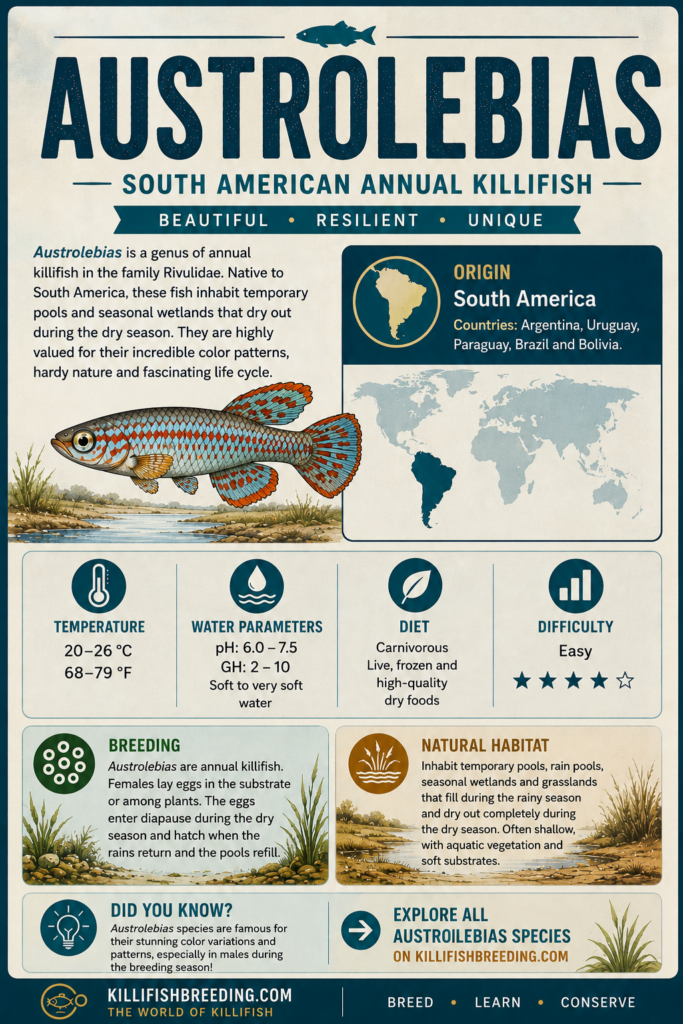
Austrolebias is a fascinating genus of freshwater fish commonly known as killifish, known for their vibrant colors, unique behaviors, and intriguing biology. These fish are native to South America, particularly in regions of Brazil, Uruguay, and Argentina. In this comprehensive guide, we will delve into the origins of Austrolebias species, exploring their native habitats, geographical distribution, habitat preferences, and adaptations.

Geographical Distribution

Austrolebias species are primarily native to the southeastern part of South America, with their distribution spanning several countries in the region. Some of the countries where Austrolebias species are found include:

  1. Brazil: Brazil is a hotspot for Austrolebias diversity, with numerous species inhabiting various regions of the country. These fish can be found in different states, particularly in the southern and southeastern areas.
  2. Uruguay: Uruguay is another country with a presence of Austrolebias species. These fish are primarily found in the northeastern and eastern regions of the country, including areas near the Uruguay River.
  3. Argentina: Some Austrolebias species are found in Argentina, particularly in the northeastern provinces of the country, such as Corrientes and Misiones. They inhabit freshwater habitats in this region.
  4. Paraguay: In Paraguay, there are reports of Austrolebias species inhabiting specific areas, particularly in the eastern parts of the country.
Habitat Preferences

Austrolebias species exhibit a diverse range of habitat preferences, and their distribution is closely linked to specific types of aquatic environments. Some key habitat preferences include:

  • Temporary Pools and Seasonal Wetlands: Many Austrolebias species are associated with temporary pools, seasonal wetlands, and flooded grasslands that experience fluctuations in water levels throughout the year. These environments are characterized by the formation of shallow pools during the rainy season, which gradually dry up during the dry season.
  • Marginal Areas of Rivers and Streams: Austrolebias species may also inhabit the marginal areas of larger water bodies, such as the edges of rivers, streams, and lakes. They are often found in regions with slow-moving or stagnant waters.
  • Flooded Fields and Rice Paddies: In some cases, Austrolebias species have been observed in flooded agricultural fields and rice paddies, taking advantage of temporary aquatic habitats created by agricultural activities.
  • Forest Streams and Swamps: Certain species are specifically found in forest streams, swamps, and small water bodies within forested or wooded regions. These environments often have dense vegetation and canopy cover.
Adaptations to Seasonal Environments

Austrolebias species have developed remarkable adaptations to thrive in seasonal and dynamic aquatic environments. These adaptations are crucial for their survival in habitats where water availability can vary significantly:

  1. Rapid Growth and Reproduction: Austrolebias fish exhibit accelerated growth rates and have a relatively short lifespan compared to many other fish species. They reach maturity quickly and reproduce within a short period, ensuring the survival of their offspring before the habitat undergoes changes.
  2. Drought-Resistant Eggs: One of the most remarkable adaptations is their ability to produce drought-resistant eggs. Austrolebias females deposit their eggs in the substrate of temporary pools or wetlands. These eggs enter a state of diapause, a type of dormancy, which allows them to withstand desiccation and extreme environmental conditions. When the rains return and the habitat refills with water, the eggs hatch, initiating a new generation of fish.
  3. Coloration and Courtship Displays: Male Austrolebias often exhibit vibrant colors and elaborate courtship displays to attract females during the brief breeding period. This colorful display helps in species recognition and mate selection.
  4. Behavioral Adaptations: Austrolebias species display specific behaviors that allow them to adapt to changing water levels and conditions. They may seek refuge in mud or leaf litter during dry periods and become active when water returns.
  5. Tolerance for Variable Water Quality: These fish are adapted to cope with fluctuating water quality, including variations in temperature, pH, and oxygen levels. They can endure periods of environmental stress.

In aquarium settings, aquarists interested in keeping Austrolebias species often replicate their natural habitat conditions, including the use of specialized substrate, controlled water parameters, and appropriate tank decorations that mimic the conditions of their native environments. This approach allows aquarists to observe the unique behaviors and life history strategies of these remarkable fish while contributing to their conservation through captive breeding programs.

  1. Austrolebias bellottii
  2. Austrolebias charrua
  3. Austrolebias elongatus
  4. Austrolebias luteoflammulatus
  5. Austrolebias luteoflammulatus
  6. Austrolebias minuano
  7. Austrolebias nigripinnis
  8. Austrolebias nonoiuliensis
  9. Austrolebias paucisquama
  10. Austrolebias periodicus
  11. Austrolebias robustus
  12. Austrolebias vandenbergi